Get Full Government Meeting Transcripts, Videos, & Alerts Forever!
Get email alerts on the Medicaid Audit Guardrails topic
No spam. Unsubscribe anytime.
Bill would limit extrapolation in Medicaid audits after providers report large retroactive recoveries
Summary
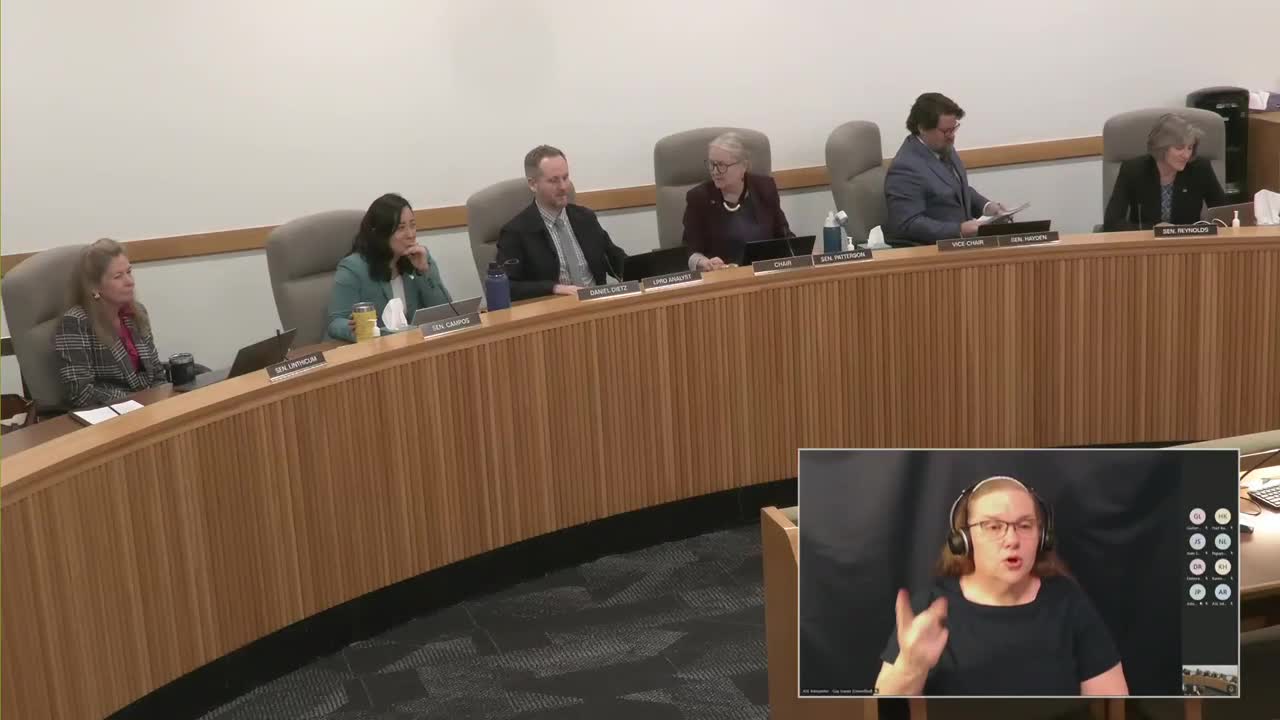
Senate Committee on Health Care heard public testimony on Senate Bill 61 on Feb. 25, 2025; the bill would limit extrapolation from very small audit samples in Medicaid overpayment reviews and require larger representative samples or documented overpayments before broad recoveries.
Senate Committee on Health Care heard public testimony on Senate Bill 61 on Feb. 25, 2025. The measure would set guardrails for Medicaid program integrity audits, narrowing situations in which contracted auditors may extrapolate an error rate from a small sample to the full claims population and requiring a larger audit sample or actual overpayment findings before broad recoveries are pursued.
Sponsor Senator Caden described provider complaints during the COVID period in which auditors extrapolated small samples to recover substantial sums. She said one example involved auditors finding issues in 13 reviewed charts and then applying that error rate to more than 1,600 patient claims, producing a large recovery demand. "In the 1 case that we looked at that they were clawing back a significant amount of money ... they applied it to 1,600 ... patients and drew all that money back out of 13 cases," she said, arguing that technical charting errors should be remediated cooperatively rather than treated as fraud.
Art Sukhozhevsky, representing Family Care, and other witnesses said aggressive recoupment can shut down small providers and discourage clinicians from serving Medicaid patients. "You're essentially shutting them down and disincentivizing providers from serving Medicaid clients going forward," Sukhozhevsky testified.
The bill would still allow auditors to recover funds for confirmed overpayments and preserve program integrity reviews, but require either documented individual overpayments or a larger representative sample (for example, a 15 percent sample) before applying an extrapolated recovery. Sponsors and witnesses asked the committee to review public records and submitted testimony showing a pattern of large retroactive recoveries that, they said, have destabilized parts of the behavioral‑health provider network.
Committee members heard that the bill seeks to balance the federal government's interest in recovering improper payments with preserving small provider viability and patient access. No committee vote occurred at the hearing; sponsors urged OHA and CCOs to work with providers to improve audit practices and documentation processes.