Get Full Government Meeting Transcripts, Videos, & Alerts Forever!
Get email alerts on the Burea Of Labor And Industries Budget Hb 5015 topic
No spam. Unsubscribe anytime.
Witnesses urge full funding for BOLI in public hearing on HB 5015 to tackle backlogs and wage theft
Summary
Dozens of labor, business and agency witnesses told the Transportation and Economic Development Committee that House Bill 5015 should be fully funded to reduce a backlog of wage and civil‑rights claims, strengthen apprenticeship oversight and enforce prevailing‑wage law.
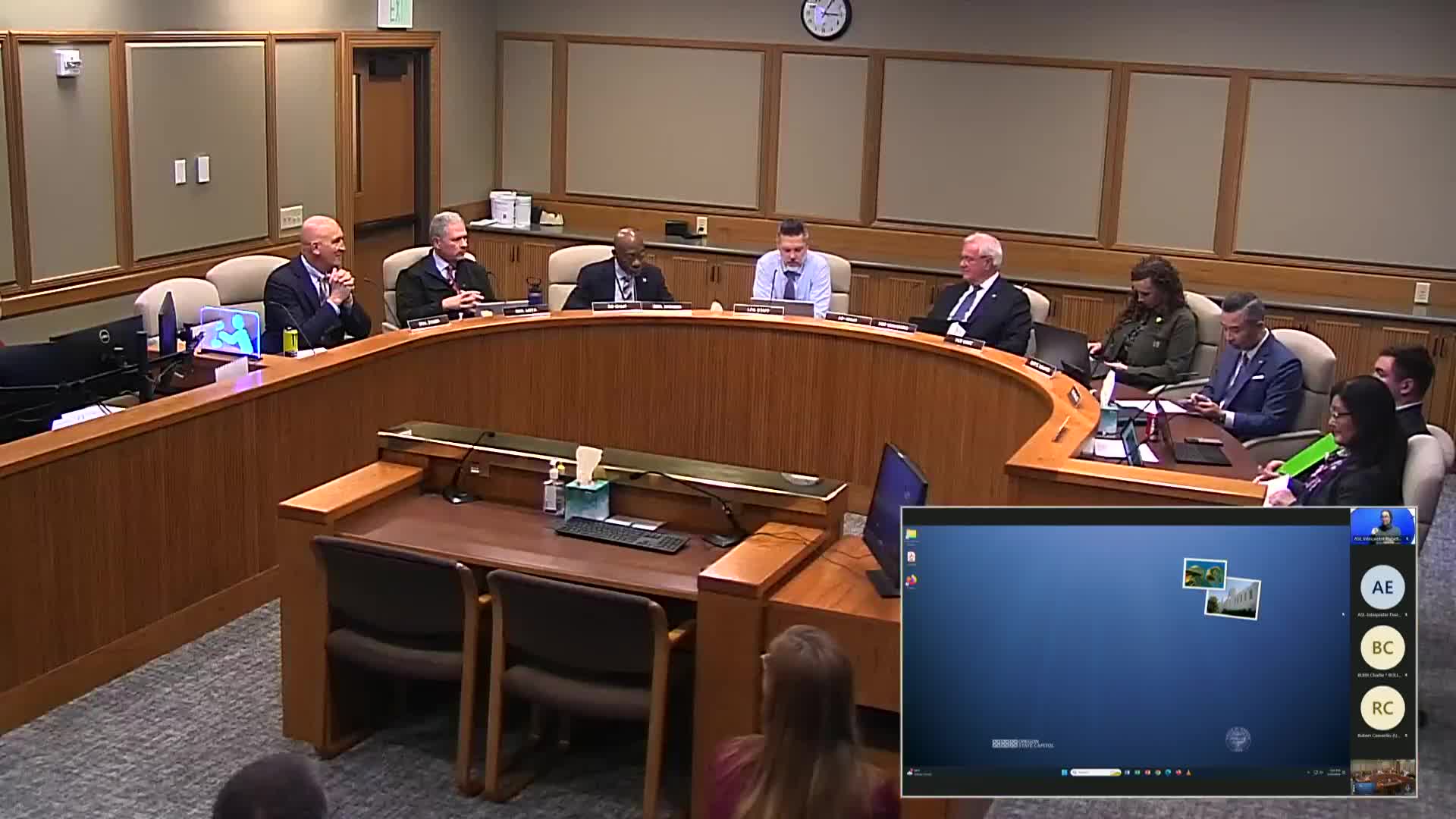
The Transportation and Economic Development Committee opened a public hearing on House Bill 5015, the Bureau of Labor and Industries (BOLI) budget bill, and heard hours of testimony urging the committee to fully fund the governor's recommended and agency‑requested budgets to reduce backlogs, hire investigators and support apprenticeship and prevailing‑wage enforcement.
Supporters told the committee that delays in investigating wage theft and civil‑rights complaints are harming workers who depend on timely pay and protections. "We need more people," said Angela Hastings Court, an administrative specialist 2 at the Bureau of Labor and Industries, describing how staff shortages divert employees from investigations to answering basic inquiries.
The testimony drew broad backing from labor unions, apprenticeship groups and many contractors. "I'm here really to testify in support of the governor's recommended budget and ask the committee to fully fund the full agency request budget to retain our professional staff and to reduce caseloads," said Anthony Castaneda of SEIU Local 503. David Berger, president of the Oregon State Building and Construction Trades Council, told the committee, "Most of us can't afford to wait 12 months for a paycheck," pointing to long delays in recovering stolen wages.
Several witnesses described specific operational limits at BOLI. "We have our case loads capped at about 50 investigations, active claims at a time per investigator," said Lenore Derrick, a compliance specialist in BOLI's Wage and Hour Division, adding that some claims assigned to her were filed in February 2022 or 2023. Felicity Ratway, a contract interpreter, said she filed a wage claim in November and was told "it could take BOLI up to 6 months to look at my claim."
Union and employer witnesses both said that adequately resourcing the bureau benefits workers and law‑abiding businesses. Paloma Sparks of Oregon Business and Industry and representatives of trade associations asked that the agency receive stable funding and emphasized BOLI's role in apprenticeship oversight and in ensuring a level playing field on public works by enforcing prevailing‑wage law.
Civil‑rights enforcement drew particular attention. "Civil rights intake forms have surged by 278%, and we are projected to receive over 10,000 cases this biennium," said Ibrahim Kulibali, a civil rights investigator and union leader at BOLI, urging the legislature to fund investigators to meet demand. Seth Johnstone of Basic Rights Oregon recounted calls from LGBTQ workers who wait months for a response after filing BOLI complaints.
Commissioner Christina Stevenson, who appeared before the committee, said recent actions aim to improve BOLI's ability to recruit and retain staff. Stevenson said a reclassification approved in the prior 10 days will address pay differentials, noting "that salary threshold goes away," and told the committee the bureau's package relies on other funds rather than new general‑fund authority: "BOLI's request is no general funds." She said adequate funding would allow BOLI to reopen roughly 89 cases that were closed and reduce future closures tied to staffing shortages.
Committee members asked about accountability and the causes of the backlog. Commissioners and witnesses traced the problem to multiple factors: an increase in filings following improvements to BOLI's online intake, a series of new employment laws that expanded BOLI's workload, and long‑running underfunding. Several legislators and witnesses also urged stronger penalties as a deterrent to wage theft while the committee considers funding and structural changes.
The hearing closed without a vote; the committee chair announced that HB 5015 public testimony was complete and recorded that the next meeting would address the Department of Veterans' Affairs budget. The record will be available through the committee and the Oregon Legislative Information System (OLIS).