Get Full Government Meeting Transcripts, Videos, & Alerts Forever!
Get email alerts on the Medical Examiner Eligibility topic
No spam. Unsubscribe anytime.
Oregon panel hears bill to let PAs and NPs serve as county medical examiners
Summary
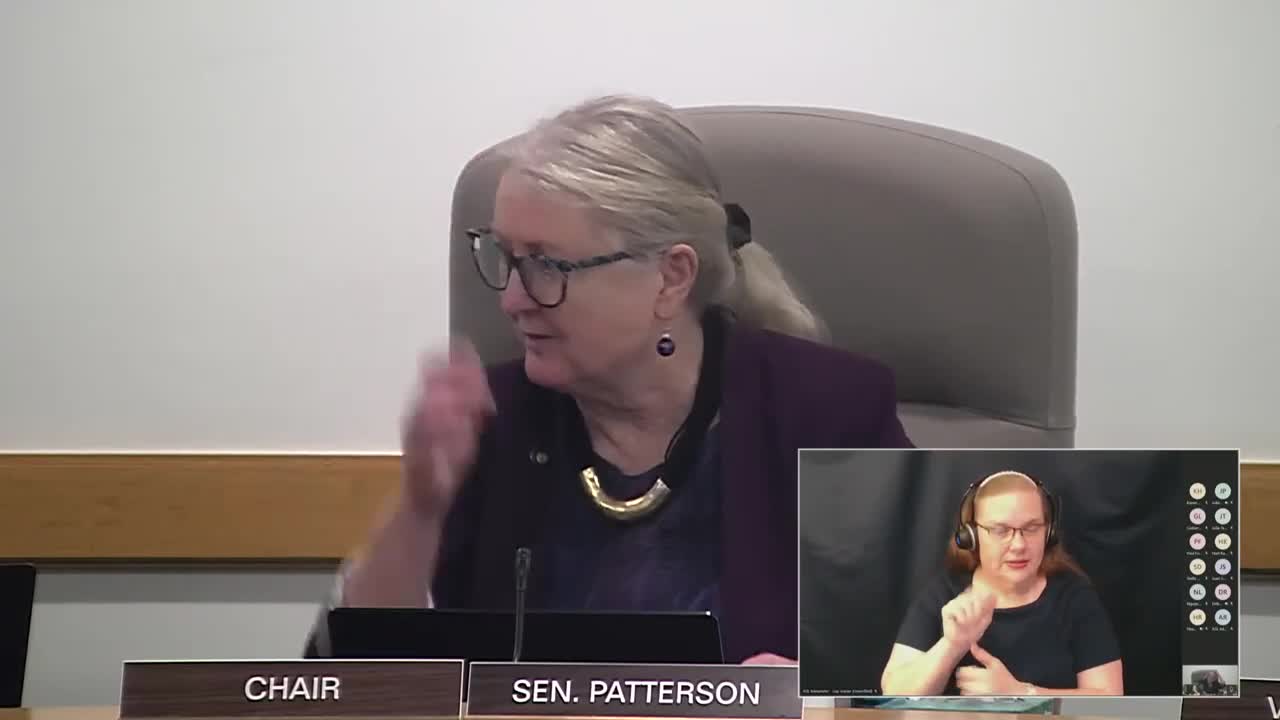
Senate Committee on Health Care Chair Patterson opened a public hearing on Senate Bill 536 on Feb. 25, 2025, a measure that would expand who may serve as a county medical examiner to include licensed physician assistants (PAs) and nurse practitioners (NPs).
Senate Committee on Health Care Chair Patterson opened a public hearing on Senate Bill 536 on Feb. 25, 2025, a measure that would expand who may serve as a county medical examiner to include licensed physician assistants (PAs) and nurse practitioners (NPs).
Supporters told the committee the bill is intended to address a shortage of physicians willing to serve as part‑time county examiners in rural and frontier counties. Tim Dooley, testifying on behalf of the Association of Oregon Counties, said the change would widen the pool of eligible clinicians and emphasized the measure is "a narrowly focused approach to address this issue." He added that "approximately 15 percent of all deaths statewide fall into a category that needs an investigation, with medical examiner involvement."
The bill’s sponsors and backers said it would leave forensic work such as autopsies and complex forensic testing to the chief medical examiner's office. Paul Fournier, Tillamook County commissioner, described a local vacancy: he said his county’s longtime examiner is retiring after 45 years and that recruiting physicians has been difficult. "We have our medical examiner ... who has served our county for 45 years. And he's leaving in June," Fournier said, urging support so counties can contract more broadly for examiner services.
Heather Robbins, president‑elect of the Oregon Society of Physician Associates, told the committee PAs are "trusted, rigorously educated and trained health care professionals" and said the Medical Examiner Improvement in Oregon work group recommended using PAs to expand medically trained personnel available to serve as medical examiners. Robbins and other witnesses said the change could be made without additional state spending.
Committee members asked clarifying questions about the scope of duties. Chair Patterson and other senators noted that the chief medical examiner's office would retain responsibility for autopsies and deeper forensic procedures, and speakers repeatedly described the bill as a targeted, operational fix for recruitment problems that especially affect rural counties.
The committee took testimony from county and clinician representatives and closed the public hearing on the measure without a floor vote. No formal committee action or vote was recorded at the Feb. 25 hearing.
Supporters suggested the measure would be implemented by counties contracting with eligible clinicians; opponents did not appear in the public hearing record.
The committee will consider next steps in subsequent business; the public hearing record is the basis for further committee deliberation.