Get Full Government Meeting Transcripts, Videos, & Alerts Forever!
Get email alerts on the Education Tspc Budget Licensing topic
No spam. Unsubscribe anytime.
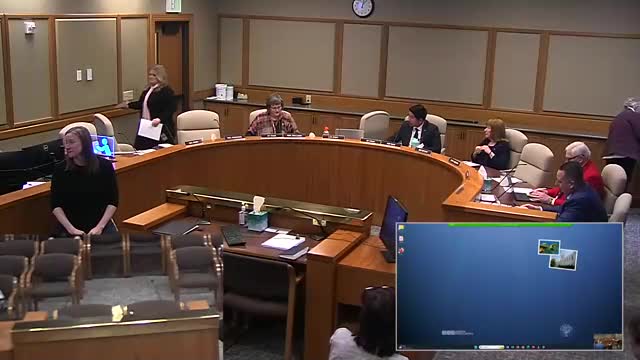
Informational hearing on House Bill 5,037 reviews TSPC budget, licensing backlog and e-licensing project
Summary
At an informational hearing on House Bill 5,037, Teacher Standards and Practices Commission leaders outlined the governor's budget request, a proposed transfer of the Oregon Administrative Scholars Program, progress on an e-licensing replacement, and a surge in misconduct complaints that has strained investigative capacity.
State education and budget officials briefed the Legislative Education Subcommittee on Feb. 25 about the Teacher Standards and Practices Commission’s (TSPC) governor’s budget request and operational pressures, saying the agency’s reliance on licensure fee revenue, a backlog of misconduct investigations, and planned technology upgrades are the most significant near-term challenges.
Stacy Chase, a budget and policy analyst with the Department of Administrative Services filling in for TSPC, told the committee the governor’s budget moves the Oregon Administrative Scholars Program out of TSPC and into the Higher Education Coordinating Commission to let TSPC focus on licensure and compliance. "Transferring the program allows TSPC to focus on its core responsibilities of licensure and compliance," Chase said.
The transfer is listed in the governor’s budget; committee members were briefed but took no legislative action at the hearing. Melissa Gough, interim executive director of TSPC, outlined agency priorities and constraints: "We ensure that Oregon schools have access to well trained, effective, and accountable educational professionals," she said, and added that TSPC is balancing that mission with rising agency costs.
Why it matters: TSPC regulates educator licensure, approves educator preparation programs and investigates alleged educator misconduct. The agency told lawmakers its revenue is mostly fee-based, general fund makes up less than 10% of total revenue, and rising personnel and services costs combined with some declines in application volume put pressure on its other-fund budget.
Key details
Budget and revenue mix: TSPC said personal services represent roughly 51% of its budget. The agency’s revenue is primarily other funds — notably licensure fees — with a small portion of general fund. TSPC reported a significant one-time increase in the 2023–25 biennium tied to one-time funding for an e-licensing system and temporary positions for investigations and application processing. The agency also reported a contract cost estimate for shared services with the Department of Administrative Services of $318,966, paid from license fees.
Licensing and fees: TSPC reported about 70,000 licenses held by roughly 60,000 licensees. The agency walked through recent license-fee history: basic license fees were $100 in 2014, the statutory cap was raised to $140 in 2015, and a later 2019 increase brought that basic fee to about $182. The legislature authorized collection of portal fees (up to $15) in 2021 to support an educator data system; TSPC said it now retains an additional $5 of the portal fee and received a $350,000 refund from its current e-licensing vendor to help offset implementation costs.
E-licensing system and staffing: TSPC said it is moving through procurement stage gates for a replacement e-licensing system and has added a permanent full-time IT position to implement the project if purchasing approval proceeds. The agency also warned that several limited-duration positions authorized in 2023 were not renewed; those roles had temporarily boosted capacity (TSPC reported 33.54 FTE during 2024 including limited-duration staff) and the loss of those positions is expected to slow processing in licensure and investigations.
Investigations and professional practices: TSPC told the committee the number of complaints rose sharply in 2024. The agency reported receiving 463 new complaints in 2024 (up from roughly 211 in prior years), completing 175 investigations that year, and having about 550 complaints pending as of Feb. 20, 2025. The agency said the average time to complete investigations in 2024 was about 13.2 months. Officials warned that recruiting investigators has been difficult because the temporary investigative positions are less attractive financially compared with comparable roles in districts or law enforcement; several candidates declined offers after learning the state salary.
Interagency investigations: TSPC described overlap with other agencies. Director-level staff said findings can differ between agencies because each uses different legal standards and scopes (for example, DHS findings, law enforcement outcomes and licensing-discipline findings may not align), and that difference can be confusing for victims and for districts.
Educator preparation, apprenticeships and early literacy: TSPC staff described work with the state’s 14 in-state educator preparation providers (and roughly 170 program-of-study listings) to implement updated educator-preparation standards, including early literacy requirements tied to prior legislation. The panel described a registered teacher apprenticeship pilot supported initially by $2 million in interagency funding (drawn from a $10 million appropriation to the Educator Advancement Council under 2023 legislation), noting the apprenticeship model requires extensive on-the-job hours and mentorship and currently operates with limited slots and no ongoing grants to expand statewide.
Programs to reduce barriers: TSPC reviewed programs intended to lower financial barriers for license-holders and candidates, including a license expense reimbursement program that TSPC said has served about 3,017 people statewide and reimbursed fees in ranges the agency reported as roughly $290 to $460 per recipient. The agency processed 755 checks to individuals through November 2024 related to the Administrative Scholars Program, but the total dollar amount reported in testimony was not specified.
Questions from legislators and agency responses: Committee members pressed TSPC staff on several points, including whether half of incoming applicants are out‑of‑state graduates (TSPC said roughly half of applications are from those with out‑of‑state diplomas or out‑of‑state program credentials, and that the current e-licensing system limits clear reporting), the agency’s process for triaging complaints (TSPC said child abuse and criminally mandated investigations receive prioritization and that grooming/boundary complaints are investigated but do not have the same statutory timelines as mandated abuse cases), and state-to-state comparisons of licensing fees (TSPC offered to gather comparators).
Votes and formal actions: The committee opened an informational public hearing on House Bill 5,037 and received testimony; no formal motions or votes were taken on HB 5,037 during this session.
Ending: TSPC staff told lawmakers the governor’s budget seeks programmatic changes intended to focus TSPC on licensure and compliance while moving some scholarship administration to the Higher Education Coordinating Commission; staff recommended continued legislative attention to recruitment/retention of investigators, the fee model that sustains most agency operations, and the e-licensing procurement timeline.