Get Full Government Meeting Transcripts, Videos, & Alerts Forever!
Get email alerts on the Reparations Task Force topic
No spam. Unsubscribe anytime.
Public hearing draws wide testimony on bill to create reparations task force for Black Oregonians
Summary
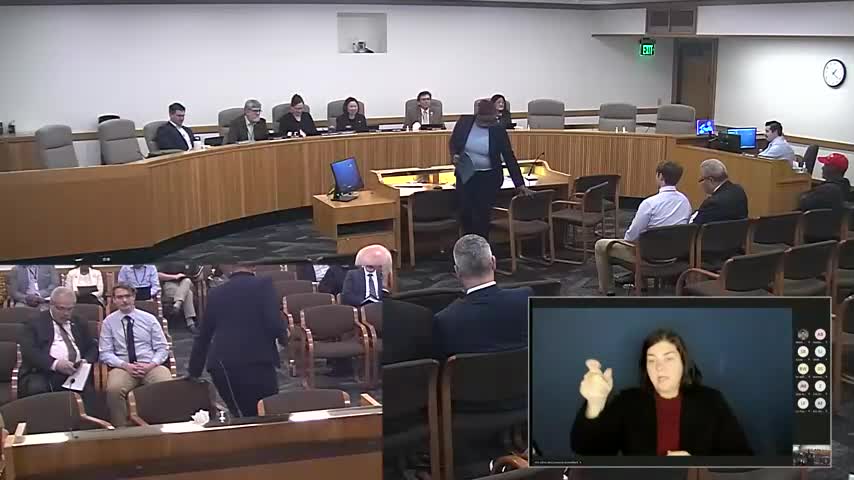
The House Committee on Emergency Management, General Government, and Veterans held a Feb. 25 public hearing on House Bill 2,995, which would create a task force to study and recommend financial and nonfinancial reparations for Oregonians of African American descent.
The House Committee on Emergency Management, General Government, and Veterans opened a public hearing Feb. 25 on House Bill 2,995, legislation that would create a task force to study and develop proposals for financial and nonfinancial reparations for Oregonians of African American descent.
Representative Travis Nelson, one of the bill sponsors, summarized Oregon's history of exclusionary laws and said the measure “is more than just a study, but a necessary and overdue step towards achieving true equity in Oregon.” Representative Shannon Jones Isidore, also a sponsor, recounted family history of denied land grants and said the task force would be a chance to “acknowledge the historic harm done to black communities and begin the necessary work towards deep reparative justice.” Senator Lou Frederick and Senator James Manning also spoke in support.
Speakers from across the state testified in favor of creating the task force. Liz Fotherbranch (Oregon Commission for Black Affairs), Susan Anglada Bartley (United Mutual Aid Network), Donovan Scribe (former Portland NAACP vice president), Zoe Piliafas (educator), Sheik Marquis Johnson Bey, Reverend Dr. W. J. Mark Knudson (Augustana Lutheran Church), and others described the long-term effects of exclusionary state laws, redlining, the Vanport flood and displacement in North and Northeast Portland, disparities in homeownership and wealth, and health-care access problems. Several witnesses cited Oregon's 19th-century “lash law,” the state's 1857 constitution language that barred Black people from living in Oregon, and other historical practices as the background for the task force.
Committee members asked procedural questions about the task force composition and pay. Representative Watanabe asked whether task force members would be paid and how residency would be defined; sponsors replied that the bill does not specifically provide pay for appointees and that the speaker, the senate president and the governor would make appointments. One committee member queried how the task force would determine who qualifies as an Oregonian for reparations; sponsors said the measure is designed to assemble experts and impacted-community members to make recommendations rather than prescribe eligibility in statute.
A few witnesses raised concerns and asked for clarity about scope and definitions. Tim Cowan, who identified himself as the chairman of the American Legion legislative commission (speaking personally), urged clear definitions of “victim” and of responsible parties and asked the committee to consider safeguards for educational materials. The committee took no vote and closed the public hearing after more than three hours of testimony.