Get Full Government Meeting Transcripts, Videos, & Alerts Forever!
Get email alerts on the Veteran Definition topic
No spam. Unsubscribe anytime.
Committee hears bill to align Oregon "veteran" definition with federal VA determinations
Summary
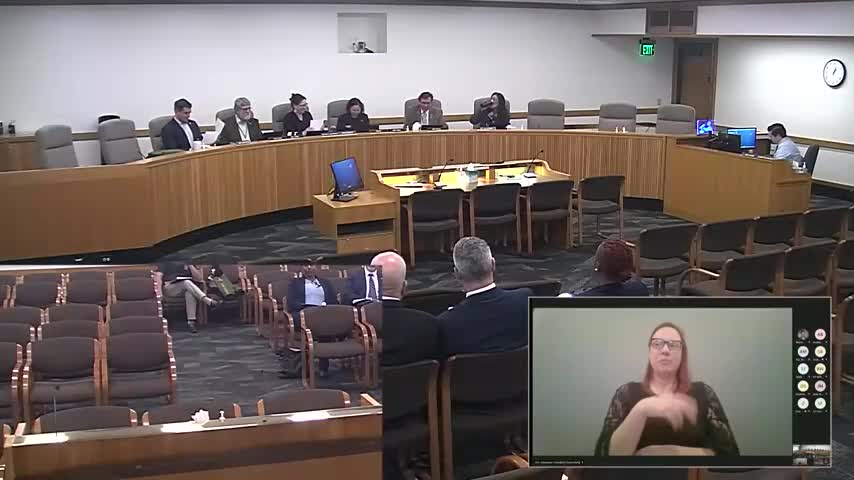
The House Committee on Emergency Management, General Government, and Veterans heard testimony Feb. 25 on House Bill 2,559, a measure that would expand Oregon's statutory definition of “veteran” to recognize individuals the U.S. Department of Veterans Affairs treats as veterans for federal benefits and to accept USDVA documentation as proof of status.
The House Committee on Emergency Management, General Government, and Veterans held a public hearing Feb. 25 on House Bill 2,559, which would change Oregon's statutory definition of “veteran” and related provisions to align with federal practice and allow a U.S. Department of Veterans Affairs applicant summary of benefits letter as documentary proof of veteran status.
Dr. Nikkia Townsville Daniels, director of the Oregon Department of Veterans Affairs, told the committee the U.S. Code (38 U.S.C. 101) defines a veteran for federal benefits as someone who served in active duty and was discharged under conditions other than dishonorable, and that many states use the federal definition. “The Oregon Department of Veterans Affairs encounters many veterans that do not meet the requirements of ORS 408.225, but would qualify as a, as a Veteran under the current U. S. Department of Veterans Affairs or the USDVA policy,” Daniels said. She added the bill would expand Oregon’s definition to include people who are recognized by the U.S. Department of Veterans Affairs but previously were denied state benefits because of language in ORS 408.225.
Joe Glover, appeals and special advocacy division director at ODVA, explained how the VA reviews service records and can issue a “character of service” determination that makes an individual “honorable for VA purposes.” In response to committee questions about whether felony convictions would be included, Glover said: “So the answer is no.” Committee members also asked whether the bill would change active-duty time requirements; Glover and Daniels said it would not.
Daniels said ODVA does not currently have a count of how many veterans would be affected but that the agency plans to develop demographic data: “We don't have the numbers, but we do have quite a few stories of veterans who've been impacted.” Later in the hearing a member of the public asked about funding for expanded benefits; Daniels responded that “there is no FIS associated with this change, so there'll be no financial impact to the state.”
No committee vote on HB 2,559 was recorded in the transcript; the chair closed the public hearing and moved on to a separate bill.