Get Full Government Meeting Transcripts, Videos, & Alerts Forever!
Get email alerts on the Child Tax Credit Expansion topic
No spam. Unsubscribe anytime.
Supporters tell Oregon committee SB 694 would raise and widen Oregon Kids tax credit
Summary
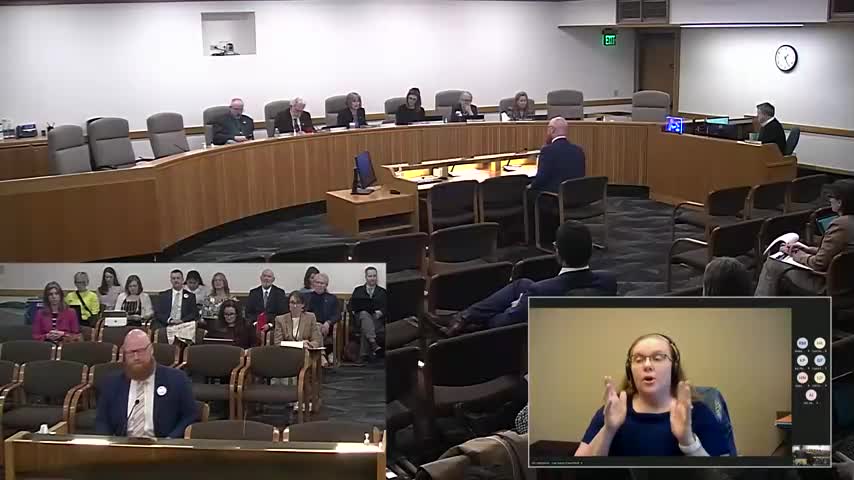
At a Feb. 25 public hearing, proponents urged the Senate Committee on Early Childhood and Behavioral Health to pass Senate Bill 694, which would increase the Oregon Kids child tax credit and expand eligibility to reach more working families.
During a Feb. 25 public hearing of the Oregon Senate Committee on Early Childhood and Behavioral Health, Daniel Hauser, deputy director of the Oregon Center for Public Policy, urged support for Senate Bill 694 (SB 694), a proposal to raise the state’s child tax credit and expand eligibility to include more working families.
"A modest bump in the credit amount to go from $1,000 to $1,200 per year per child would make it to where a family would effectively be receiving $100 per month per kid," Daniel Hauser said, summarizing the bill’s main numerical change. He told the committee the Oregon Kids program reached about 36,000 families in its first year and that nearly $40 million had been paid to families who made less than $30,000 a year.
Why it matters: supporters said the credit reduces child poverty and disproportionately helps rural families and families of color. "Investing in the kids credit means a healthier, more secure children and families across Oregon," Grace Fortson, policy and advocacy manager for Our Children Oregon, said on behalf of a statewide coalition.
What SB 694 would change: Hauser described three targeted adjustments: increasing the credit from $1,000 to $1,200 per child; shifting the phase‑in start from $25,000 to $35,000; and raising the upper eligibility limit to $45,000. He said those changes would allow full benefits for some full‑time minimum‑wage workers who currently receive nothing under the existing limits.
Evidence and distribution: Hauser pointed committee members to Department of Revenue distributions from the first year of the state credit and said the policy disproportionately reached rural households and children of color. He noted academic literature finding federal child‑tax‑credit investments yield long‑term returns, citing research that estimates a high public‑return ratio for early childhood investments.
Public testimony: two remote witnesses who spoke in favor were Hillary Nichols, a Southeast Portland mother and community health‑center organizer, and Grace Fortson of Our Children Oregon. Nichols said her household faced sharply higher costs after childbirth and that SB 694 would ensure "someone making minimum wage would actually qualify for the full Oregon kids credit," which she said is not the case now.
Questions and next steps: Vice Chair Anderson asked for projections of the number of newly eligible families; Hauser said he did not have that data on hand but expected coordination with the Department of Revenue and the Legislative Revenue Office to provide estimates. No vote was taken during the hearing.
Ending: Hauser and the witnesses asked the committee to move SB 694 forward as a pragmatic, targeted expansion to reduce child poverty and to smooth families’ pathways off public supports.