Get Full Government Meeting Transcripts, Videos, & Alerts Forever!
Get email alerts on the Rx Kids Cash Prescription topic
No spam. Unsubscribe anytime.
Michigan’s Rx Kids program prescribes cash in pregnancy and early life, presenters tell Oregon committee
Summary
At a Feb. 25 informational session of the Oregon Senate Committee on Early Childhood and Behavioral Health, Rx Kids directors described a maternal and infant cash-prescription model used in Michigan that combines TANF, philanthropy and a private administrator to deliver prenatal and early-life payments and reported early outcomes.
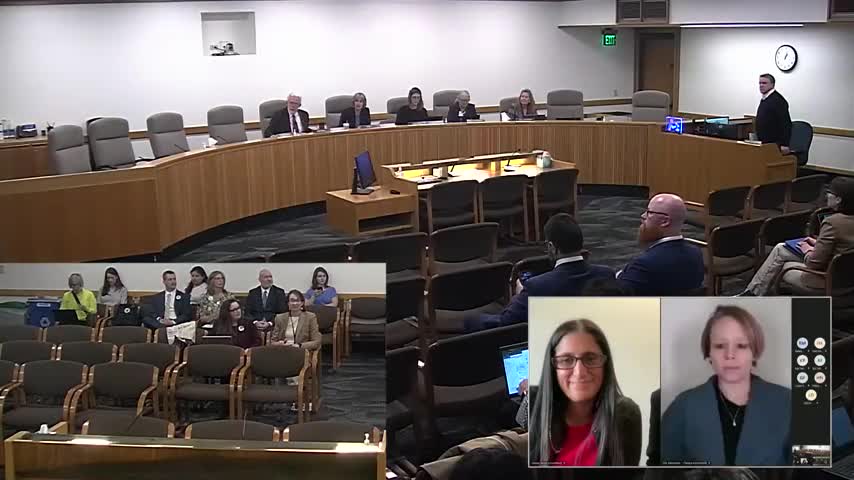
At a Feb. 25 meeting of the Oregon Senate Committee on Early Childhood and Behavioral Health, Dr. Mona Hanna-Attisha, a pediatrician in Flint, Michigan and director of Rx Kids, and Dr. Luke Schafer, a professor of public policy at the University of Michigan and co‑director of Rx Kids, described a cash‑prescription program that delivers direct cash payments in pregnancy and the infant period to reduce poverty’s harms.
The program in Flint, the speakers said, provides $1,500 mid‑pregnancy and then monthly payments after birth; together the presenters described a $7,500 total support package targeted at moms and infants. "As a pediatrician ... it is so frustrating to have my hands tied and not to be able to prescribe something to treat a root cause of what makes our children, our families, and our communities sick, and that's poverty," Dr. Hanna‑Attisha said.
The senators opened the informational to learn how Rx Kids works and whether Oregon could adopt similar elements. "Rx Kids is what we call a prescription for health, hope, and opportunity," Dr. Schafer said, describing it as "a maternal and infant cash prescription program." He explained that the Flint rollout used a mix of federal Temporary Assistance for Needy Families (TANF) funds and philanthropic dollars to expand reach and avoid harming other public benefits.
Why it matters: presenters tied the program to early‑childhood development and public health outcomes. Dr. Hanna‑Attisha stressed that the prenatal and first‑year window is the peak point of poverty and a critical period for brain development; she said Rx Kids focuses support on that window. The program is designed to avoid a benefits cliff and not to count as income for SNAP, WIC or Medicaid, according to Dr. Schafer.
Details and evidence: presenters said the Flint launch in January 2024 reached near‑universal coverage in the target population by matching vital records and birth certificates. Dr. Hanna‑Attisha said the initiative had "prescribed over $6,000,000 to over 1,500 families" and reported reductions in housing instability, diaper hardship and postpartum depression, increased prenatal care engagement, lower third‑trimester smoking, and improvements in birth weight and gestational age. Dr. Schafer said the program used an established administrator, GiveDirectly, "to do the enrollment, the verification, the safeguarding, the fraud detection." He described a TANF funding path that covered a prenatal payment plus three monthly payments for Medicaid recipients while philanthropic funds were used to make the program universal and reduce stigma.
Expansion and replication: Dr. Hanna‑Attisha said Rx Kids expanded from Flint to Kalamazoo and to five counties in Michigan’s Upper Peninsula, and that other states with unspent TANF funds have expressed interest. "We would not be doing what we're doing without the state of Michigan support," she said, and the presenters pointed committee members to a policy playbook at rxkids.org.
What the committee discussed: senators and witnesses linked Rx Kids to child‑welfare prevention, arguing that giving families resources during pregnancy and infancy could reduce neglect investigations and foster‑care placements. Committee members noted differences between the program design components described by the two presenters — Dr. Hanna‑Attisha described a universal $1,500 prenatal and $500 monthly for the first year totaling $7,500 per child, while Dr. Schafer explained the use of TANF for four payments (one prenatal and three monthly) with philanthropy topping up universality — and the witnesses said philanthropy was necessary to avoid counting the benefit as income and to protect existing benefits.
Ending: presenters and senators framed Rx Kids as one model Oregon could study further. Dr. Hanna‑Attisha said the project’s materials and a policy playbook are available at rxkids.org.