Get Full Government Meeting Transcripts, Videos, & Alerts Forever!
Get email alerts on the Land Use topic
No spam. Unsubscribe anytime.
Senate committee hears bill to bar certain PRC entities from buying farmland in exclusive‑farm zones
Summary
Senate Bill 641 would prohibit the People’s Republic of China and related entities from acquiring real property zoned for exclusive farm use; sponsor cited national‑security concerns near military operations areas and proposed amendments to exempt entities vetted through federal national security review.
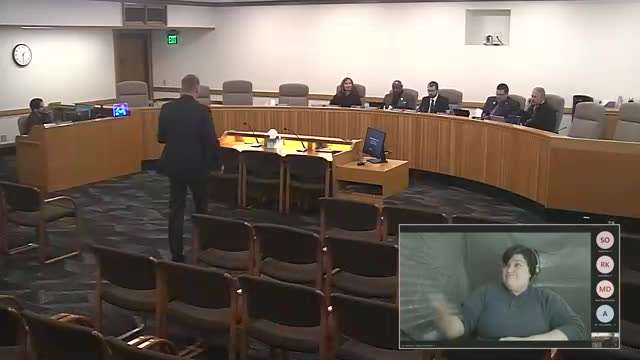
The Senate Committee on Veterans, Emergency Management, Federal and World Affairs held a public hearing on Senate Bill 641, which would bar the People’s Republic of China, its agencies or entities subject to its jurisdiction from acquiring real property or property interests in parcels zoned for exclusive farm use in Oregon. Under the bill as presented, instruments or agreements in violation would be void and would apply to instruments executed on or after the bill’s effective date.
Senator Daniel Bonham, sponsor of SB 641, said concerns that prompted the draft arose after military leaders at Kingsley Air National Guard Base notified him the base is transitioning from older fighter aircraft to the F‑35 and that some nearby parcels of land had been purchased by Chinese nationals. Bonham told the committee, “We don't want a foreign adversary to buy land in the United States and to set up probes and mechanisms to try and detect our military assets.” He described the bill as part of a national pattern: he listed 22 states that have adopted or proposed similar restrictions on foreign ownership of agricultural land.
Bonham said he has drafted two amendments. One would exempt entities that have been vetted through the Committee on Foreign Investment in the United States (CFIUS) via a national security agreement; another would remove or narrow the People’s Republic of China–specific language to address concerns raised by stakeholders. He said those amendments had not yet been posted but would be available for committee consideration.
Committee members who spoke expressed support for addressing foreign purchases near sensitive military areas but also raised procedural and federal‑state jurisdiction questions. Senator David Brock Smith said he supports the bill and noted the broader economic context of Chinese interest in foreign farmland. Committee staff said additional witnesses (including a lieutenant colonel from the airbase and a Major General) may present unclassified briefings at a later date.
No formal vote was taken; the hearing was informational and committee staff said modifications and amendments will be circulated and the bill will be scheduled for further consideration.