Get Full Government Meeting Transcripts, Videos, & Alerts Forever!
Get email alerts on the Family Law Parenting Time topic
No spam. Unsubscribe anytime.
Oregon House Judiciary Hears Widely Divided Testimony on HB 3095, a Rebuttable Presumption for Equal Parenting Time
Summary
A public hearing on House Bill 3095 drew parents, mental-health professionals, judges and advocates who sharply disagreed about whether a rebuttable presumption of equal parenting time would benefit children, burden survivors of domestic violence, or reduce litigation. The committee carried the measure and related work sessions to a later date.
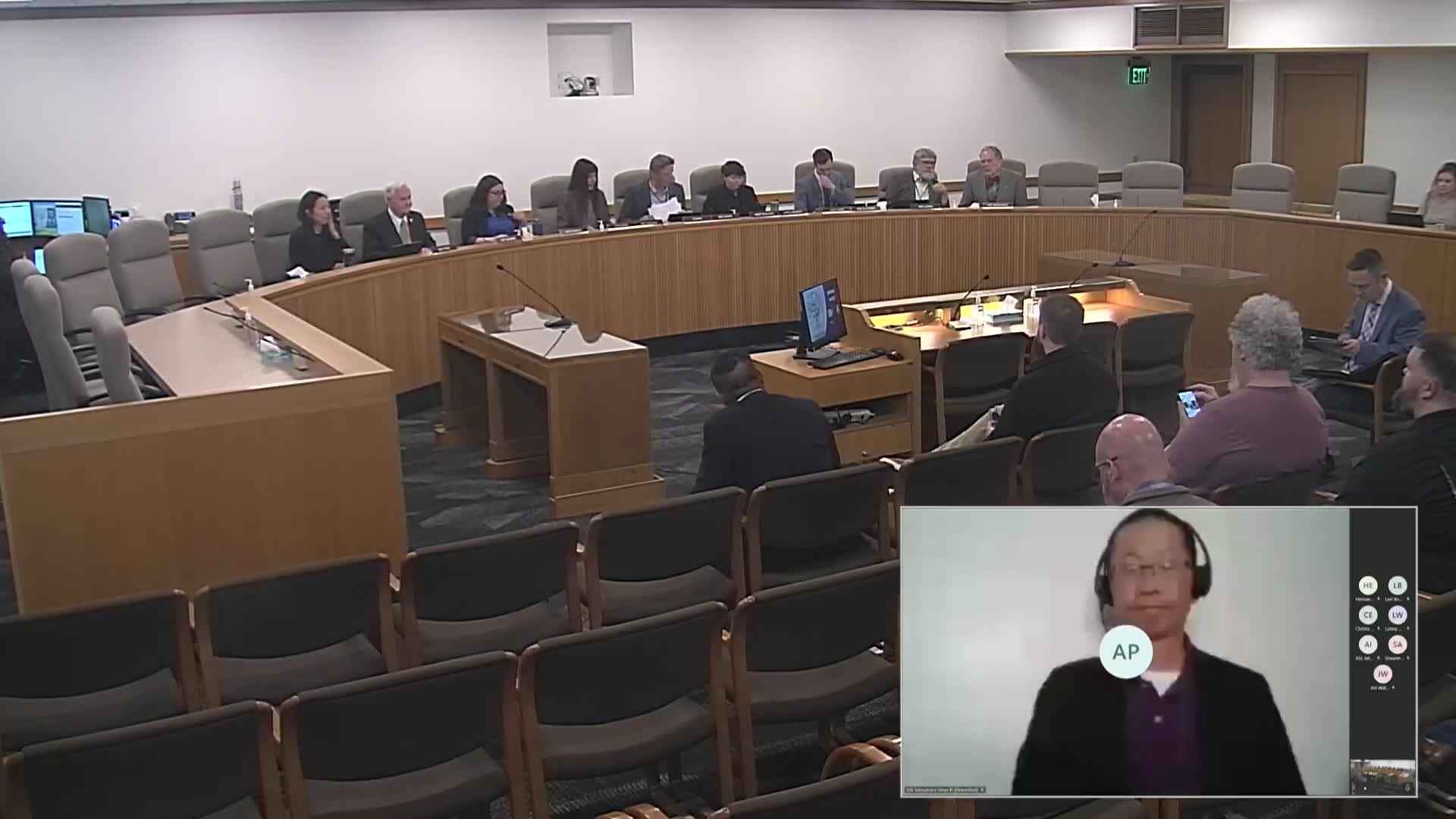
Salem — The House Judiciary Committee opened a public hearing Feb. 25 on House Bill 3095, which would create a rebuttable presumption that equal parenting time is in the best interest of a child when parents dissolve a marriage. Representative Rick Lewis, sponsor and House District 18 lawmaker, told the committee the measure is a redraft requested by Justice Miller and intended to bring “clarity” and consistency to parenting-time decisions across the state.
Supporters told the committee that presumptive equal parenting time would keep both parents engaged in their children’s lives and reduce the emotional and financial toll of prolonged custody disputes. “This bill gives Oregon an opportunity to modernize presumptions of family law into our current century,” testified Jess Miller, who identified himself as a family doctor and father. Seth Lazier, who said he works as an ADA advocate for low-income people in family law, and several other fathers and parents described long court battles and enforcement problems and argued that the bill would help many families regain parental contact and reduce costly litigation.
The bill’s text would require a court, when developing a parenting plan, to presume equal parenting time is in the child’s best interest unless the presumption is rebutted by evidence showing it would not be in the child’s interest or would endanger the parties’ safety. Representative Lewis summarized that, if the presumption is rebutted, “the measure requires the court to develop a parenting time schedule that maximizes practical parenting time with each parent.” Committee members repeatedly noted that the statutory standard the bill would amend is ORS 107.137 (best interest of the child).
Opponents, including clinical social workers, psychologists and a sitting circuit court judge, said the presumption would undermine individualized, child-centered decision making. “There’s not a one-size-fits-all situation and safety really has to remain at the top of all decisions that are being made,” said Lori Bonover, a licensed clinical social worker who said she has worked in family-law evaluations for more than 25 years. Lonnie Webb, a licensed clinical social worker with three decades of forensic and child-development work, argued the proposal conflicts with attachment research and would “handcuff judges” by prioritizing a preset time-sharing outcome over individualized assessments.
Judge Sean Armstrong, a Marion County circuit court judge who said he runs settlement conferences and mediations, told the panel that most family cases settle and that family-law decisions require case-by-case attention: “The level of complexity of making a parenting plan is incredibly high,” he said, arguing that an artificial statewide default could make difficult cases worse rather than easier to resolve.
Several witnesses who support the bill said delays and procedural dynamics often reshape the practical facts a judge must consider. Jonathan Bernstein described a custody dispute that became lengthy and costly after delays, and said a presumption would have preserved an existing 50/50 arrangement rather than allowing circumstances to drift while a case waited to be heard.
Several speakers raised child-safety and domestic-violence concerns from opposing perspectives. Jess Miller told the committee he had provided DOJ and DHS statistics in his written testimony and said other states that adopted presumptions saw declines in some forms of post-dissolution conflict; he also said the bill would not alter criminal or child-protection statutes. Opponents warned survivors that the bill shifts the burden to people seeking protection; Lonnie Webb said the measure would require victims to “prove why equal parenting time is not safe,” potentially triggering retaliation and making it harder for courts to identify less-visible forms of coercive control.
Other practical concerns included enforcement and court resources. Steve Bella described efforts to enforce a court-ordered equal parenting plan in Deschutes County and said judges had issued orders denying him court-ordered contact without findings of fact or conclusions of law. Several witnesses and attorneys told the committee that Oregon has few custody evaluators and mediation or evaluation capacity in some counties is limited, a problem witnesses said could make rebuttal procedures difficult to carry out in practice.
Speakers on both sides noted the bill is rebuttable — not an absolute mandate — and many encouraged amendments to protect victims, clarify judicial authority and ensure findings when a court denies court-ordered time. Sybil Hebb of the Oregon Law Center urged adherence to existing statutes and said survivors of domestic violence frequently rely on legal assistance to craft safe parenting plans; she warned that forcing parties to overcome a presumption could be “complex and hard for folks.”
The committee closed the public hearing with no floor votes. Chair Croft said the body would carry over several work sessions to a later day to allow more time for consideration. The public record for HB 3095 will remain open and the committee plans additional work sessions to consider amendments and testimony.
What the bill would do and next steps
House Bill 3095 would establish a rebuttable presumption that equal parenting time is in a child’s best interest and would direct a court to consider only the child’s best interest and the parties’ safety in developing a parenting plan; if the presumption is rebutted, the court must maximize practical parenting time for each parent. Committee members carried the measure’s work sessions to a later date for further review; no vote was taken during the Feb. 25 hearing.
Voices from the hearing
Supporters emphasized enforcement problems, the emotional and financial cost of litigation, and family-law delays that change custody facts over time. Opponents emphasized attachment and developmental research, special needs and geographic impracticalities, the risks of shifting burdens to survivors of violence, and the limited supply of evaluators and mediation resources in parts of Oregon.
The committee’s next formal actions will depend on the work-session schedule the Judiciary chair sets; the hearing record remains open.