Get Full Government Meeting Transcripts, Videos, & Alerts Forever!
Get email alerts on the Public Transit topic
No spam. Unsubscribe anytime.
DeKalb council hears detailed review of proposed Route 19 changes; staff to return in March
Summary
City staff described efforts to simplify and keep Route 19 on schedule by removing a low‑use segment and making the route a continuous loop; public commenters urged preserving stops that serve workers and essential destinations.
City of DeKalb transit staff presented proposed changes to Route 19 at the Feb. 24 City Council meeting and said they will return with a final schedule at the council’s first March meeting.
The presentation by Transit Manager Mike Neuenkirchen and Assistant Transit Manager Brian Van Heiner explained that Route 19 had split into four different patterns over time, producing inconsistency riders dislike and causing schedule delays. Staff said they consolidated the route into a continuous loop serving Northern Illinois University, downtown, Park 88 and the industrial area and extended service to run seven days a week and overnight to align with 24‑hour employer shifts. To improve on‑time performance staff proposed removing a small section that runs on North First Street up to Hillcrest and then to Seventh and Pleasant; that segment, they said, is covered by other routes except for one stop near the middle school that has only existed about nine months.
The change is intended to save about 10 minutes per loop and give drivers short breaks that will help keep the loop on schedule. Staff said the route’s ridership rose sharply after previous schedule expansions — to about 2,500 annual rides on Route 19 — and that the service’s primary demand comes from industrial employers. Staff also stressed that Route 19 does not serve the DeKalb County Health Department; that stop is served by Route 18 and was not on the table for removal.
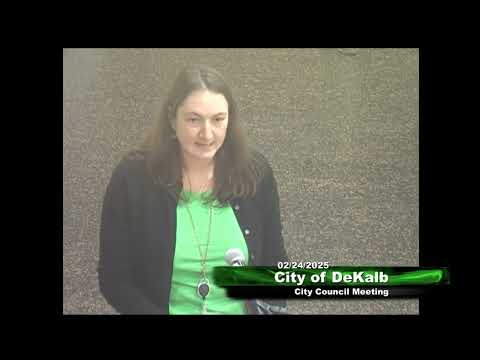
Several residents urged the council to retain stops that serve workers and essential destinations. Lynn Wen, who spoke during public participation, said Route 19 is a lifeline for people who rely on transit for jobs, school and grocery access and asked the council to “find solutions that enhance this vital service.” Aldermen pressed staff on data: riders at the specific North First Street stop, staff said, averaged about four people in a six‑month period and the KinderCare and Seventh Street segment is covered by Routes 17 and 18.
Council members and staff discussed constraints on adding service. Staff said federal formula and grant dollars (Federal Transit Administration funding) limit how many vehicles and hours can be added without additional funding; they said they would monitor peak‑time loading and could add limited peak trips if demand grows. Alderman Susada asked what ridership threshold would justify another bus; staff replied there is no single number but that they would consider additional peak trips when buses fill repeatedly at peak commuting hours.
The council indicated general support and asked staff to finalize notices and come back at the first March meeting with the revised schedule so changes can take effect after spring break.