Get email alerts on the Special Education topic
No spam. Unsubscribe anytime.
West Valley special education reports rising caseload, inclusion steps and expanded transition programming
Summary
District special education leaders told the board Feb. 25 that special education enrollment rose during the school year, inclusion rates remain above state average, and the district expanded behavior supports and transition/vocational opportunities for older students.
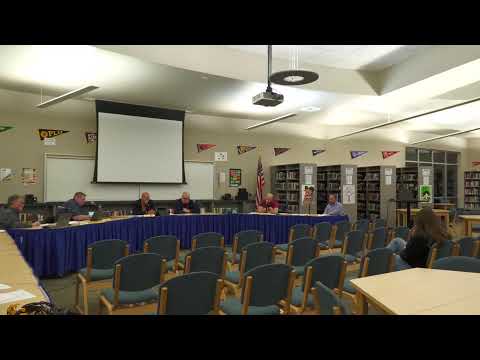
Special education leaders for West Valley School District presented an annual update Feb. 25 outlining enrollment, inclusion data, and transition‑to‑work programs.
"We are at 827 students currently who qualify for special education services," Susan Allmison, director of special education, told the board. She said the district began the year with 793 students and that a cluster of transfers and several students with higher needs drove the increase.
Allmison and Stephanie Melton, assistant director of special education, reported that the district’s inclusion metric (students who spend 80–100% of the day in general education, LRE 1) likely remains above the state average, but that the district saw a modest dip because several more‑impacted students moved into the district and a small number of students required more specialized settings this year. "We had quite a few, I think it was around 11 students who are pretty impacted with their disabilities move into the district this year," Allmison said.
Leaders described steps to support inclusion and student success: assigning every elementary special‑education student to a general‑education class roster from the start of the year; expanding district behavior‑support staffing to strengthen MTSS for behavior and social‑emotional learning; individualized "badge books" that align IEP goals with classroom tasks; and a focus on augmentative and alternative communication (AAC) for non‑vocal students.
At the secondary level, Melton described work to align individualized education program (IEP) goals with standards‑based grading and priority standards used in district classrooms. Melton said graduation rates for students receiving services showed a slight dip but remain improved relative to pre‑pandemic numbers; she noted the end of COVID waivers and a recent change that extended the age for special education services to 22 contributed to program shifts.
Melton outlined the district’s transition and vocational efforts: a transition program for ages 18–22 that provides roughly 2.5 hours per day of community‑based work (examples cited include Ray's Market, Ace Hardware, Summit View Thrift and a Pegasus equine program) and a pilot vocational partnership with another district (SD 105) to provide skill‑level‑appropriate job training.
Board members asked how the higher caseload occurred; Allmison said increased student transfers and more students with higher support needs accounted for the jump. Board members also requested more routine visibility on safety and security evaluations and on how instructional support practices are tracked; administrators said they will bring additional reports when feasible.
The board thanked Allmison and Melton for tying the special education work into the district strategic plan and for concrete examples of inclusion and transition supports.
AI generated
The text on this page is AI generated. Summaries, highlights, analysis, and video transcripts are all produced from the original source material.
AI can make mistakes, so if you spot one, and we will fix it for everyone.
Note: the source content is unaltered by us. Any content source we link to, be it a video, an audio recording, or a document, is presented exactly as its publisher released it. That publisher is usually a government body, sometimes an individual official or another organisation.