Get Full Government Meeting Transcripts, Videos, & Alerts Forever!
Get email alerts on the Board Governance Self Evaluation topic
No spam. Unsubscribe anytime.
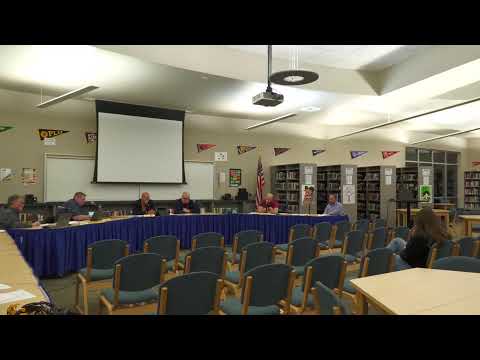
West Valley board reviews WASDA self‑assessment, plans goals and communications push
Summary
The West Valley School District board held a facilitated debrief of a board self‑assessment on Feb. 25, identifying communication and process clarity as near‑term priorities and agreeing to develop explicit board goals and more public-facing explanations of routine work.
The West Valley School District Board of Directors met Feb. 25 for a facilitated debrief of its board self‑assessment and discussed next steps for board goals, public communication and processes.
Cindy McMullen, a representative of the Washington Association of School Directors (WASDA) who led the session, said the board’s responses showed strengths across governance standards but also identified areas for improvement. "There is no way to do all these in the 4 category every year," McMullen told the board, urging it to pick targeted priorities to improve while sustaining areas of strength.
The assessment the board reviewed grouped board standards into categories such as responsible governance, setting high expectations for student learning, creating conditions for district success, accountability for learning and community communication. McMullen said the district scored well across standards 1, 2, 3 and 5 (governance, expectations, conditions and communication), with some divergence around standard 4 (use of data and accountability).
Board members who spoke during the debrief repeatedly raised communication and process clarity as areas to address. Several board members praised the accessibility of meeting materials and recordings but said the district should do more to highlight routine successes and to make specific reports (for example, safety evaluations and superintendent expectations) more visible to both board members and the public.
"Please don't ask my staff to invent anything more new," McMullen said, recommending the board reuse existing presentations and materials (for example, the special education presentation from the same meeting) as communication tools the board can carry into community conversations. She also suggested using a short standardized cover sheet for agenda items (budget impact, community engagement, history, who is affected and why the board is addressing it) so the public sees consistent background information before discussion.
Board members discussed practical next steps: schedule a board retreat or workshop to set annual board goals aligned to the district strategic plan; identify specific communication actions (news items, service‑club briefings, or community forums); and ask staff for regular reports on areas where some members said they lack visibility, such as safety/security evaluation practices or the details of ongoing instructional supports.
Superintendent Dr. Finch said the timing of the self‑assessment was intentional to allow newer board members to become familiar with district practice before setting board-level priorities. Finch and McMullen both said the board should continue discussion at a future meeting and consider a summer retreat to finalize board goals that align with the district strategic plan.
Board members agreed to continue the conversation and to bring suggested formats for goal‑setting and communication to future meetings.