Get Full Government Meeting Transcripts, Videos, & Alerts Forever!
Get email alerts on the Community And Business Surveys topic
No spam. Unsubscribe anytime.
Moline City to run National Community and Business surveys to inform strategic plan
Summary
Polco representative outlined methodology, sampling and timeline for the National Community Survey and National Business Survey; council members pressed on district-level sampling, language access and overlap with existing local surveys.
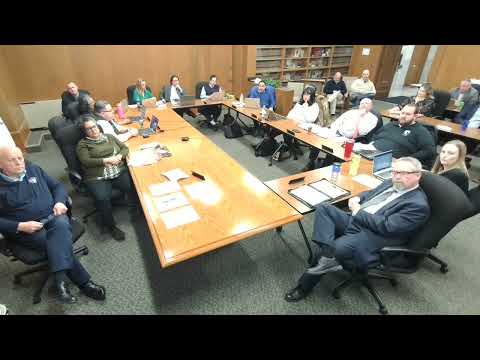
Moline City Council heard a presentation Wednesday on the National Community Survey and National Business Survey that city staff plan to use to shape the next strategic plan and FY26 budget cycle.
The presentation, led by Alec Vyse of Polco, said the surveys will produce scientifically valid baseline data about resident and business sentiment and offer custom benchmarking and follow-up engagement tools.
Polco’s national community instrument uses a random household sample (Polco recommended a 3,000-household sample for Moline) and a six-week data-collection window, followed by reweighting against census demographics to produce a scientifically valid result. Households invited by postcard receive a unique URL and QR code; paper surveys are mailed to respondents who request them. The firm said the average completion time is about 15 minutes and that an open-participation version will run during the survey’s final two weeks so non-sampled residents can still respond. Results are delivered as a long PDF and an interactive Tableau report.
"The goal of everything that we do is to provide local government decision makers with the data they need to make those decisions, make them effectively, make them decisively," Alec Vyse, Polco representative, told the council.
Council members pressed Polco on several practical details. Council Member Schmidt asked how volunteer or self-selected respondents would be handled; Vyse said those responses are kept as a separate dataset and the scientifically valid sample remains the primary analytic product. Council Member Castro asked about language access; Vyse said Polco can provide surveys in additional languages (Spanish most commonly) and recommended adding a demographic question on primary language to help distinguish browser translation from native-language responses.
Members debated geographic breakdowns. Council Member Timmy said district-level (ward-by-ward) results could help shape neighborhood initiatives, while others urged caution about splitting samples along ward lines and suggested using neighborhood groupings or precinct aggregations so smaller areas aren’t underpowered. Vyse said Polco can accommodate subgeographies but sample size and oversampling choices affect margin of error.
On the business survey, Polco described a different approach: a mailed census or sample of up to 4,000 businesses located within city corporate limits, addressed to owners or managers. The business instrument is broader in scope and intended to measure overall business climate; Polco advised custom questions where the council needs targeted answers. Several council members raised concerns about redundancy with existing business surveys conducted by the school district, chamber and the state, and asked staff to clarify what unique information the city hopes to gain.
"If we're not a business-friendly community, the question is what's driving people to say that? Because we can't address it if we don't know what their reasons are," Council Member Bob said during the discussion, urging a clear goal for the business instrument.
Vyse also described Polco’s add-on data products, including a large indicator dataset and cross-community benchmarking that combine sentiment data with public metrics (unemployment, demographic indicators) for comparative analytics.
City staff asked the council for up to three to five custom questions to include in the community instrument. Staff said they will collect council input quickly — roughly within a week — so the survey team can finalize questions. The city aims to have results available by June to inform a fast strategic planning session and summer budget work.
Polco recommended limiting substantive wording changes to benchmark questions if Moline wishes to preserve comparability with other communities; council members confirmed they would weigh trade-offs between local specificity and national benchmarking.
Next steps: staff will solicit custom-question proposals from council members and return with a finalized survey package and timing for launch.