Get Full Government Meeting Transcripts, Videos, & Alerts Forever!
Get email alerts on the Housing Blight Vacant Properties topic
No spam. Unsubscribe anytime.
Commission hears update on vacant-property registry; staff proposes ordinance changes and vendor software
Summary
Logan Cobbs, community development director, presented proposed changes to the Vacant Property Registry ordinance and a revenue-neutral software and administration agreement with PERA Property Registry LLC to improve ownership tracking, inspection and enforcement.
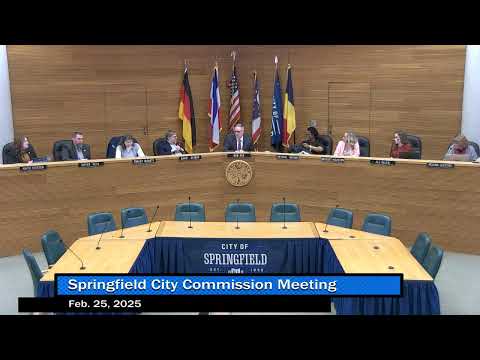
Logan Cobbs, director of community development, briefed the Springfield City Commission on proposed updates to the city’s Vacant Property Registry (VPR) ordinance and a planned contract with PERA Property Registry LLC to provide software administration for the program.
Cobbs said the VPR was established in January 2020 to reduce neighborhood blight, correct public nuisances and help the city document ownership of vacant residential, commercial and industrial properties. He summarized recent progress: between December 2020 and December 2022 the city reduced the number of unregistered vacant residential structures and increased registrations; in December 2020 the city recorded 722 unregistered vacant properties, including 71 with deceased owners that presented extra complexity.
The ordinance changes Cobbs described (to be read as a first reading) would expand the registry to include commercial and industrial properties, raise the residential registration fee from $100 to $125 annually, add a commercial construction registration fee of $300 semiannually ($600 annually for commercial structures under construction), increase the civil fine for nonregistration from a Class A ($50) to a Class B ($100), and extend the scope of registration notices to owners within a 250-mile radius of City Hall.
Cobbs explained new vacancy thresholds in the proposed ordinance: a commercial structure would be considered vacant after 30 days for certain rules, a multifamily structure after 60 days, and a single-family residential property after 90 days; he clarified that owners would have built-in time to transfer, renovate, or market properties before enforcement timelines take effect. Cobbs said the changes aim to address faster deterioration of vacant commercial properties and the longer-term economic impacts these properties create in business districts.
Cobbs said the city’s prior registration software vendor filed bankruptcy in 2022, leaving the registry stalled; the proposed contract with PERA Property Registry LLC (a software and administration vendor) would be revenue-neutral to the city and provide notice mailing, portal maintenance and billing functions while the city retains inspection, enforcement and fine authority.
Commissioners asked about the vendor’s other municipal customers and fee comparators; Cobbs said PERA serves about 80 customers and that the proposed fees are at the lower end of what that vendor typically charges. Commissioners and staff discussed why the city contracts for software: staff said contracting can be more efficient than hiring full-time staff, and that some federal and state procurement rules also shape vendor selection. Commissioners expressed support for expanding the VPR to commercial properties and for raising penalties to improve owner accountability.
Assistant City Manager/Director of Economic Development (Tom Branson, not a presenter) and other staff participated in questions and clarifications about registration timeframes and enforcement process. City staff said code enforcement will continue to inspect properties, issue orders and levy fines; the software vendor would assist with owner identification (including foreclosed properties) and portal administration.
Cobbs said both the proposed ordinance changes and the agreement with PERA Property Registry LLC would appear as first-reading items on the commission’s legislative agenda that evening; no ordinance was adopted during this meeting’s presentation. Commissioners asked staff to continue outreach and to provide additional details before final vote.
Actions noted at the presentation stage: the proposed amendments to Chapter 13.80 (Vacant Property Registry) and a proposed professional services agreement with PERA Property Registry LLC for registry administration. No final vote on those items occurred in the work session presentation.