Get Full Government Meeting Transcripts, Videos, & Alerts Forever!
Get email alerts on the Superintendent Evaluation topic
No spam. Unsubscribe anytime.
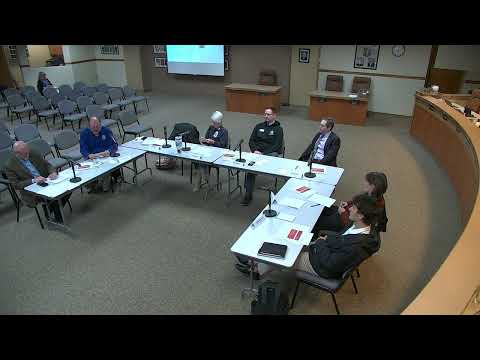
Pasco board holds midyear superintendent evaluation check, narrows focus for 2025–26 goals
Summary
Dr. Alsbury, the board’s evaluation facilitator, opened the work session with a midyear review of Superintendent Whitney’s performance under the district’s balanced‑governance evaluation cycle.
Dr. Alsbury, the board’s evaluation facilitator, opened the work session with a review of the district’s superintendent evaluation cycle and the board’s use of a balanced‑governance model for oversight.
“The superintendent’s evaluation cycle. We did a work session on this before and so hopefully this, is, recognizable,” Dr. Alsbury said, describing the midyear check as an opportunity for growth‑oriented feedback rather than a surprise summative judgment.
The superintendent, identified in the meeting as Superintendent Whitney, delivered a midyear progress report on the district’s five focus targets the board selected in October. Whitney summarized progress and called out three areas the administration is emphasizing: core literacy instruction, mathematics alignment (including ninth‑grade algebra), and the long‑term facilities management plan.
“Core instruction needs to be our focus,” Superintendent Whitney said, recommending that the board prioritize full‑fidelity implementation of vetted curriculum materials and teacher supports over adding new, separate academic priorities.
Whitney reported specific implementation and usage figures for literacy supports: American Reading Company (ARC) materials are in partial to full use at about 94% of district schools, and teachers’ frequency of entering reading data into the district platform School PACE was reported as 43% frequent use, 33% occasional use and 24% infrequent use. Whitney said IRLA (English) and EMEAL (Spanish) remain the district’s formative literacy assessments and that STAR test results provide an additional cross‑check on reading proficiency trends.
On algebra, Whitney said the district has begun administering a single state benchmark assessment in algebra classes this year and reported that roughly 91% of students were at or near the benchmark on that tool. The superintendent recommended using the benchmark assessment — not letter grades — as the primary growth indicator for the algebra goal, while continuing grades for credit and course purposes.
Several board members pressed for clarity on what the benchmark measures and whether it provides a summative measure of an entire algebra course or only part of it. Vice President Simmons and Board Member Amy both said they want a summative view of algebra mastery (not just unit‑level results) and asked staff to confirm which interim/summative benchmark the district is using.
“We need some sort of a summative assessment of algebra,” Vice President Simmons said, urging the district to ensure the benchmark or an averaged set of unit assessments gives a reliable year‑end picture.
District staff noted there are multiple benchmark options available to teachers (formative unit benchmarks and summative interim blocks), and that teachers currently use the assessments they have agreed to administer. Whitney said the district intends to move monitoring for the algebra goal away from course grades (which can include non‑content factors) toward a consistent benchmark assessment, but acknowledged logistics remain to be resolved.
Staff also reported results of an external AIR audit and ongoing work aligning Multi‑Tiered Systems of Support (MTSS); the University of Washington is assisting with implementation recommendations. Whitney said the district will add a column to the strategic goals document that specifies the measurable data point for each goal to make future monitoring clearer.
Board members asked about timing for the summative evaluation and the availability of state and program test results. Dr. Alsbury walked the board through the evaluation timeline: the midyear check (this meeting), additional data and reports in March and April, and a consensus summative evaluation process that typically produces a single board‑approved report. Board members debated shifting the delivery timeline so the evaluation could incorporate additional late‑arriving data (for example, some state results), but staff noted one constraint: the superintendent’s contract calls for an evaluation delivered by July 1.
Dr. Alsbury described the mechanics the board will use to produce a single, consensus summative evaluation: each board member will submit ratings and recommendations for growth; Dr. Alsbury will aggregate and anonymize recommendations and return them for board rating; and the highest‑ranked recommendations for growth will form the final report. He emphasized the process is intended to produce no more than about eight actionable growth recommendations rather than dozens of disparate items.
Board members directed staff to (1) add explicit measurable data points to the strategic goals document, (2) confirm which algebra benchmark(s) the district will use and whether the benchmark yields a summative year‑end measure, and (3) supply the board with the evaluation workbook referenced by Dr. Alsbury. The board completed its rating forms at the meeting to identify five to six focus targets for next year; staff collected those forms for immediate aggregation.
The meeting also included an update on the Long‑Term Facilities Management Plan: staff said data collection, enrollment and facility condition analyses are complete, a technical work group is meeting this week, community engagement is planned, and the plan timeline aims for board approval in the fall.
The midyear check concluded with staff and the board agreeing to follow up on specific data questions (benchmark selection and scope, summative vs. unit measures, and the timing of state results) before the April/May evaluation steps. Dr. Alsbury reiterated that the midyear review’s primary purpose is to inform growth and to provide the superintendent timely direction rather than to serve as a punitive or surprise review.
The board did not take a formal public vote on the final summative evaluation at this meeting; instead members completed rating sheets to guide the selection of next year’s focus goals and instructed staff to return clarified data and timeline options for further action.