Get Full Government Meeting Transcripts, Videos, & Alerts Forever!
Get email alerts on the Lcap topic
No spam. Unsubscribe anytime.
Palm Springs Unified board gets midyear LCAP update; district reports mixed progress on academics, engagement and safety
Summary
Director of state and federal programs Jim Pfeffer presented the district27s Local Control and Accountability Plan midyear update, noting progress on several academic and safety metrics while some measures remain in progress or pending year-end data.
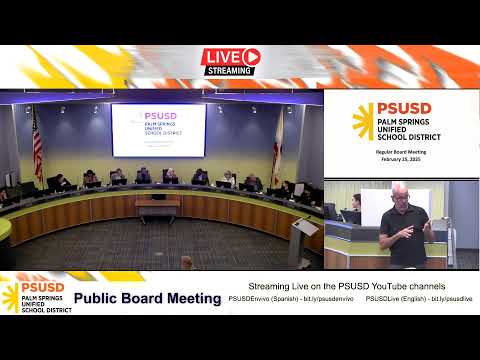
Dr. Jim Pfeffer, the district27s director of state and federal programs, presented Palm Springs Unified School District27s LCAP midyear update at the board27s Feb. 25 meeting, outlining where the district is tracking on academic outcomes, family engagement and school safety.
"I'm here today to present the LCAP midyear update, which is one of the required elements of the LCAP process every year," Pfeffer said, describing the report the board receives annually in February under state law.
The midyear presentation framed the LCAP as a hub for multiple funding streams, including supplemental and concentration grants from the Local Control Funding Formula, Title I, the Learning Recovery Emergency Block Grant, and other targeted funds. Pfeffer told the board the presentation shows both expenditure updates and progress on outcome metrics required by Senate Bill 114.
Pfeffer highlighted three districtwide goals covered in the presentation: academics (Goal 1), family and community engagement (Goal 2), and safe, healthy schools (Goal 3). For academics he cited internal benchmark testing (STAR) as an in-progress measure leading to year-end CAASPP results and said graduation and A-G completion rates remain reported a year in arrears.
On engagement, Pfeffer said survey windows are still open through March, so several parent-participation and school-connectedness metrics were listed as "in progress." He noted as a known item that the district currently has 11 active PTA/PTO groups.
For safety and student well-being, Pfeffer said suspension and chronic absenteeism rates were improving compared with the same point last year, and that the MTSS model integrates both academic and behavioral supports. He pointed to district-funded community liaisons and mental-health specialists as actions intended to reduce chronic absenteeism.
Board members commended the outreach and data work in the presentation. A board member said the variety of parent input channels 27helps us make our decisions,27 and Pfeffer noted LCAP-focused parent groups and advisory councils he meets with regularly.
Pfeffer emphasized that some LCAP measures are fully known now, others are still being collected, and a portion will not be available until year-end. He said the full midyear report and accompanying budget values (including draft second-interim figures) are attached to the board27s agenda and will be updated as fiscal reports are finalized.
Board members did not take any formal action during the presentation; Pfeffer invited further questions and offered to provide more detail from the full report on request.
Looking ahead, Pfeffer said the district will incorporate spring survey results and the finalized second-interim budget into the full LCAP update the board will receive in the spring.