Get Full Government Meeting Transcripts, Videos, & Alerts Forever!
Get email alerts on the Free Speech topic
No spam. Unsubscribe anytime.
Public commenter warns against censoring city social media; mayor cites legal advice for comment policy
Summary
A speaker urged the commission not to silence public speech on city platforms, citing U.S. Supreme Court cases; the mayor and staff said legal counsel and state law allow treating city pages as information-only and uniformly turning comments off.
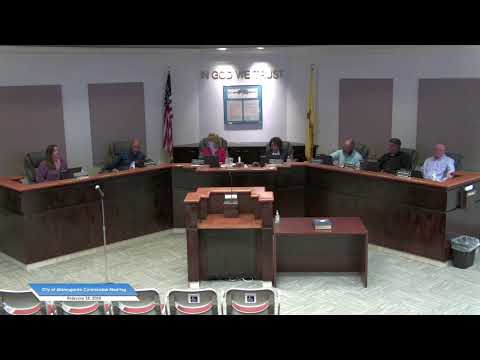
A member of the public addressed the commission during public comment Tuesday to warn that government cannot lawfully silence speech on public platforms and cited several court decisions, while the mayor and staff explained the city’s decision to disable comments across its social-media pages.
Joseph Lindsey (identified in the record as Joe L.) urged the commission to preserve “the modern public square” and cited United States Supreme Court decisions and other cases in support of his position, saying “you can't simply shut that down without tampering the Constitution.” In his remarks Lindsey referenced Hague v. CIO (1939), Packingham v. North Carolina (2017), Reed v. Town of Gilbert (2015), and more recent litigation raising First Amendment issues for state actions involving online speech.
Mayor Susan Paine and staff responded on the record, saying the city consulted legal counsel before disabling comments. Paine said state case law permitted the city to “turn off comments” if the account is treated uniformly as an information-only bulletin, and that the policy has been applied across all city social media pages. The mayor added she did not make the decision herself but must follow legal advice and said alternatives for public contact include direct messages to elected officials, the mayor’s Facebook Messenger and traditional channels such as email and phone.
City staff noted the practical concern that city social pages are not continuously monitored and that consistent, uniform policies are required to avoid selective enforcement. The city manager’s report that followed reiterated that legal counsel had advised the approach and that a local case interpreting the law supported treating the pages as informational bulletins.
The exchange left the legal issue framed as a matter for counsel and for public-policy decisions by the commission; commissioners did not indicate a vote to change the current online-comment policy during the meeting.