Get Full Government Meeting Transcripts, Videos, & Alerts Forever!
Get email alerts on the Battery Energy Storage topic
No spam. Unsubscribe anytime.
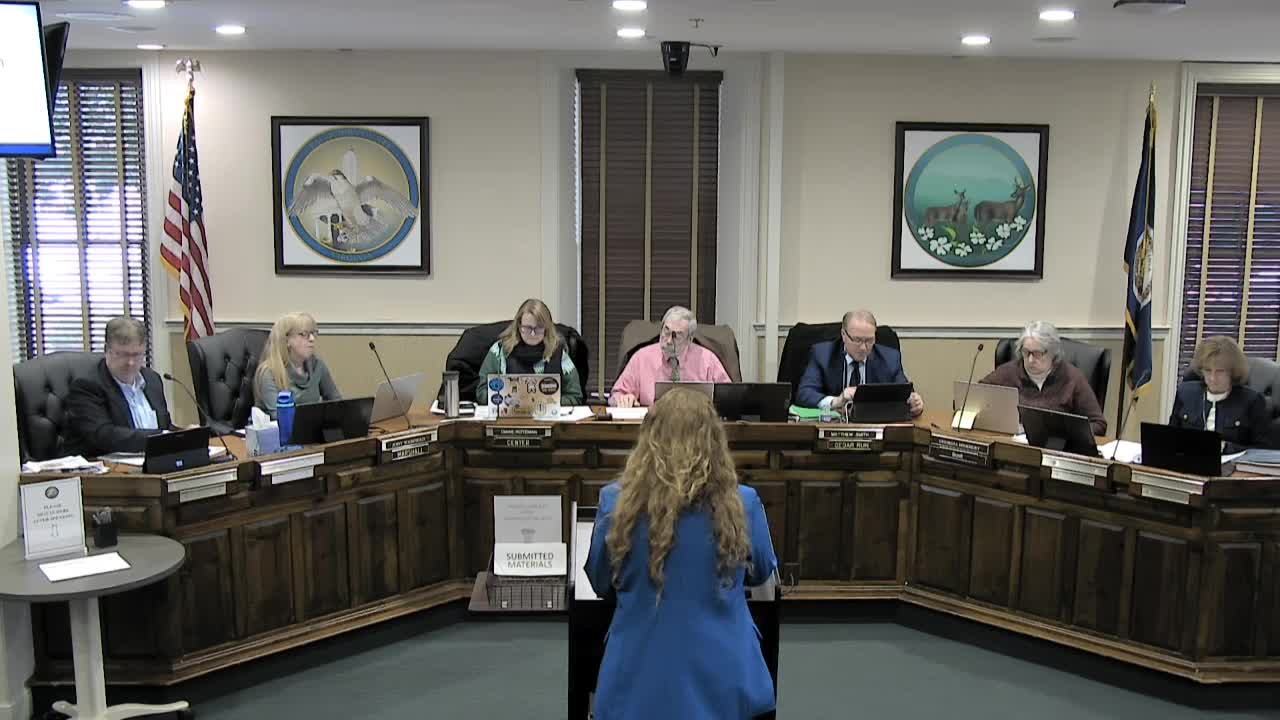
Planning commission reviews draft battery energy storage ordinance; staff told to refine standards with emergency services
Summary
Planning commissioners reviewed a draft zoning ordinance to regulate battery energy storage systems and gave staff direction on setbacks, height, emergency response timing and decommissioning requirements.
The Fauquier County Planning Commission held a work session on a proposed zoning text amendment to regulate battery energy storage systems (BESS). The draft ordinance, prepared by planning staff after a November work session and a review of other jurisdictions’ rules, would use a tiered approach: small, site‑specific “Tier 1” systems (under 600 kilowatt‑hours) would be permitted as accessory uses in all zoning districts; larger “Tier 2” utility‑scale systems (more than 600 kilowatt‑hours) would require a special exception and a comprehensive plan compliance review in specified zoning districts (Agricultural, Industrial Park, Industrial General, and Business Park).
Staff said the draft borrows standards from the county’s solar requirements and from other jurisdictions and includes provisions for construction and operation to comply with industry standards and the building and fire codes; landscaping and perimeter buffering; a minimum 6‑foot fence with anti‑climb features; undergrounding of collection lines; decommissioning assurances similar to utility‑scale solar; and an emergency response plan to be reviewed by Fauquier County Fire and Rescue.
Commissioners and staff discussed developer comments they had received, including redlines from Dominion Energy and written input from developers active in the region. Dominion asked for a higher height limit (20 feet) to provide flexibility for enclosed equipment and HVAC needs; staff noted industry feedback but commissioners generally favored retaining a 15‑foot height limit and adding a narrow engineering exception for small rooftop or HVAC equipment that consumes a small percentage of the enclosure roof area.
On setbacks, commissioners largely supported the staff proposal (a 100‑foot setback to the project boundary and larger buffers to sensitive receptors); they also approved retaining a 1,000‑foot buffer from corridors of statewide significance while allowing the Board of Supervisors discretion to reduce that distance in specific cases. Commissioners asked staff to clarify whether the 100‑foot measurement referenced the fence line or the battery equipment; staff proposed measuring from the project boundary or perimeter fence.
Commissioners directed staff to consult Fauquier County Fire and Rescue on timing and content of the required emergency response plan. Staff reported industry preference for providing a draft plan with site plan submission and a final, approved emergency response plan signed off by emergency services a set period (for example, 60–90 days) prior to commercial operation; the commission asked staff to propose language that requires an initial draft with site plan and final approval prior to operation, and to add a periodic review requirement (every two to three years) to accommodate changing technology and response needs.
On other points commissioners generally supported staff’s recommendation that decommissioning security remain a full surety (bond, cash or letter of credit) posted up front rather than a staged approach; that new above‑ground transmission not be routinely exempted; and that the ordinance allow the Board to find a lesser road‑access standard in limited circumstances while otherwise requiring access via a major collector or higher.
Staff said they would draft revised ordinance language reflecting the commission’s guidance, consult with the fire marshal on emergency‑plan timing and content, check comparable county standards for the ownership‑change notification period (commissioners preferred reducing a proposed 90‑day notice to something like 30 days), and return the updated draft to the commission at a future meeting.
No formal vote was taken at this work session; the session produced direction to staff for revisions prior to a public hearing on the draft ordinance.