Get Full Government Meeting Transcripts, Videos, & Alerts Forever!
Get email alerts on the Land Use Solar Agriculture topic
No spam. Unsubscribe anytime.
Fauquier planning commission finds Alameda solar projects not in accord with comprehensive plan
Summary
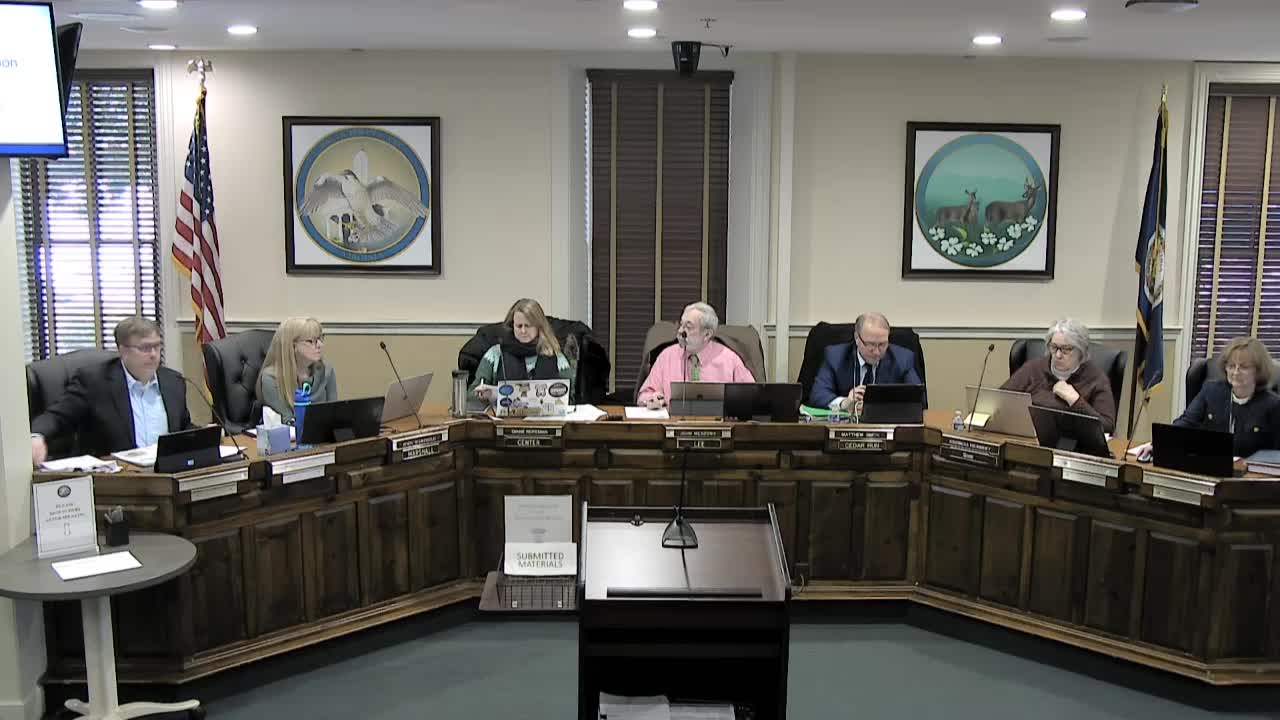
The Fauquier County Planning Commission voted unanimously in Feb. 2025 that three Alameda Solar Grazing Center applications for a 90-megawatt solar facility are not substantially in accord with the county comprehensive plan, citing concerns about scale, agricultural loss and visual impact.
The Fauquier County Planning Commission voted 5-0 in Feb. 2025 that three applications for the Alameda Solar Grazing Center — a proposed 90-megawatt, utility-scale solar development on roughly 941 acres — are not substantially in accord with the Fauquier County Comprehensive Plan.
Planning commissioners said the project’s scale, location and visual effect on long-established agricultural landscapes conflicted with multiple sections of the county plan, particularly the Rural Lands and scenic resources guidance. Commissioner Matthew Smith moved that the applications “are not in substantial accord with Fauquier County’s comprehensive plan,” and the commission approved the motion without recorded opposition.
The Alameda proposal comprises three related applications: Alameda Solar Grazing Center North (about 618 acres across 10 parcels), Alameda Solar Grazing Center South (about 302 acres), and an interconnection parcel (about 21.5 acres). Together the applications request comprehensive plan compliance review for a project with a total development area of about 516 acres and multiple commitments from the applicant including a 40‑year decommissioning schedule and an on‑site rotational sheep grazing operation.
County planning staff described soils and historic‑resource findings to the commission: USDA and county soil surveys identify large portions of the properties as prime agricultural soils (staff reported figures in the 70s percentage range for two of the parcels, with a more detailed Type‑1 site soil study identifying a much smaller share of “prime cropland” where that study was completed). The staff presentation also noted multiple historic resources in the project area, including farmsteads, a cemetery and proximity to the Blackwell Town Historic District, and said no comprehensive archaeological surveys had yet been completed.
Open Road Renewables, the project developer, and its representatives framed the proposal as a hybrid model tying solar generation to local agriculture. Mike Folpe, senior vice president and co‑founder of Open Road, said the company has invested in the project for years and described commitments designed to reduce visual impacts and support farming, including 200‑foot setbacks from some roads, on‑site sheep grazing to manage vegetation, and a mechanism to transfer preserved acreage to the grazing operator over time. Folpe summarized the developer’s pitch as “temporary solar, permanent agriculture.”
Jacob Seeley, the local farmer proposed as the grazing operator, told the commission the project would provide an opportunity for him to acquire a stake in the land over time and to sustain a small livestock business on parcels that otherwise had uncertain tenure. “This project isn’t just about energy; it’s about ensuring the land we all cherish continues to work,” Seeley said.
Opponents in public comment questioned those assurances. Several nearby landowners and farmers told the commission they believed the properties are productive row‑crop farmland, disputed the developer’s soil and water assessments, and said they feared the cumulative loss of farmland and the visual consequences of large arrays. One speaker told the commission the developer had “told us so many lies” during private meetings; others cited concerns about road damage during construction and the long‑term permanence of industrial infrastructure on rural land.
Commissioners who supported the motion against the applications cited the comprehensive plan’s repeated emphasis on preserving agricultural soils, scenic and historic resources, and retaining the rural character of county lands. Commissioner Smith read excerpts of the plan and historic background for the Robes/Carolina Road corridor, linking the area’s cultural heritage to the commission’s determination.
The commission’s negative finding on the comprehensive‑plan compliance review is an advisory determination that flows to the Board of Supervisors; applicants may appeal the planning commission’s decision or pursue further action before the supervisors. The commission noted the applications remain subject to future steps if appealed, including additional environmental and archaeological studies, potential special exceptions and site‑plan review phases.
The commission also heard that the developer has proposed a 40‑year decommissioning term and an easement mechanism to preserve portions of the land after panels are removed; commissioners and staff noted those commitments but said they did not overcome the plan conformity concerns presented by scale, location and potential impacts.
Next steps: the developer may appeal the planning commission determination to the Board of Supervisors. The commission record shows the vote as 5‑0 against finding the project substantially in accord with the comprehensive plan.
Community members will likely continue to monitor any Board of Supervisors action or appeals and await additional studies and site plans should the project proceed further.