Get Full Government Meeting Transcripts, Videos, & Alerts Forever!
Get email alerts on the Affordable Housing Preservation topic
No spam. Unsubscribe anytime.
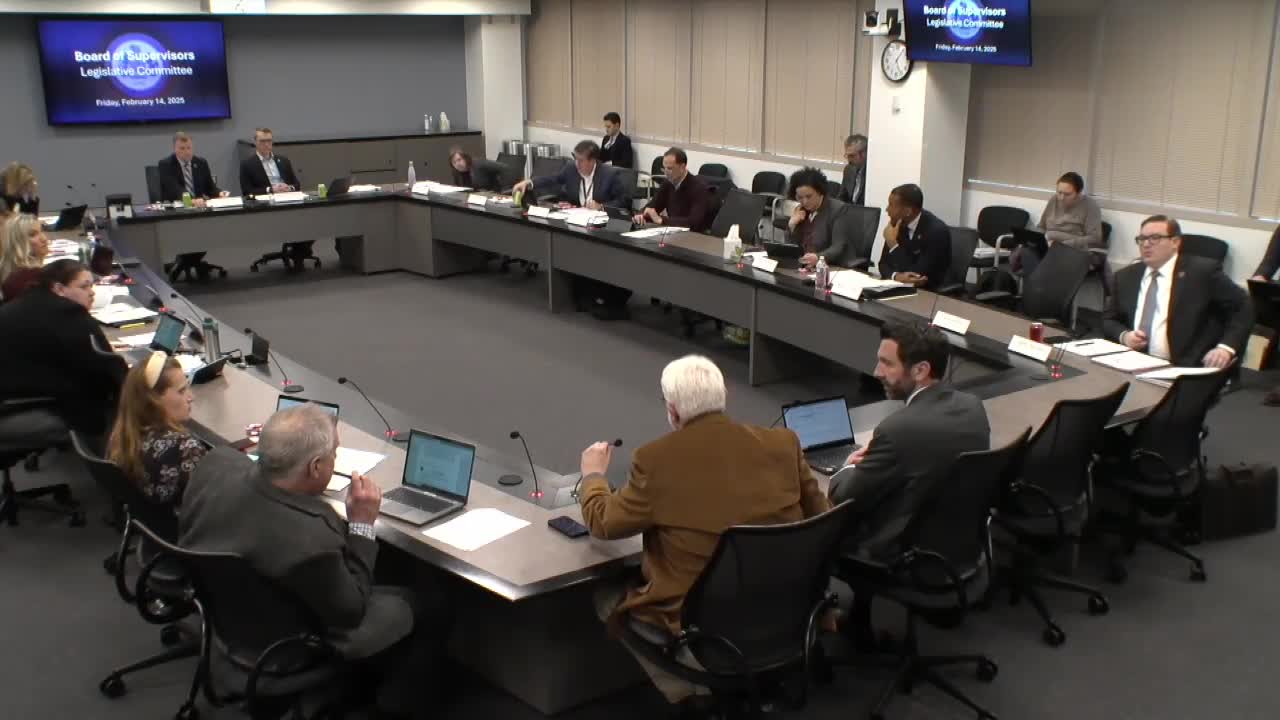
Board hears bill that would give localities right of first refusal on expiring affordability restrictions
Summary
County attorneys described a local-option bill that would require owners of certain affordable properties to provide two years— notice and would give localities a right of first refusal to preserve affordability for 15 more years.
County attorneys briefed the committee on House Bill 19 73, a local-option bill that would allow jurisdictions to adopt ordinances requiring owners of properties with expiring affordability restrictions to notify the locality at least 24 months before expiration and to grant localities (or their designees) a right of first refusal to acquire and continue operating the property as affordable housing for an additional 15 years.
Ryan Wolf of the County Attorney's Office described the proposal and said it would include a $5,000 penalty for owners who fail to comply with the notice requirement. Wolf said the local right of first refusal would permit the locality to match a third-party purchase offer, and the locality—s designee would be required to record an instrument in the land records to perfect the right.
County staff noted the proposal aligns with many existing preservation tools the county already uses, such as including rights of first refusal in financing documents and the county—s affordable-housing preservation bench. They recommended technical refinements, including possible carve-outs or different handling for housing authority-owned properties where duplicate reporting or notice might be unnecessary because the authority already tracks its assets.
Supervisor discussion focused on implementation. A supervisor asked how the bill would affect initial financing for affordable projects; staff replied that in practice the bill largely replicates existing preservation steps and is unlikely to change financing terms for most developments that already account for affordability restrictions. Several board members expressed general support and asked staff to work on technical language to avoid unintended consequences for housing authority properties or to refine notice and recordation mechanics.
Why it matters: the bill would create a statewide, local-option framework to preserve affordable units as they come out of affordability restriction periods, potentially giving localities an orderly opportunity to keep housing affordable rather than allowing immediate market conversion.
Next steps: staff said they will follow up with the patron on technical refinements and consider exemptions or tailored rules for housing-authority properties and other special cases.