Get Full Government Meeting Transcripts, Videos, & Alerts Forever!
Get email alerts on the Parks Equity topic
No spam. Unsubscribe anytime.
Fairfax Park Authority outlines sliding-fee plan to expand access; asks board for phased $12 million implementation
Summary
The Fairfax County Park Authority presented an equity implementation plan centered on a sliding-fee scale, pilot results from Sully Community Center, and a proposed five‑year rollout costing $12 million (implementation) with staff and outreach costs phased into the FY26 budget process.
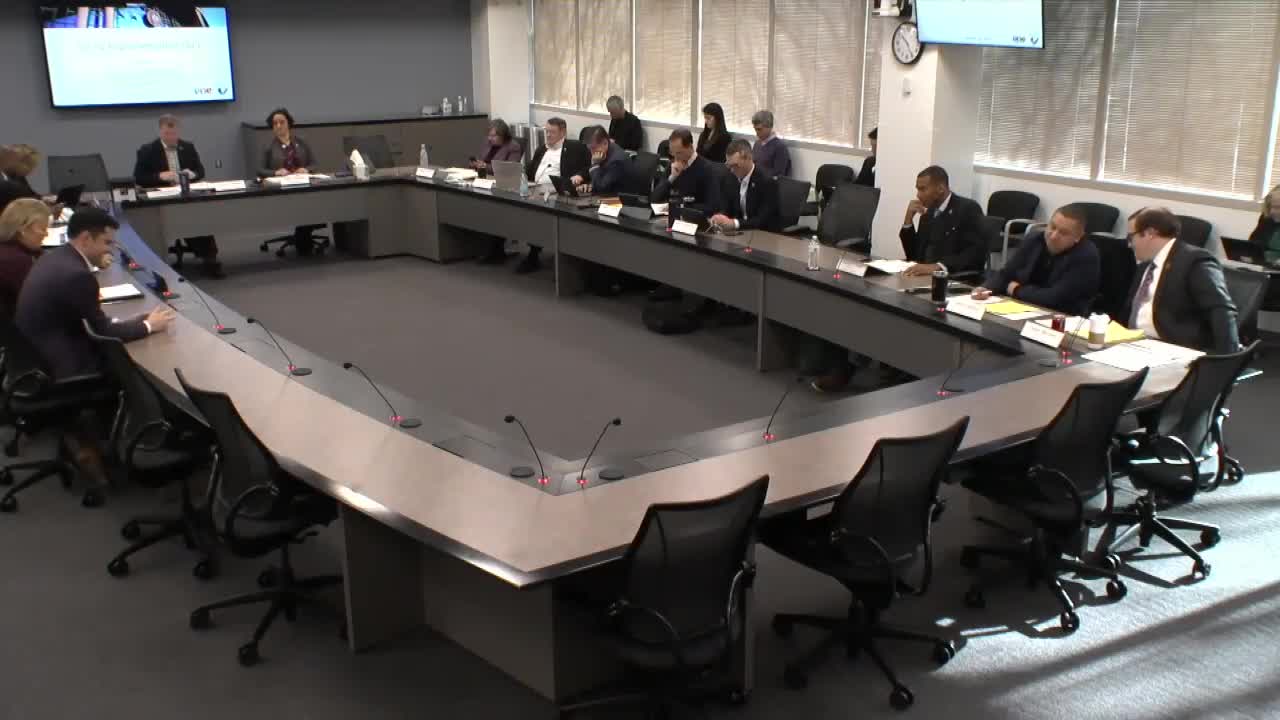
Jay Cole, executive director of the Fairfax County Park Authority, and Sarah Baldwin, deputy director of operations, presented the Park Authority’s equity implementation plan to the Health and Human Services Committee on Feb. 4, outlining a five‑year, phased approach to a countywide sliding-fee scale.
The plan aims to reduce cost and familiarity barriers to parks programming and to boost participation by lower-income residents. “During the summer of 2024, we conducted an extensive outreach effort…Those were cost, distance, and familiarity,” Sarah Baldwin said when reporting results of community engagement and the Sully sliding-fee pilot.
Why it matters: The Park Authority’s data showed programs that already used sliding-fee subsidies — for example, the Sully Community Center pilot — attracted substantially higher shares of nonwhite and lower-income participants than standard Park Authority programs. Implementing a sliding-fee scale at rec centers, then swim and classes, then camps, would change pricing and outreach across a widely used county service and require systems changes in registration and income verification.
What the plan calls for: The Park Authority presented a reduced implementation estimate of $12 million (down from an earlier consultant estimate of $14.2 million). The agency proposes phasing costs across FY26–FY30: start implementation planning and backend changes in FY26 with a requested FY26 budget ask of $818,000; go live on rec-center memberships in FY28; add learn-to-swim and rec classes in FY29; and implement camps in FY30. The $12 million figure includes the sliding-fee program and required administrative and outreach work to operate the program systemwide.
Pilot evidence and outreach: Agency staff said a Sully Community Center pilot that used a sliding fee scale and targeted outreach produced a higher percentage of nonwhite participants (the presentation compared 92% nonwhite participation in the pilot to 34% in other FCPA programs) and demonstrated that sliding fees alone are not sufficient without outreach and registration assistance. The pilot also showed that rec centers are a reasonable place to begin because they have fewer price points and broader capacity; staff noted that about 90% of residents live within at least one rec-center service area.
Supervisor concerns and staff response: Supervisors raised questions about administrative costs, possible duplication with existing county means-testing and verification systems (for SAC and other programs), and distance/transportation barriers for low-income families. Vice Chair Smith and others asked why the projected administration and outreach costs were large relative to subsidy dollars; staff said they reduced administration/outreach estimates from the consultant’s figure and stressed that some up-front systems work is needed (registration, IT, and income verification) and that the “house” built for administration would serve future program elements.
Next steps and dependencies: The Park Authority will coordinate with Neighborhood and Community Services, Department of Information Technology and Department of Management and Budget on registration-system changes, income‑verification strategies and outreach. Staff said the FY26 budget submission will include the first-year $818,000 request and that they will return to the Board with regular updates and evaluation findings as the phased rollout proceeds.
Ending: Park Authority leadership said the work will be iterative and evaluated at each phase to adjust outreach and technical solutions; the committee did not take formal action but requested follow-up on benchmarking to neighboring jurisdictions, distance analyses for rec-center access, and opportunities to leverage existing county verification systems.