Get Full Government Meeting Transcripts, Videos, & Alerts Forever!
Get email alerts on the Juvenile Detention Consolidation topic
No spam. Unsubscribe anytime.
Fairfax officials warn consolidation bill would strain juvenile services, displace families
Summary
County court services and supervisors told the legislative committee a state bill to close several Northern Virginia juvenile detention centers and consolidate residents in Fairfax would create capacity and access problems; the bill was passed indefinitely but could reappear in the budget.
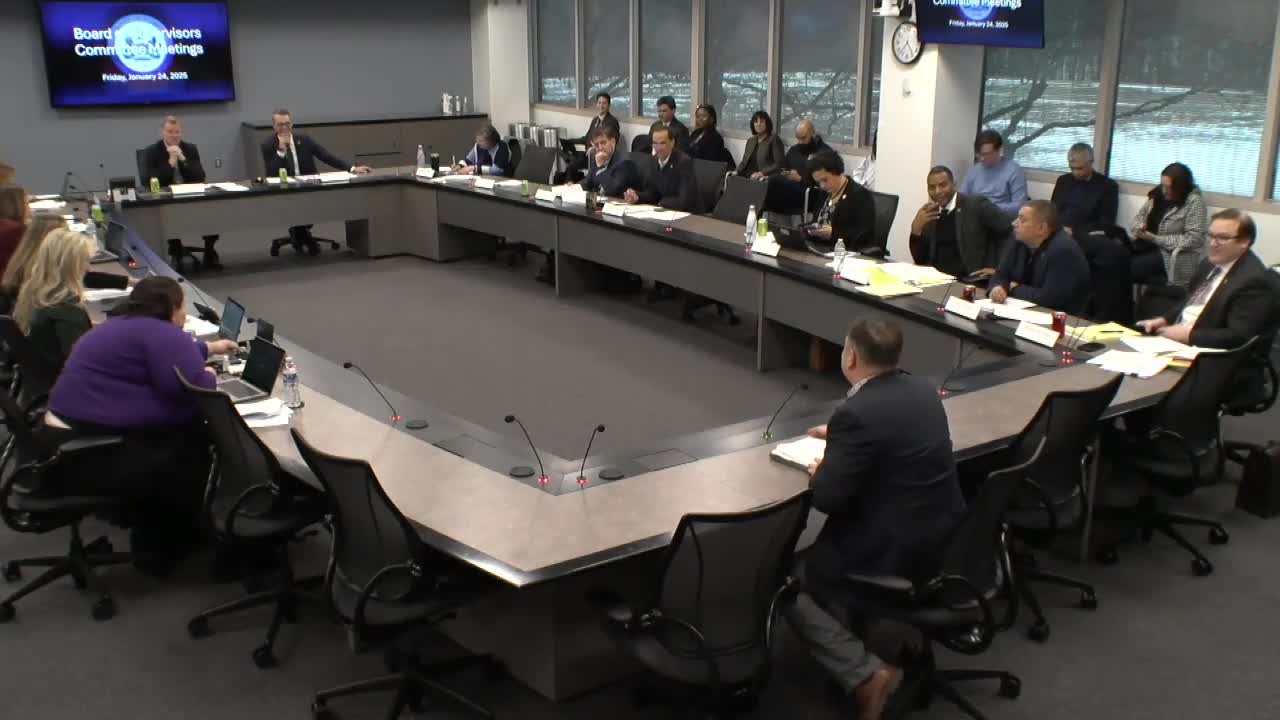
A state proposal to close several Northern Virginia juvenile detention centers and consolidate their residents in Fairfax would create capacity, cost and family-access problems for the county, staff and supervisors told the Fairfax County Legislative Committee on Jan. 24.
Matt Thompson, director of court services for Fairfax County Juvenile and Domestic Relations District Court, said the version heard in committee would have required Loudoun County, Prince William County and the Northern Virginia Detention Home to close and would have transferred their detention populations to Fairfax. Thompson said the bill as written included a mechanism that could remove state block grant funding from a locality if it refused to accept transferred residents. He told the committee the bill “was heard this morning and was passed indefinitely,” and that while it was not moving forward in that form, it could return as a budget amendment.
Why it matters: County officials said forced consolidation would pull youth out of their communities, disrupting access to legal counsel, social supports and family visits, and would disproportionately burden families and residents with transportation barriers.
Thompson said scaling Fairfax’s facilities to accept the added population would present operational challenges and that moving youth out of their home communities is generally not good for outcomes. County staff described the proposal as likely to shift costs to localities while producing limited operational benefit for the state.
Board members and staff also reported that, according to accounts from regional meetings in Richmond, they were unable to find jurisdictions that supported the consolidation approach. One supervisor said “there seems to be no operational improvement” and that the bill appeared aimed at state cost savings rather than better juvenile outcomes.
Ending: The committee recorded staff concern and opposition to the consolidation approach and will continue to monitor for any re‑emergence of the proposal as a budget amendment or reworked bill.