Get Full Government Meeting Transcripts, Videos, & Alerts Forever!
Get email alerts on the Health Human Services topic
No spam. Unsubscribe anytime.
County officials hail several governor amendments for crisis and school mental-health funding, urge scrutiny of childcare changes
Summary
Fairfax human-services staff highlighted amendments that expand Medicaid coverage for certain behavioral-health settings, add flexibility for school mental-health funds, create outreach grant funding, and raise foster care payments — while flagging potential risks in childcare-subsidy rule changes.
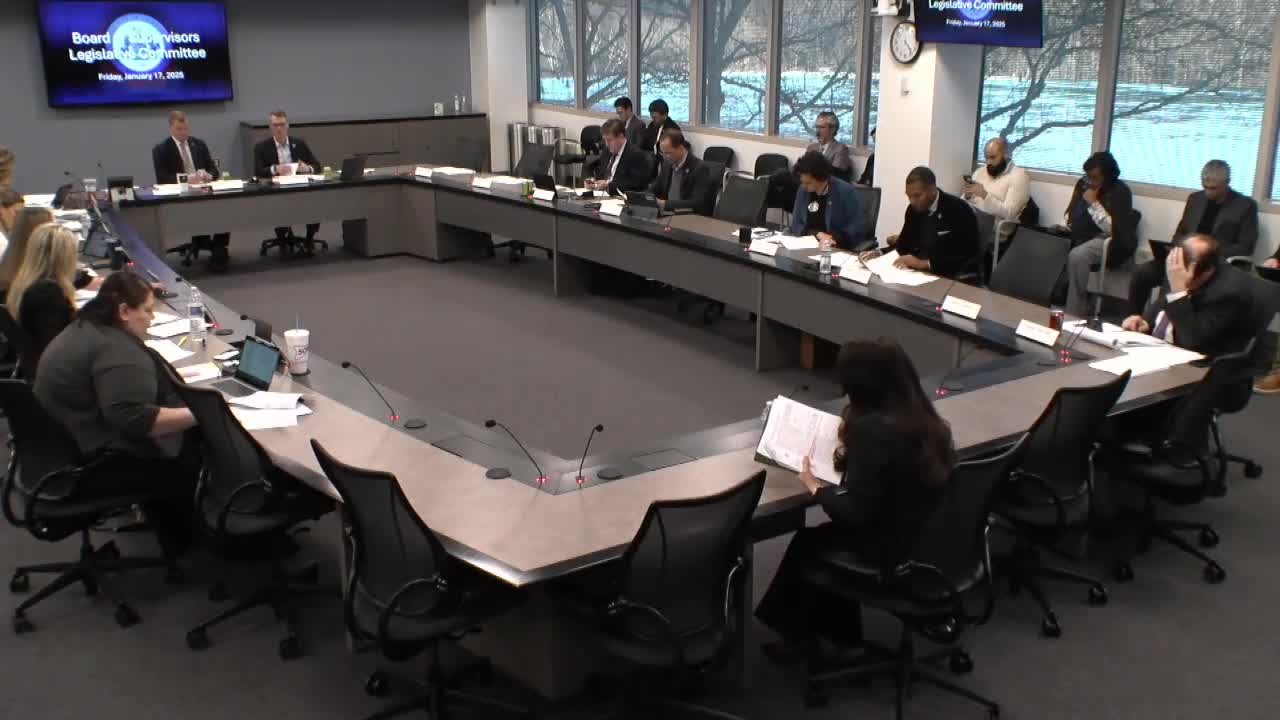
Fairfax County human-services staff briefed the Legislative Committee on governor-proposed budget amendments that the county largely supports for behavioral health and child welfare, while cautioning that several early-childhood changes need closer review.
Ariel McAloon, the county human services legislative liaison, told the committee the governor’s amendments would authorize Medicaid coverage for services to beneficiaries during short-term acute psychiatric or residential stays under an 1115 serious mental illness waiver, a change county staff said aligns with the county’s legislative program and could improve crisis-service reimbursement. The amendments also add flexibility for school-based mental-health funds and include $1 million in FY2025 for outreach and education on youth mental health, substance use and social media.
Why it matters: County staff called several items “positive,” noting they may expand reimbursement for crisis stabilization, relieve some law-enforcement burden, and improve access to psychiatric consultation for primary care providers.
Key behavioral-health items noted by county staff include a $35.2 million FY2026 allocation to allow the Department of Behavioral Health and Developmental Services to provide funds to private hospitals for special conservators of the peace, which the county said could reduce law-enforcement custody burdens during emergency holds. Staff also highlighted $1.5 million in FY2026 to pilot two regional adult psychiatric access-line hubs run by the Medical Society of Virginia.
On the Children’s Services Act (CSA), staff said the governor’s amendment would simplify the reimbursement model but would also cap state reimbursement rates for private day educational services at no more than 2.5% above the previous year’s rate; staff warned the cap would apply only to the state share and not limit local liability if providers raise prices above that cap.
Early-childhood provisions drew the most questions. Staff reported additional childcare-subsidy slots but flagged several amendments that could create barriers: a new family co-payment of $5 per month in 2026 for households under 100% of federal poverty (a cohort that currently pays nothing), a potential 90-day job-search time limit, and limiting new childcare-subsidy enrollments to children birth to age 5 unless designated “hard to serve” by the Virginia Department of Education by July 1. Staff warned those changes could reduce access for school-age children unless the governor’s proposed work group produces alternative solutions. County staff also noted the proposed removal of the cap on the Virginia Preschool Initiative (VPI) could reduce state funding for local VPI slots by roughly $5.1 million in FY2026 if enacted.
On foster care and adoption assistance, the governor proposes raising maximum payments by 3% in FY2026 ($1.5 million general fund and $1.4 million non‑general fund noted in staff materials), a change the county called a positive step because Virginia’s rates have been comparatively low.
Next steps: Committee members asked staff to continue monitoring these amendments and to work with early‑childhood and school staff to assess net impacts to families and county budgets.