Get Full Government Meeting Transcripts, Videos, & Alerts Forever!
Get email alerts on the Expungement Implementation topic
No spam. Unsubscribe anytime.
Fairfax officials say 2021 expungement law still creates heavy, unfunded workload despite technical fixes
Summary
County sheriff, police and court staff told the legislative committee that technical amendments to 2021 expungement law ease some problems but do not address major staffing, technology and funding needs, and urged more time and state resources for implementation.
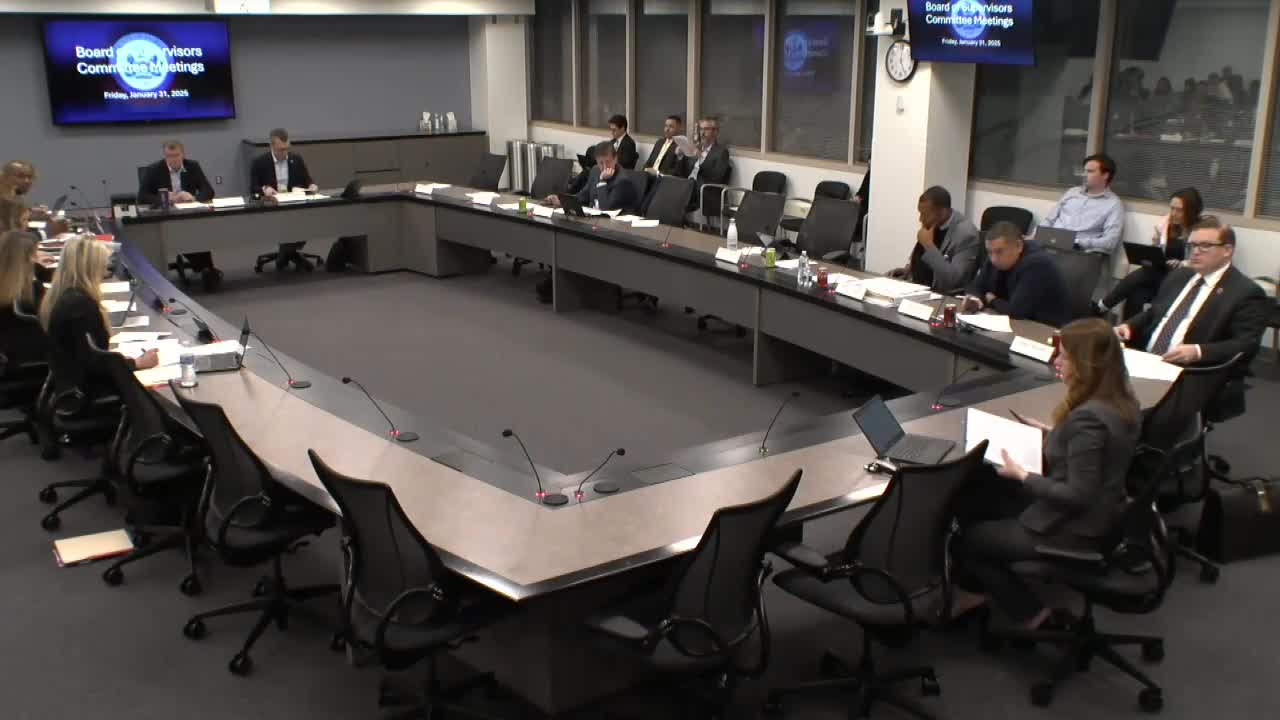
Fairfax County officials told the Board of Supervisors' Legislative Committee on Jan. 31 that technical amendments to the 2021 record-sealing and expungement law provide modest relief but do not resolve large implementation costs for local courts, law enforcement and the sheriff’s office.
The changes under review would push back some requirements and narrow the date range for records to be processed, but county staff said the core problem remains: local agencies must hire staff, convert legacy records and build new data flows without adequate state funding.
"It still doesn't address the key factor that has already been brought up, which is, just the great expansion of expungement and sealing of records without providing the necessary resources," said Katie Pavlicek, general counsel for the Fairfax County Sheriff's Office. "The Sheriff's Office has already endeavored to clear rooms in the adult detention center... We've begun allocating staff... to making this their primary core function because there are consequences to failing to obviously comply with all of these expungements."
Julie Hamilton, chief deputy with the Fairfax County Circuit Court Clerk's Office, said the clerks already have staff working on the project and need more time and funding. "We have been working closely on a weekly basis with OES to make sure that the things are in place... This is a huge endeavor, and it is going to require... IT and clerks," Hamilton said. She told the committee the office already has seven people assigned to the task and wants the bill's effective date delayed to July 1, 2026.
Rex Pazier of the Fairfax County Police Department described legacy-technology and staffing hurdles. He said workforce planning estimates the police department would need to add at least six administrative-level positions, at an estimated $330,000 a year for salaries and benefits, and that converting microfilm records to searchable electronic format could cost about $500,000. "All of our records are in microfilm. Our microfilm machine is at its end of life... That's a $500,000 price tag right there," Pazier said.
Staff told the board the proposed technical bills (identified in the packet as fixes to the 2021 law) would narrow the look-back window for affected records from 1960 to 1986 and add approximately one year before the law fully takes effect — moves staff described as helpful but insufficient without additional Commonwealth funding.
County staff also said some budget amendments have been filed at the General Assembly level. One amendment in the legislature proposed about $5.4 million for circuit court clerks; other proposals target the Supreme Court's executive secretary, the compensation board for Commonwealth's attorneys and the Indigent Defense Commission, but county law-enforcement technology and staffing needs remain largely unaddressed.
The committee voted informally to support the technical fixes while continuing to press the state for implementation funding and to track actual county costs already incurred and estimated going forward.
County staff said they will return to the board with an itemized estimate of Fairfax's total expected costs across the sheriff's office, police department, clerk's office and related IT work so the board can pursue funding through the budget process and coordinated advocacy with other localities.
Ending: The committee's discussion made clear that a delayed effective date and narrower record window would ease near-term pressure, but local officials urged continuing outreach to state lawmakers to secure funding for staffing, records conversion and new IT interfaces needed to comply with the expanded sealing and expungement regime.