Get Full Government Meeting Transcripts, Videos, & Alerts Forever!
Get email alerts on the Health Insurance Fertility topic
No spam. Unsubscribe anytime.
Montana committee advances bill requiring insurers to cover IVF, sparking cost debate
Summary
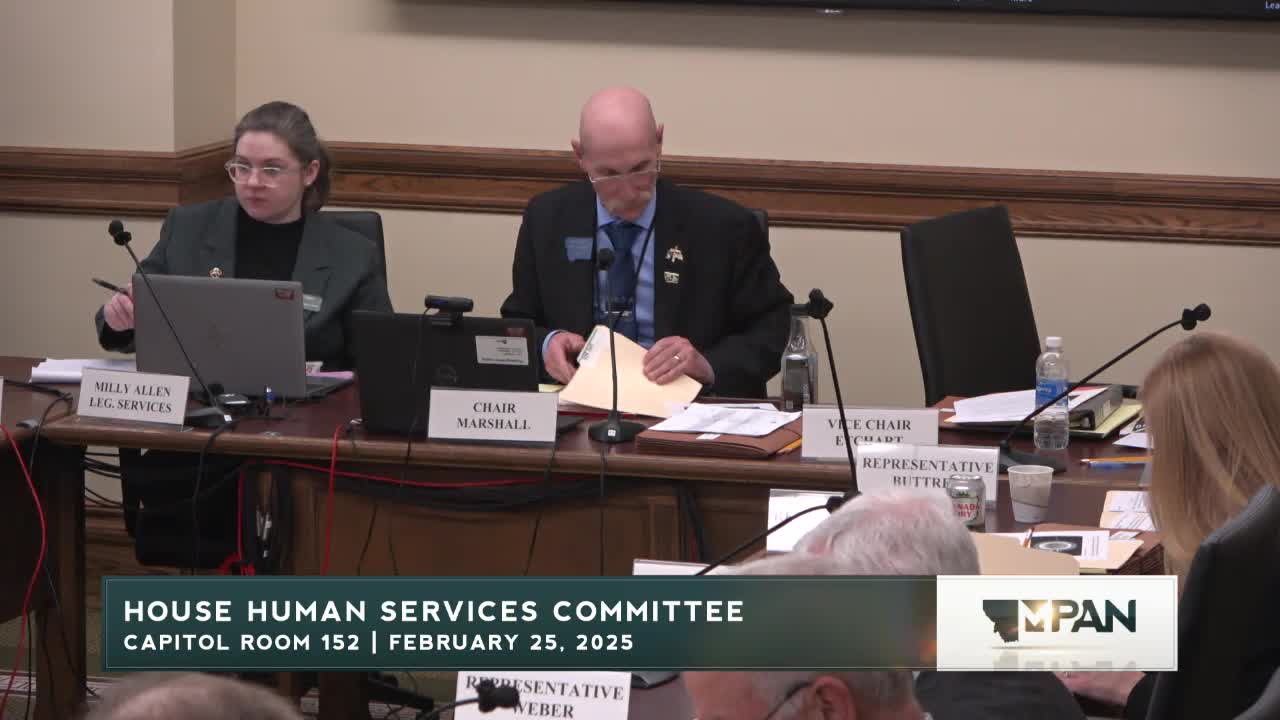
Representative Staffman, sponsor of House Bill 565 and a lawmaker from House District 59 in South Bozeman, opened the hearing saying the bill "essentially provides mandatory insurance coverage for fertility treatment up to and including IVF." The committee voted in executive action to advance the bill to the floor, 12-9.
Representative Staffman, sponsor of House Bill 565 and a lawmaker from House District 59 in South Bozeman, opened the hearing saying the bill "essentially provides mandatory insurance coverage for fertility treatment up to and including IVF." The committee voted in executive action to advance the bill to the floor, 12-9.
The bill would require insurers doing business in Montana to cover diagnosis and treatment of infertility, including IVF, and sets a $40,000 lifetime cap per individual. In his opening remarks Staffman cited national fertility trends and said the cap would fund roughly one-and-a-half to two rounds of treatment for many patients.
Why it matters: Supporters — including patients, a reproductive specialist and advocacy groups — described out-of-pocket costs, long travel, and emotional strain. "Having a fertility related condition isn't distinct from any other medical event," testified Ann Angus of Bozeman, who said she is currently pregnant via IVF. "That is why I ask the committee to vote yes on 565."
Clinical perspective: Dr. Stacy (Stacy Siomento in the record), identified herself as a reproductive endocrinology and infertility provider in Montana, saying the state currently does about 500 IVF cycles a year and has a single IVF program. She told the committee IVF is the standard of care for several fertility diagnoses and that success rates are age dependent: "for women under the age of 35, they have approximately a 50 percent chance of being successful on their first try;" for older age groups the per-cycle success rate declines.
Patient testimony: Multiple Montanans described paying for IVF with savings, help from family or employer-provided benefits. "To afford IVF my husband and I made tremendous financial sacrifices," said Casey Nelson, who described refinancing a home and taking on debt to pursue treatment. Several witnesses said the expense and travel required are barriers for many families.
Insurer and fiscal concerns: Representatives of state-regulated insurers explained the mechanics and costs of adding a mandated benefit. Jackie Boyle of Mountain Health Co-op told the committee that any state-mandated benefit above the ACA benchmark triggers a state defrayal payment for exchange plans and affects fully funded employers and the state plan. "This bill would impact the state employee plan as well as the state regulated fully insured products, which is about a quarter of all Montanans," Boyle said.
Drew Cziok, government relations director for Blue Cross Blue Shield of Montana, said the company estimated the mandate would cost about $4,000,000 per year and that roughly $3,000,000 of that could be subject to federal defrayal requirements. Amy Jenks, administrator for the Health Care Benefits Division in the Department of Administration, gave state-plan estimates: "For fiscal year 26 we estimated about a $623,000 cost to the state plan," she said, and for a full fiscal year the estimate was about $1,200,000.
Opposition and other views: Opponents questioned using government mandate to require coverage and warned of premium impacts. Anna Shchemelian, an online opponent, said she supported private coverage but opposed forcing insurers to provide the benefit. Insurer witnesses and others encouraged careful consideration of cost and scope.
Committee debate and next steps: Committee members asked about medication costs (Dr. Siomento estimated out-of-pocket medication costs for self‑pay patients commonly range from $5,000 to $8,000), age-related success rates, and how the bill interacts with special plan types. Sponsor Staffman noted the $40,000 cap and suggested appropriations could address fiscal questions. The committee completed executive action and moved the bill to the House floor for further consideration.
Votes at a glance: During the same meeting the committee also considered several bills in executive action. Actions below reflect motions and results recorded in the transcript.
Ending: The committee recessed after executive action; additional fiscal analysis — including formal fiscal notes from the budget office and actuarial estimates for the state and university plans — was reported in testimony to be forthcoming and will inform floor debate.