Get Full Government Meeting Transcripts, Videos, & Alerts Forever!
Get email alerts on the Help Act Employment Services topic
No spam. Unsubscribe anytime.
Committee concurs to let Department of Labor deliver HELP Act employment services; fiscal note shows $125,000 annual state special revenue need
Summary
Representative Ed Buttrey, sponsor: "I'm representative Ed Butchery. I represent House District 21, which is the North Side Of Great Falls in the community of Black Eagle."
Representative Ed Buttrey, sponsor: "I'm representative Ed Butchery. I represent House District 21, which is the North Side Of Great Falls in the community of Black Eagle." Representative Ed Buttrey brought the fiscal-note hearing for House Bill 245 on behalf of the HELP Act workforce provisions, telling the committee the bill would remove the requirement that employment services be contracted to non-state entities and instead let the Montana Department of Labor deliver them directly.
The nut graf: The committee voted to concur on the bill in executive action. The fiscal note projects the department will need an additional $125,000 per year in state special revenue authority to serve increased client caseloads through the agency's 18 job service offices; sponsors and supporters argued the department is better positioned today to provide the services and that keeping fraud-prevention provisions in place is important.
Buttrey said the bill would let the Department of Labor "serve clients directly through the agency's 18 job service offices." He told members the change follows an earlier choice by the Legislature to contract services to nonstate entities at a time when that was judged appropriate.
Todd O'Hair, president and CEO, Montana Chamber of Commerce, said business leaders view workforce as the top challenge: "workforce is the number 1 challenge that businesses are facing today." He told the committee he supports the provision as a modest, important investment to help people get upskilled.
Matt Kuntz, executive director, NAMI Montana, rose in support and said the organization "trust the Department of Labor to get folks trained up and ready to move to the next round of their vocation." Steve Arbishchoud, executive director, Big Sky Economic Development, noted Medicaid expansion provides coverage for "over 12,000 workforce age recipients" and said that coverage matters to the business community as officials consider the fiscal impacts.
Sarah Swanson, Commissioner for the Montana Department of Labor and Industry, appeared informationally to answer questions about the fiscal-note assumptions tied to the HELP Act workforce pieces. Kim Akin, chief of finance and operations for Public Health and Human Services, attended informationally.
The fiscal note and technical note: Committee discussion and the fiscal note assume the department can serve additional program members but will require $125,000 annually in state special revenue authority to expand capacity. Representative Buttrey also pointed to a technical concern described on page 2 of the fiscal note: the original HELP Act had incorporated new waste, fraud and abuse prevention requirements into the department's unemployment insurance division, and removing the sunset in HB245 would keep those provisions in place.
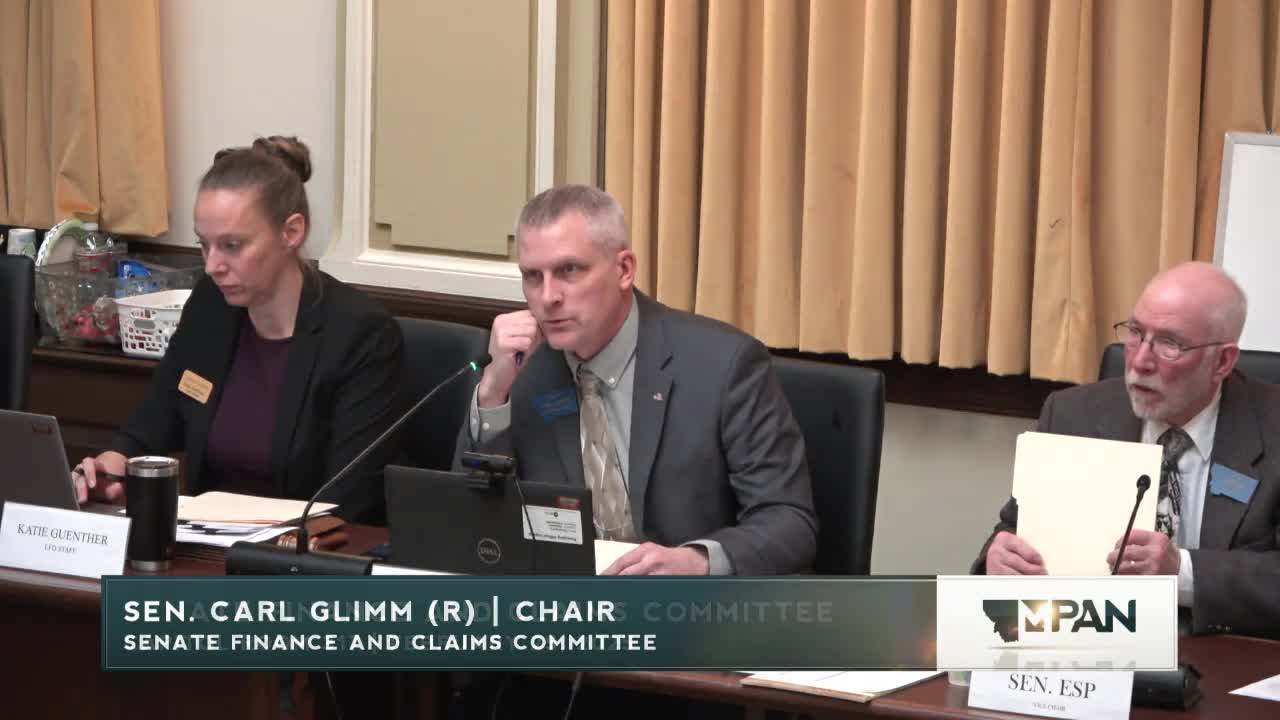
Executive action: In the committee's executive action, a senator moved to concur on House Bill 245. The roll-call result recorded in the transcript was 13 yes, 9 no; the committee's clerk recorded the bill as "concurred" and it was sent on to third reading unamended.
Why it matters: The bill changes how state-funded employment supports tied to the HELP Act are delivered, shifts operational responsibility to a state agency, and includes a modest recurring cost per the fiscal note. Backers framed the bill as aligning service delivery with current state capacity and as an investment to reduce reliance on other state and federal programs by helping Montanans find better-paying work.
Ending: Representative Buttrey closed the hearing by thanking the committee. The bill will proceed according to the committee's concurrence vote.