Get Full Government Meeting Transcripts, Videos, & Alerts Forever!
Get email alerts on the Wildlife Data topic
No spam. Unsubscribe anytime.
Montana bill would require self-reporting of deer and elk harvest; sponsor says amendment eases penalties
Summary
Representative Marilyn Marler introduced House Bill 564 to require mandatory hunter harvest reporting for deer and elk; sponsors and proponents emphasized modernizing reporting methods and building public trust while an amendment removed fines and bonus-point penalties and left a requirement to report before purchasing the next hunting license.
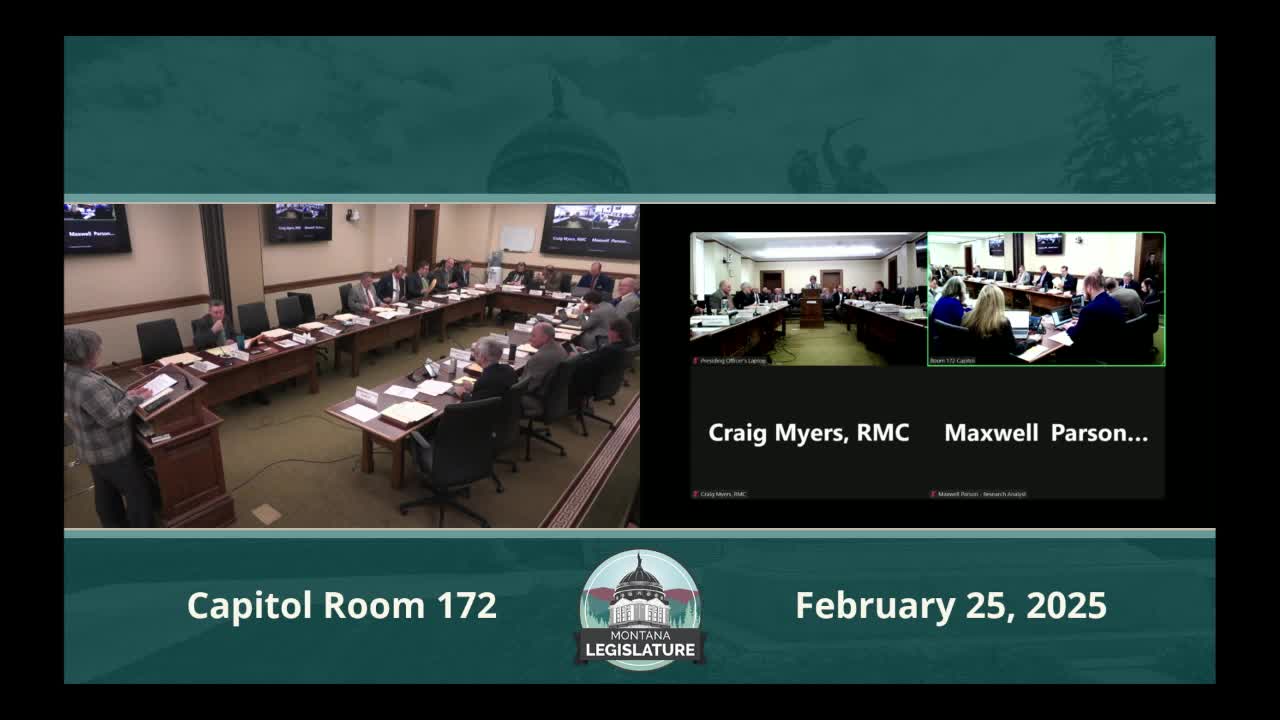
Representative Marilyn Marler, sponsor of House Bill 564, told the House Fish, Wildlife and Parks Committee she wants Montana to move from a telephone-based hunter survey to mandatory self-reporting for deer and elk harvest. "If it's the legislature's intention to bring harvest data into a modern age, we need to tell the department to do it," Marler said.
The bill would extend existing mandatory self-reporting (now required for mountain goats, bighorn sheep and mountain lions) to deer and elk and direct Fish, Wildlife and Parks (FWP) to set reporting deadlines. Marler said the bill originally used a “carrot and a stick” approach but committee amendments remove a fine and the proposed bonus-point reward while keeping the requirement that a hunter complete a harvest report before buying the next year’s license.
Why it matters: FWP uses harvest and effort data to set seasons and tag allocations. Proponents told the committee that the telephone survey method is dated and that electronic self-reporting via the FWP app, web form or email could increase transparency and public confidence in harvest estimates. "Better data means better decision making," Matt Leo of Backcountry Hunters & Anglers said. Multiple proponent witnesses — including tribal representatives and county commissioners — said modernizing reporting could strengthen relationships between FWP and hunters.
FWP officials described implementation and fiscal considerations. Lina Havron, FWP chief financial officer, said the department would not eliminate phone surveys until a new system is standing up and estimated the current phone-survey budget at about $250,000 per year. Ken McDonald, chief of the wildlife division, told the committee that other Western states with mandatory reporting report compliance typically in the 50–60% range and that follow-up phone surveys and modest fees have been used elsewhere to raise compliance. McDonald said some states' late fees or penalties (for example, a $10 fee in Washington) yielded roughly 60% compliance while higher penalties in other states correlated with higher compliance.
Committee discussion focused on logistics, timing and data utility. McDonald said an April deadline would be useful for analysis before season-setting work begins in June; he noted FWP would aim to collect as much data by about February and use follow-up calling to reduce bias from non-compliance. Questions from legislators included how reporting would work at retail license vendors and whether paper forms would remain available; licensing bureau chief Emily Cooper said paper forms at license offices and an online option would be provided.
The hearing drew broad proponent turnout: individual hunters, advisory group members, tribal representatives and conservation organizations testified in favor. Tribal witness Patrick Yawake noted existing tribal harvest and testing records and said HB 564 would help understand on-the-ground conditions. Some witnesses urged strong outreach and biologist input on survey design. A few proponents said they preferred stronger requirements (for example, a reporting window tied to license purchase) but acknowledged the committee amendment aimed to ease initial compliance.
Ending: Marler closed by urging patience for a transition period while phone surveys and a new reporting system operate in parallel. "More data, less voicemail," she said, summarizing the sponsor's pitch for modernization. The bill remains at hearing stage; committee action on passage was not recorded in the transcript.