Get Full Government Meeting Transcripts, Videos, & Alerts Forever!
Get email alerts on the School Mental Health topic
No spam. Unsubscribe anytime.
House hearing highlights fiscal details for mental health student pilot bill
Summary
Lawmakers heard testimony and fiscal questions on House Bill 385, a pilot program that would fund school-based student mental health projects with a $250,000 annual appropriation and district-level minimums and caps; no formal action was taken.
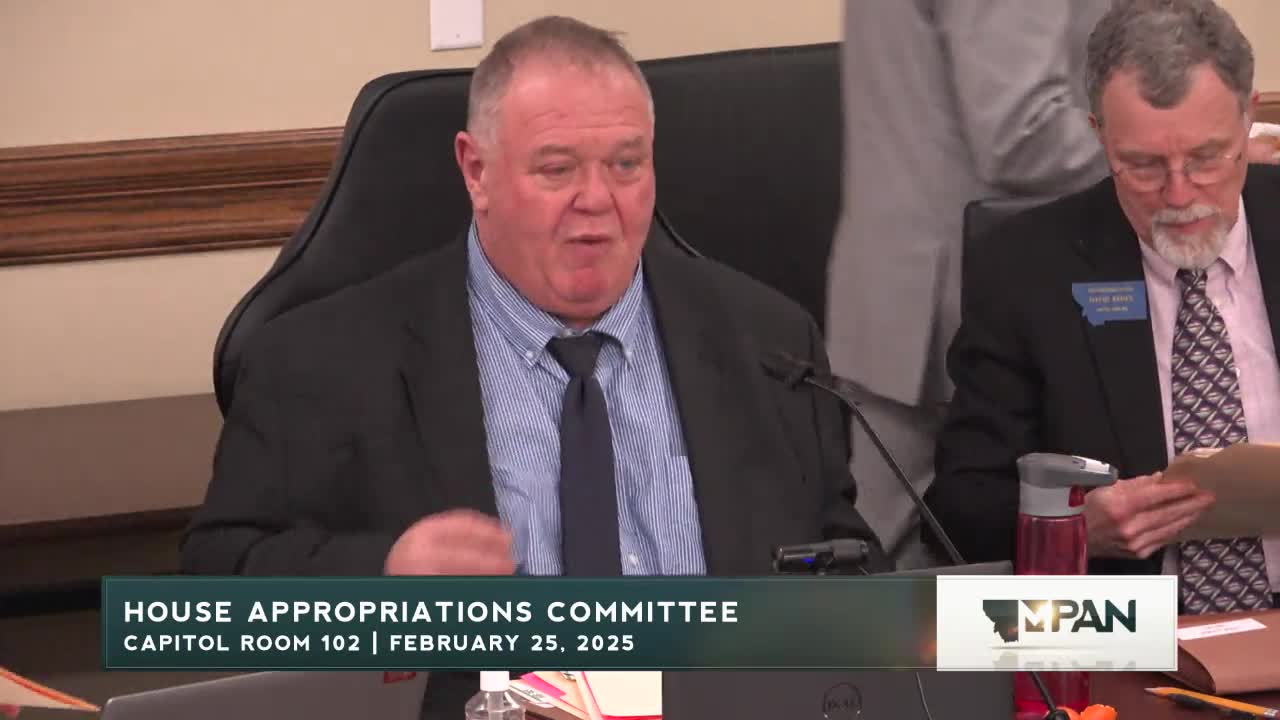
Helena — Lawmakers reviewed fiscal assumptions and implementation questions during a hearing on House Bill 385 on funding for a mental health student pilot program.
Representative Melissa Romano, sponsor of HB 385, told the House Appropriations Committee the bill provides an annual appropriation of $250,000 and sets a minimum award of $5,000 per district. She said the measure allows awards at the rate of $25 per student, with a per-district cap of $50,000, and noted a termination date for the pilot so data can be collected.
"There's a 250,000 annual appropriation," Romano said. "We amended it down so it's 5,000 per district and ... the lesser of $25 per student with a max of 50,000." Romano emphasized expected cost offsets, including fewer emergency interventions, reduced juvenile justice costs, and improved teacher productivity.
Proponents included Jasmine Krotkov of the Montana Farmers Union and Mary Windecker of the Behavioral Health Alliance of Montana, both of whom urged support for a due pass. Krotkov said the union supported the bill because mental health is "a seminal issue in rural Montana." Windecker said the amount was small to test boots-on-the-ground approaches in rural areas.
Committee members focused questions on the fiscal note and program administration. Representative Walsh and others pressed the sponsor about mechanics: whether the Office of Public Instruction (OPI) will run an application process, how the minimum and per-student cap interact, and how OPI will prioritize districts with greatest need. Romano said OPI would develop an application and that the bill’s cap and floor are intended to ensure small districts are not excluded.
Members also asked whether the program replaces or supplements services provided by guidance counselors and how peer-support elements would interact with mandatory reporting obligations. Romano described the program as broader and more communal than one-to-one guidance-counselor interventions; she said peer mentoring examples exist in Great Falls and would include adult supervision and staff involvement when necessary.
No formal vote or committee action was recorded during the hearing. The public record shows proponents and no recorded opponents at the hearing.
The committee will consider the fiscal note language and technical clarifications, including whether statutory language should be amended to make OPI's application process and prioritization criteria explicit.
The hearing closed without action; the bill remains in committee for further consideration.