Get Full Government Meeting Transcripts, Videos, & Alerts Forever!
Get email alerts on the State Code Publication topic
No spam. Unsubscribe anytime.
Committee concurs to end printed code index, cites about $40,000 biennium savings
Summary
The Legislative Administration Committee voted to concur in House Bill 115, which would eliminate the statutory requirement to print a paper index to the state code and rely on an electronic index instead; proponents said printing is rarely used and costly.
The Legislative Administration Committee voted to concur in House Bill 115, a proposal to remove the requirement to publish a printed index to the state code, saying the printed indexes are rarely used and the change would save about $40,000 per biennium.
The bill, introduced for the record by Representative Fitzpatrick, would eliminate the statutory requirement to print the code index and rely on electronic publication. Representative Fitzpatrick said the current printing contract runs roughly 40,000 copies a year while “they’ve sold three copies of those a year.” He said the bill would eliminate a recurring printing expense and produce future savings of about $40,000 biennially.
The change drew questions from committee members about how users would locate code sections without a printed index. Senator Dunwell asked, “If we don't have an index, how are people going to know what title to go to, what chapter to go to?” Representative Fitzpatrick and Todd Evertz, co-commissioner and chief legal counsel, replied that an electronic index would remain available and that most users now search the code online. Evertz said he had “not cracked that index in 15 years” and described the printed edition as obsolete, adding the committee directed staff to find efficiencies.
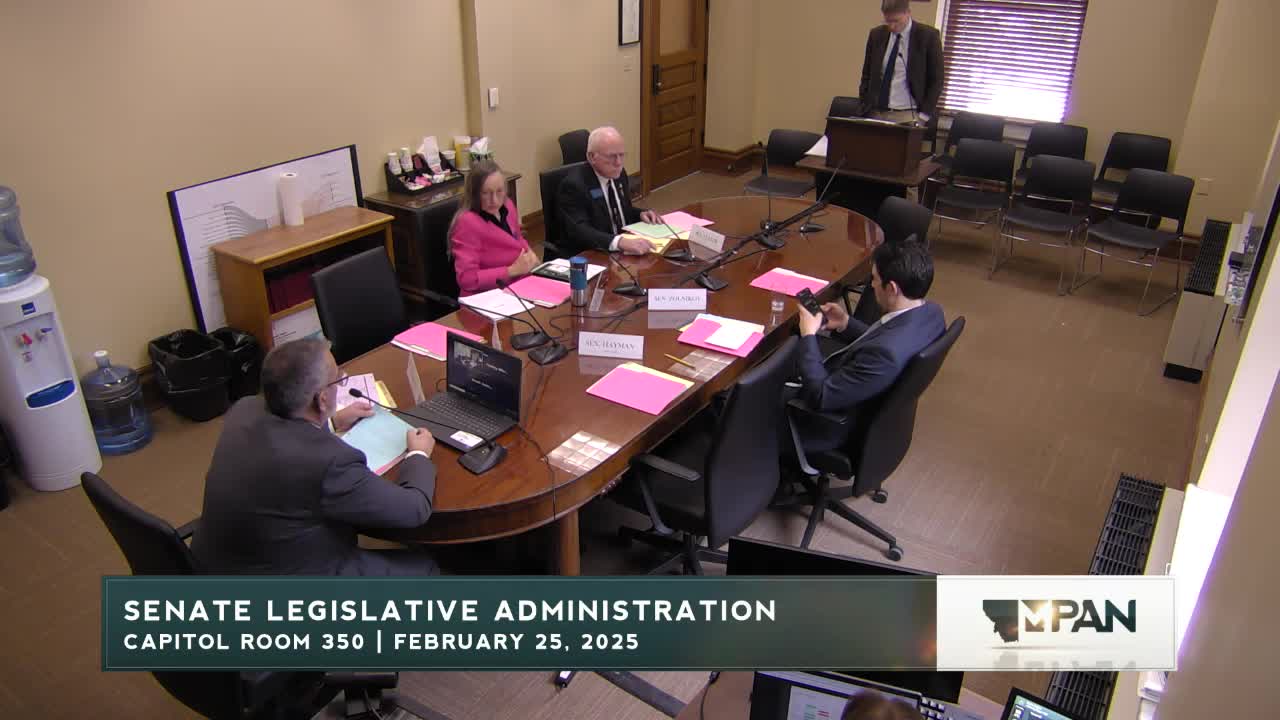
During executive action, Senator Zolnicoff moved to concur in House Bill 115. The committee conducted a roll-call count by proxy and in-person votes. Vice Chair Emerich registered an aye by proxy; Vice Chair Haman registered a no by proxy. Senator Dunwell voted no. Senator Fuller, Senator Zolnicoff and Chair Riqui voted yes. The chair announced that the committee had concurred in House Bill 115 and that the bill would move to the Senate floor.
The bill’s supporters said the measure preserves an electronic index while removing the statutorily required printed edition; opponents cautioned that some users still rely on print. The committee record shows both positions were raised during the discussion, but the formal action was concurrence and referral to the Senate floor.
Votes at a glance: House Bill 115 — motion to concur carried by committee (ayes: Vice Chair Emerich (proxy), Senator Fuller, Senator Zolnicoff, Chair Riqui; noes: Vice Chair Haman (proxy), Senator Dunwell).
The committee did not specify an effective date for the change during the hearing; next steps are concurrence on the Senate floor and any further scheduling decisions there.