Get Full Government Meeting Transcripts, Videos, & Alerts Forever!
Get email alerts on the Finance Bonds topic
No spam. Unsubscribe anytime.
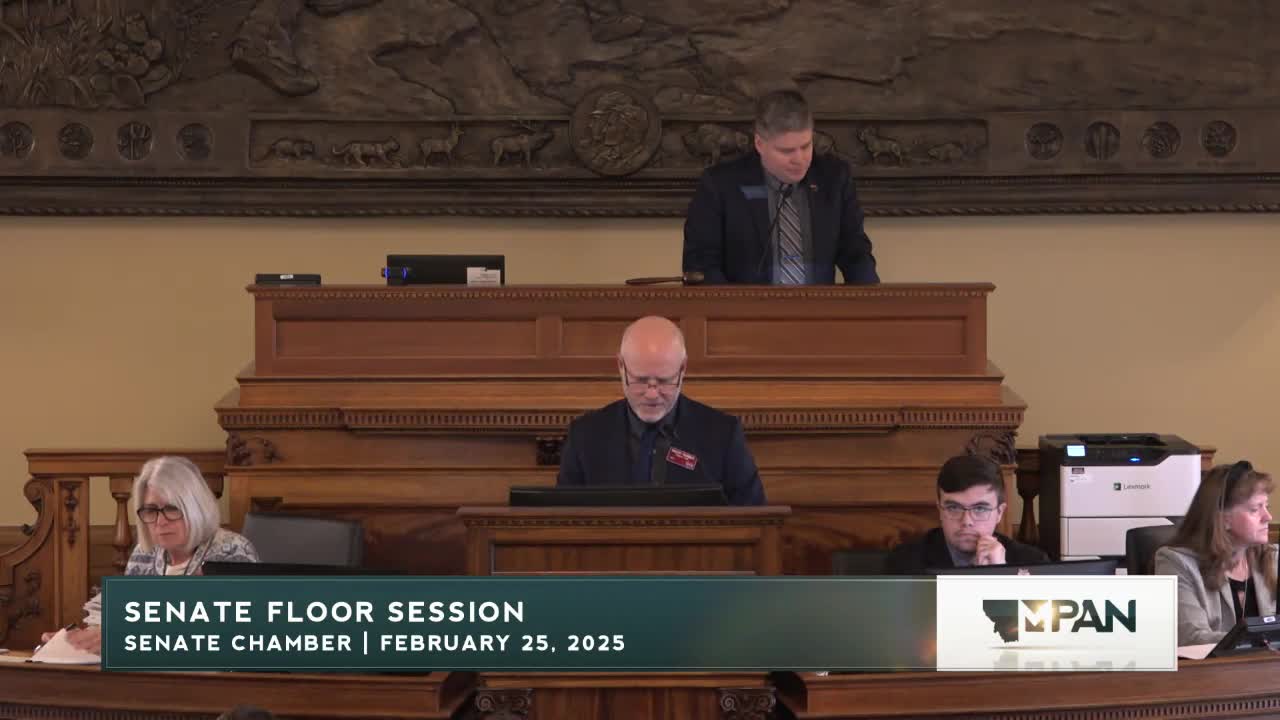
Senate passes bill to raise Montana Facility Finance Authority bond cap to $1.5 billion
Summary
The Montana Senate voted to advance Senate Bill 104, which would expand the Montana Facility Finance Authority(MFFA) bond issuance cap and broaden eligible borrowers, with supporters saying the change opens low-cost capital to more projects and opponents raising procedural questions and seeking clarity on defaults.
Senators on the floor advanced Senate Bill 104 on second reading, voting 37-13 to recommend the bill do pass. The bill would raise the Montana Facility Finance Authority(MFFA) bond issuance cap to $1,500,000,000 and add an annual inflationary adjustment, and it expands eligibility so additional nonprofit and public-benefit projects can access low-cost conduit bond financing.
Sponsor Senator Lammers said the MFFA acts as a conduit issuer that connects private borrowers with the bond market and that the authority has facilitated more than $4 billion in private-activity bonds over roughly 40 years. "These are private market transactions, not state obligations," Lammers told the Senate, saying the program does not obligate state taxpayers and that bond proceeds may not be used for operations or campaign activity.
The bill drew questions from colleagues about conflict of interest and risk. Senator Cuff disclosed a personal connection: his wife, Joanne, serves on the MFFA board and he said he had attended meetings in that capacity. Senators asked what would happen in a default; the sponsor and others said defaults are between borrower and lender and do not create state debt. Senator Curti noted that, according to testimony in committee, the MFFA has not experienced bond defaults in its four-decade history.
Supporters said the change would extend the authority to workforce housing, manufacturers and other nonhealth projects that currently lack access to affordable capital, while preserving the MFFAas an enterprise fund separate from HB2 appropriations. Opponents did not offer an amendment on the floor.
The motion that the committee recommend Senate Bill 104 do pass was made by Senator Lammers. The Clerk recorded 37 senators voting aye and 13 voting nay. The bill passed second reading.