Get Full Government Meeting Transcripts, Videos, & Alerts Forever!
Get email alerts on the Vapor Products Registry topic
No spam. Unsubscribe anytime.
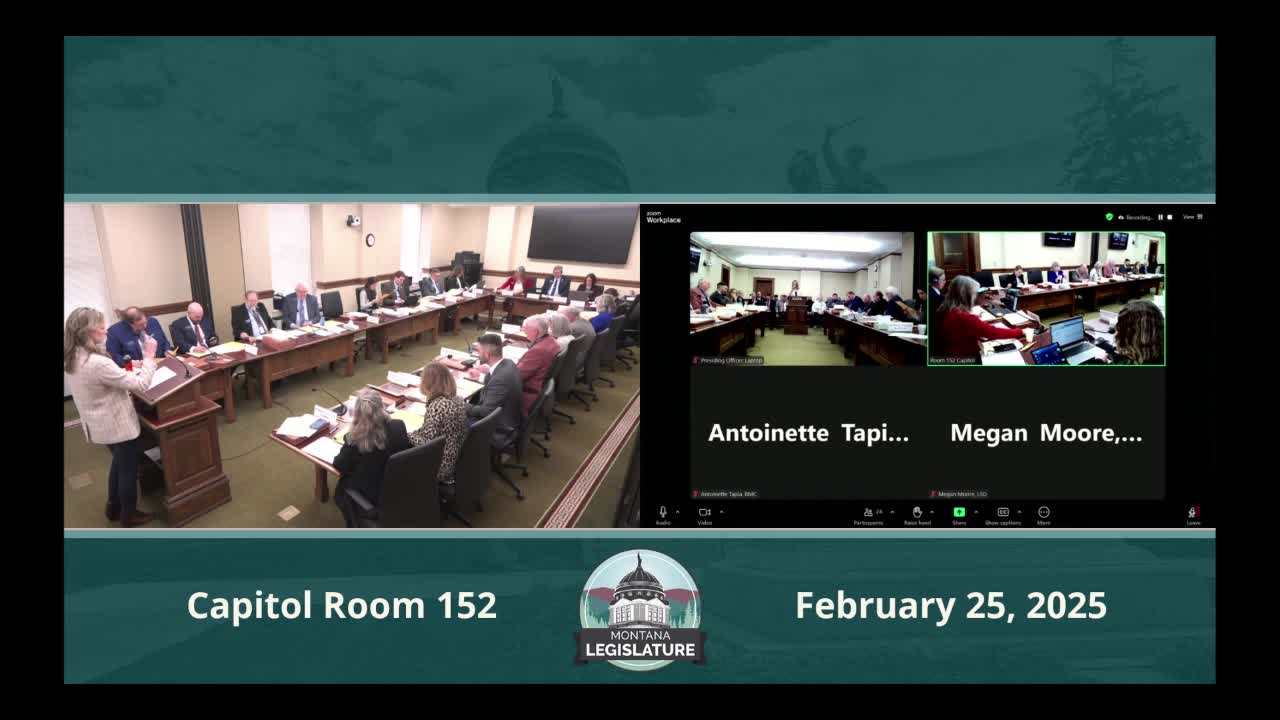
House taxation committee hears bill to create state directory of legal vape products
Summary
A House taxation committee hearing on HB 525 centered on a proposal to create a Montana-managed directory of vapor products eligible for sale, with proponents saying it would help curb illicit, often China‑made products and opponents arguing it would hand market control to large tobacco companies and harm small retailers.
Representative Amy Regier, sponsor of House Bill 525, told the House Taxation Committee that HB 525 would establish a Montana directory of vapor products authorized for legal sale and provide penalties for sellers of unlisted products. “In Montana, our vapor market is in a complete disarray,” Representative Amy Regier said, citing unregulated products and brands she said target youth.
Proponents including Attorney General Austin Knudsen and Brent Mead, Bureau Chief for the Montana Department of Justice Office of Consumer Protection, urged the committee to approve the directory as a practical enforcement tool. Knudsen told the committee, “The FDA is not doing their job. They haven't been doing their job for quite some time,” and said the directory would let Montana act where federal enforcement has not. Mead walked the committee through mechanics: manufacturers would certify a product and provide evidence of an FDA marketing order, a timely-filed premarket tobacco product application (PMTA), or a temporary FDA statement so the product could appear on the state list.
Business and retail groups largely supported the bill on practical grounds. David Fernandez, vice president of public policy at Altria, said manufacturers who follow FDA processes should be identifiable and accountable, and several Montana convenience-store and petroleum‑marketer witnesses said a single list would help retailers avoid unintentionally stocking illicit products. Retailers and small-store owners told the committee they often cannot tell which products have completed or even started the FDA process and asked for a government-managed reference they can trust.
Opponents — principally independent vape shop owners and industry advocates — warned HB 525 would effectively eliminate many independent products from shelves because most small manufacturers do not yet have completed FDA approvals. Keith Bowman, who identified himself as part owner and general manager of an e‑cig business, said the bill would “punish innovation while handing over victory to big tobacco.” Multiple opponents raised legal and economic concerns: they said the PMTA process denied many small manufacturers, that litigation seeking to block similar laws is ongoing in other states, and that the bill's fee structure and enforcement could close dozens of Montana vape shops.
Committee members pressed DOJ and bill proponents on enforcement logistics and fiscal implications. DOJ witnesses said the department expects enforcement to mirror the state's existing tobacco registry work, with manufacturer certifications used to compile the list and routine inspections checking retailer shelves against the directory. The fiscal note discussed in testimony included a first‑year general‑fund appropriation (described in committee testimony as roughly $300,000) for start‑up and anticipated litigation costs and proposed recouping ongoing costs through manufacturer fees; DOJ testified it expects to staff the program with a small number of FTEs and to fund ongoing work from fees.
The hearing included technical questions about the bill’s eligibility criteria. Under the bill language described in testimony, a manufacturer can appear on the directory if it submits proof of a marketing order, a timely-filed PMTA, or a temporary FDA statement; witnesses confirmed a pending PMTA would qualify a product for the list until the FDA issues a denial, at which point the manufacturer must notify the state.
The committee closed the hearing without taking executive action. With testimony split between public‑safety and enforcement arguments and worries about market effects for small businesses, lawmakers signaled they expected further questions on litigation risk, fee amounts, and whether the directory’s requirements would effectively limit retail options to products from large firms that already have FDA authorization.