Get Full Government Meeting Transcripts, Videos, & Alerts Forever!
Get email alerts on the Ballot Initiative Access topic
No spam. Unsubscribe anytime.
Committee Hears Opposition to Bills Limiting Petition Signatures to Active Voters; Legal Concerns Raised
Summary
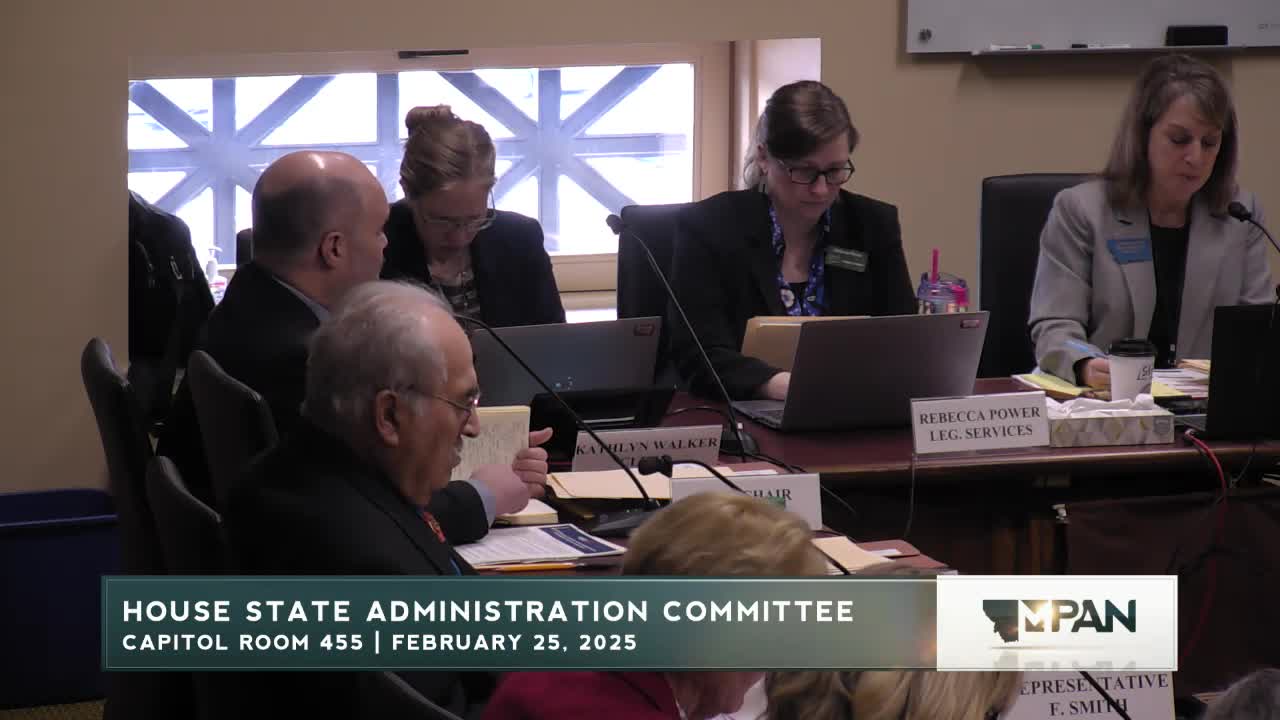
Opponents, including the ACLU, Secretary of State staff and tribal representatives, told the House State Administration Committee that House Bills 597 and 598 would conflict with the Montana Constitution and risk disenfranchising registered but temporarily 'inactive' voters, particularly young and tribal voters.
Representative Zach Wirth introduced House Bills 597 and 598, both of which would alter who may sign ballot initiative or referendum petitions by linking signature eligibility to the status of an ‘‘active elector.’’ Wirth said the bills aim to clarify signature rules and reduce potential confusion about petition validity.
Several opponents, led by SK Rossi of the American Civil Liberties Union of Montana, told the committee the statutes cannot override the Montana Constitution’s definition of ‘‘qualified elector.’’ ‘‘If we are going to change who can sign a petition or what a qualified elector is, it has to be done through a constitutional referendum or a constitutional initiative,’’ Rossi said, citing Article 4 and Article 3 of the state constitution described in testimony.
Jonathan Motl and other legal witnesses warned that the bills also raise practical problems because a voter’s active/inactive status fluctuates during the election cycle. Rossi explained that voters may be placed on the inactive list after missing an election or failing to respond to a mailed verification; those same voters may later return to active status by voting or updating registration before a clerk’s review. For that reason, several witnesses argued the constitution measures petition eligibility at the time the clerk and recorder reviews signatures, not at the moment a person pens a signature.
Tribal representatives and youth groups also opposed the bills, saying the inactive designation disproportionately affects young people and Native American voters who move frequently or have been historically disenfranchised. Patch Yawake (Patch Kiewake in transcript) representing three tribes urged the committee to protect the ballot-initiative process: ‘‘Ballot initiatives provide direct democracy for Montana electors,’’ he said.
An attorney representing the Montana Family Foundation urged the committee to adopt clarifying language. Derek Streicher said the bills could be read to provide statutory clarity that ‘‘a qualified elector who meets the residence and registration requirements as provided by law would be an active elector, not an inactive elector.’’ Secretary of State staff and several opponents highlighted a recent district court matter involving rejected signatures and noted litigation risks if statutes conflict with constitutional language.
No committee vote occurred. Several witnesses requested the committee defer action because the question touches on constitutional definitions and could invite court challenges. Committee staff and the secretary of state’s representative answered procedural questions about how county clerks currently verify signatures and how provisional or inactive registrants are handled.