Get Full Government Meeting Transcripts, Videos, & Alerts Forever!
Get email alerts on the Education Professional Development topic
No spam. Unsubscribe anytime.
Committee Hears Mixed Testimony on Bill to End Mandatory Statewide School Closures for Educator Conferences
Summary
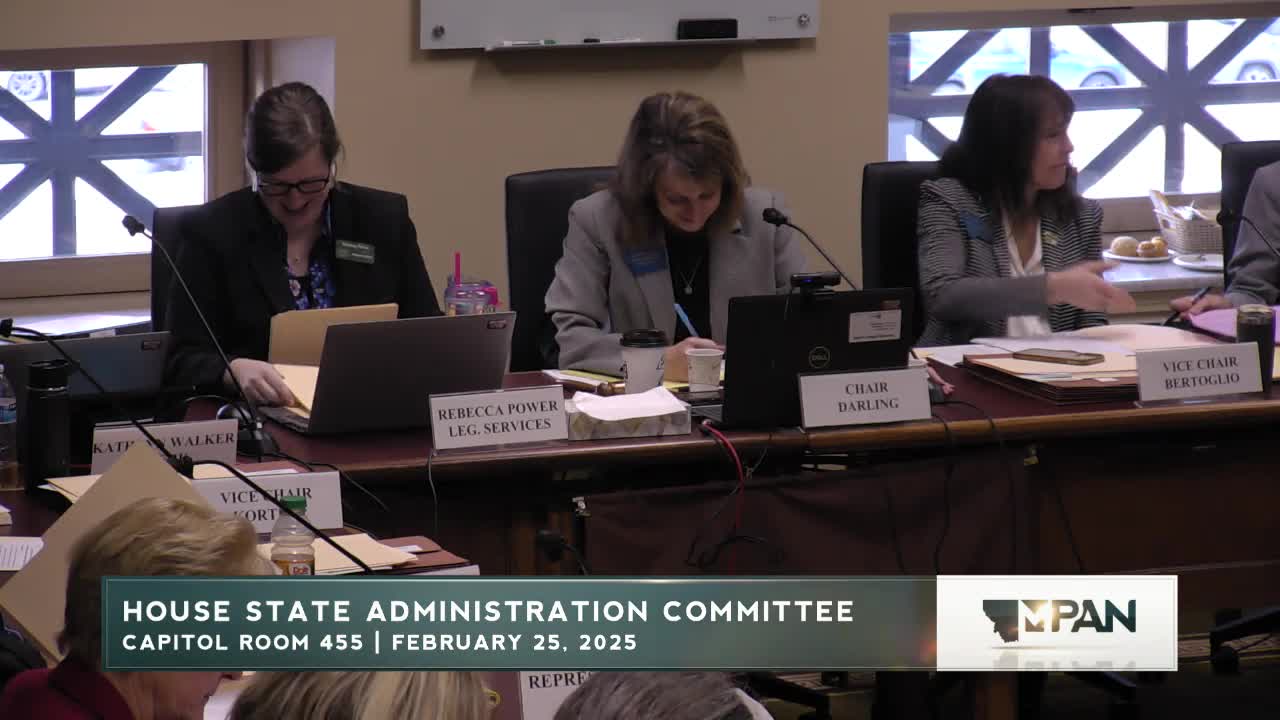
A House State Administration committee hearing on House Bill 557 drew lengthy testimony from teachers, school groups and conservative organizations about whether state law should require districts to close for certain educator conferences and whether taxpayer-paid time should be used for union-sponsored events.
Representative Jodee Etchart, sponsor of House Bill 557, told the House State Administration Committee the bill would allow local school districts to decide how pupil-instruction-related (PIR) days are used and would remove a statutory provision that requires districts to close for ‘‘state meetings of teachers organizations.’’
Supporters of the bill, including Maxford Nelson of the Freedom Foundation and Derek Streicher of the Montana Family Foundation, argued that the statute in current law gives preferential, taxpayer-backed time off to teacher union activities and said some conference sessions contain partisan content. ‘‘There is no justification for the state to compel taxpayers to pay for teachers to attend the convention of a private membership organization,’’ Nelson said.
Opponents, including a long list of educators, school administrators and local education groups, urged the committee to reject the bill. Kim Popham of the Montana Federation of Public Employees (MFPE) and several teacher witnesses said the annual educator conference provides professional development that many rural and subject-specific teachers cannot otherwise obtain. ‘‘This conference offers teachers the opportunity to improve their practice by connecting face to face with others who understand the uniqueness of teaching in Montana,’’ Popham said.
School administrators and rural education advocates warned that eliminating the statute that requires closure could create a patchwork of district calendars and reduce cross-district collaboration. Doug Reisig of the Montana Quality Education Coalition told the committee that the bill’s July 1, 2025 effective date could leave districts with insufficient time to adjust calendars already set for 2025–26.
Several witnesses described how many presentations are curriculum-focused: math, science, reading, Indian Education for All and other subject-area sessions. Kim Popham and others said curriculum groups and practicing teachers propose and organize most sessions, and the Office of Public Instruction (OPI) awards renewal units for approved sessions. ‘‘You go through the list of topics and you choose which ones you want,’’ Popham said.
The MFPE and other opponents described the educator conference as teacher-led professional development that in some cases charges a registration fee and is paid for by attendees, while districts continue to pay teachers’ salaries when schools are closed. Opponents warned that withdrawing statutory closure would disproportionately harm rural teachers and small-district educators who rely on the consolidated conference for targeted training.
Representative Etchart said the bill is intended to increase local control and that she did not intend to remove longstanding events such as statewide music festivals or the youth hunt days. She also said she would be open to OPI oversight of conference agendas if that would address concerns raised during testimony. The committee held extensive questioning of witnesses, including about who sets session agendas and whether sessions are recorded.
The committee did not take a vote during the hearing. The bill’s proponents and opponents signaled multiple possible amendment paths including clarifying the role of OPI, adjusting the effective date, or specifying which conferences would continue to trigger district closures. The hearing included dozens of on‑the‑record witnesses and a broad range of written materials provided to the committee.