Get Full Government Meeting Transcripts, Videos, & Alerts Forever!
Get email alerts on the Jury Compensation topic
No spam. Unsubscribe anytime.
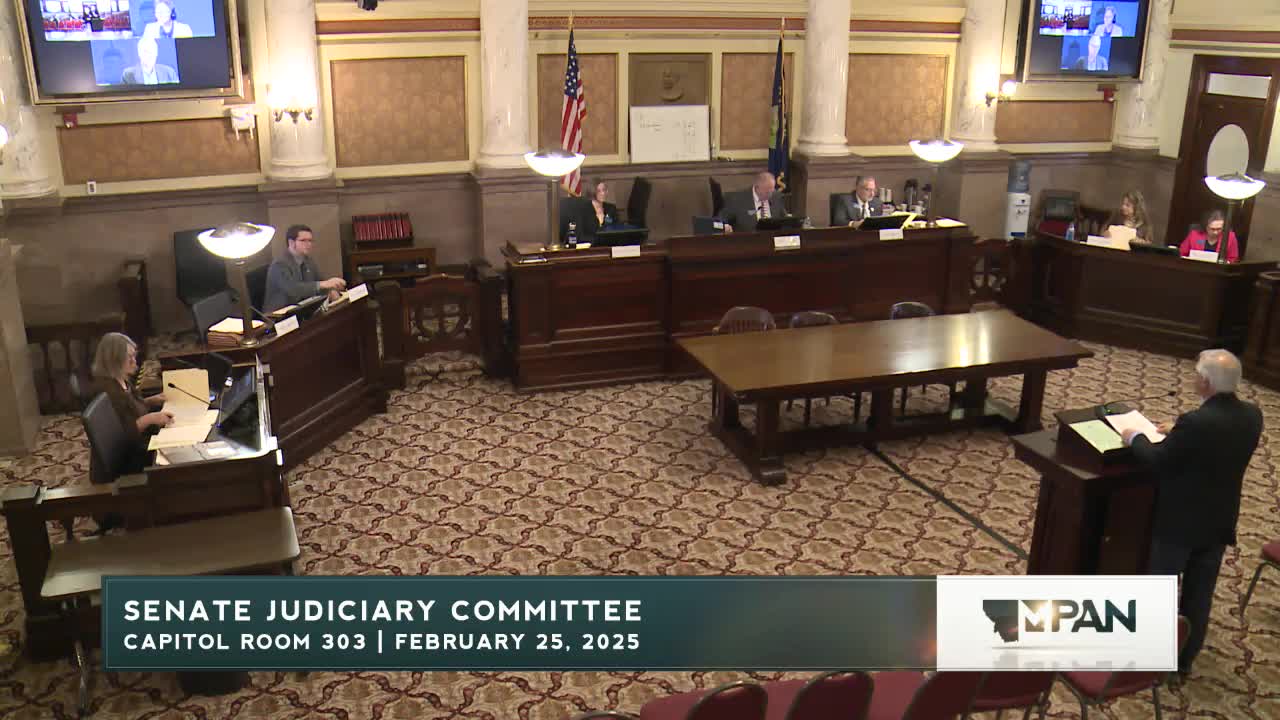
Senate committee hears proposal to raise juror pay; sponsors cite recruitment and fairness concerns
Summary
Sen. Mike Yakovich sponsored Senate Bill 370 to increase juror pay from $12 to a higher daily rate; backers said higher pay would reduce financial hardship and improve jury representativeness, while the League of Cities and Towns warned municipal and city courts could face substantial new costs without clarified reimbursement language.
Senator Mike Yakovich introduced Senate Bill 370 to raise Montana’s juror pay, telling the Senate Judiciary Committee that the current $12 daily juror fee was no longer adequate and that a higher rate would reduce financial hardship for jurors and improve the representativeness of jury pools.
Yakovich said Montana’s current pay lagged neighboring states and estimated that increasing payments would help attract younger and lower‑income residents who otherwise cannot afford to serve. He said doubling the juror fund’s current appropriation would cost roughly $660,000 for the biennium if the daily fee were substantially increased.
Proponents included Alyssa Snow, who told the committee that low juror pay forces some prospective jurors to seek exemptions for financial hardship and that underrepresentation undermines the legitimacy of juries. A retired lawyer and former small‑business owner who testified remotely also supported the bill as a way to encourage participation by working‑age people.
The League of Cities and Towns, represented by Thomas Jodin, registered light opposition and urged the committee to clarify the bill’s reimbursement mechanism. Jodin told the committee municipal courts and city courts of record currently bear jury costs and that a fivefold increase in fees could materially increase local costs. He recommended amendments directing reimbursements to the court of record that conducted the jury trial and aligning the reimbursement mechanism with existing statutes governing court administration.
Committee members asked about the scope of the increase and whether it should apply to criminal and civil juries; the sponsor said the draft focuses on criminal trials because those enforcement actions involve state prosecutions and thus may reasonably be prioritized for state reimbursement. Yakovich closed by calling the bill a "goodwill jury bill" and asked the committee for a due pass.
No committee vote on the bill was recorded during the hearing in the transcript.