Get Full Government Meeting Transcripts, Videos, & Alerts Forever!
Get email alerts on the Kratom Regulation topic
No spam. Unsubscribe anytime.
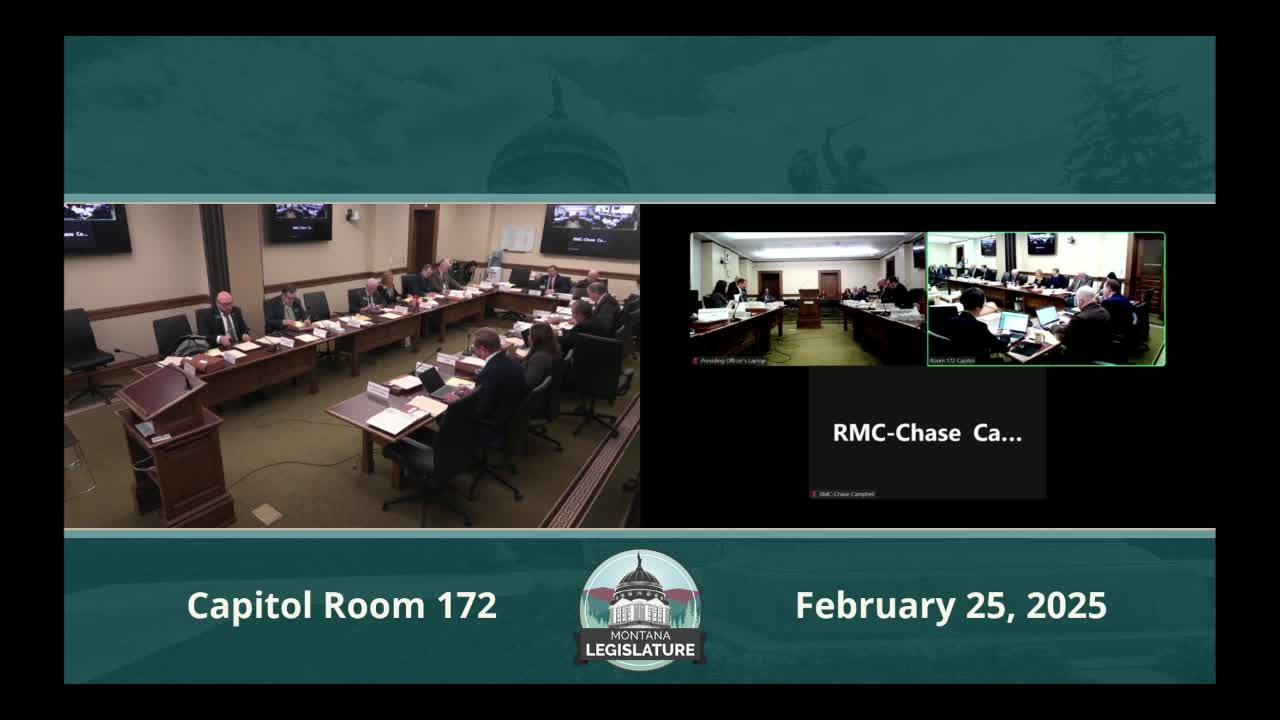
Montana committee hears hours of testimony on kratom consumer-protection bill
Summary
A broad hearing on House Bill 407 drew national witnesses and lengthy debate over regulation, safety, and impacts on small kava/kratom businesses. Supporters urged a state consumer-protection framework; small-business operators warned proposed language was overbroad and could shut craft vendors out of the market.
HELENA — Lawmakers and witnesses spent hours debating House Bill 407, a measure that would create a state regulatory framework for kratom products and require independent testing, registration and labeling for vendors selling products in Montana.
The bill drew a national witness and industry advocates as proponents and local proprietors and operators of kava/kratom cafés as critics. Supporters framed the proposal as a consumer-protection measure that removes adulterated or synthetic products from the market; opponents said some provisions would unintentionally burden or close small, on-site beverage businesses.
The bill’s lead opponent in the room was Mac Haddow, senior fellow on public policy for the American Kratom Association, who told the committee the FDA’s earlier attempts to schedule kratom failed and urged state regulation to curb dangerous adulterated products. “Kratom is a plant that grows in Southeast Asia,” Haddow said, and added that many consumers report using it for pain relief and as a harm‑reduction tool for opioid dependence. He also recounted federal agency actions and studies in support of a regulated market.
Haddow described elements he favors in state regulation — independent laboratory analysis, age restrictions and labeling — but he also pressed lawmakers to target “bad actors” who market dangerous, synthetically enhanced products rather than constrain all kratom businesses.
Several proponents cited studies and federal reporting in support of a consumer-protection approach. Haddow referenced the FDA’s FAERS adverse-event reports and the National Institutes on Drug Abuse-funded research; he said that when careful testing occurs, fatalities tied solely to natural kratom are rare and many reported deaths reflect poly‑substance use.
Kava/kratom café operators who testified as opponents warned the committee that the bill’s language as written could ban everyday ingredients used in on‑site beverages. Isaac D. Hammer, chief operating officer of Kava Routes in Billings and Laurel, told the committee that a clause barring combinations with compounds that inhibit CYP450 enzymes would “ban simple ingredients like sugars, pineapple juice, lemon juice, or even berries,” and would be “overbroad” for small craft establishments that mix fresh leaf with flavoring on‑site.
Hammer described his clientele — adults seeking a nonalcoholic social space — and asked lawmakers to carve out reasonable compliance paths for retail establishments that prepare kratom beverages on site rather than large manufacturers.
Committee members asked for more written materials and additional technical detail. Representative Vinton, sponsor of a separate kratom-related bill mentioned during the hearing, said the committee would allow witnesses who flew in to have their testimony included in the record when the bill reaches committee later.
The committee did not take final action on HB 407 at this session. Lawmakers and staff signaled they will continue refining statutory language and seek clarifications about laboratory standards, labeling expectations and how on‑site vendors would comply.
Ending: The committee left HB 407 pending further technical work. Several witnesses offered to submit citations and technical papers; staff said written materials would be added to the bill record for the eventual hearing date.