Get Full Government Meeting Transcripts, Videos, & Alerts Forever!
Get email alerts on the Courthouse topic
No spam. Unsubscribe anytime.
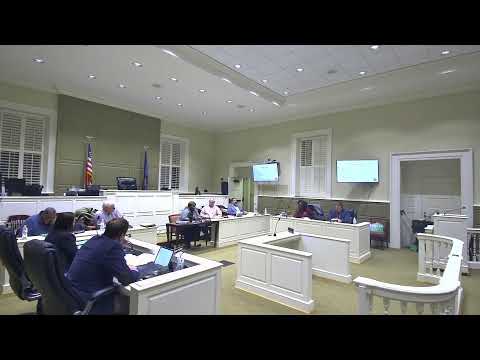
Cumberland County considers $37M–$54M courthouse options; supervisors do not approve authorization after heated public comment
Summary
County administrators presented architectural and state assessments recommending courthouse repairs or an addition estimated between $37 million and $54 million and asked the board to authorize further evaluation and start RFPs for design work. Multiple residents objected; no formal authorization vote was recorded.
County Administrator Kimberly presented assessments of the Cumberland County courthouse and asked the Board of Supervisors to authorize staff to continue evaluating renovation and expansion options and to begin requests for proposals for architecture and engineering services. The county’s consultants and the Virginia Department of General Services (DGS) produced reports and design concepts that estimated project options between $37 million and $54 million and identified security, space and technology deficiencies.
The request was framed as a procedural step: the agenda item did not award contracts or appropriate funding but would create a courthouse project team, refine designs, and produce more detailed cost estimates over a 12–16 month design period. “The agenda item tonight does not award any contracts or appropriate any funding. It’s just an authorization to proceed with the process and the value of continuing to evaluate the courthouse needs,” Kimberly said.
The architectural assessment and DGS review were described as the basis for the cost range. The county administrator said the HBA architects’ final report (issued Oct. 17, 2024) and the state site visit (April 2022) produced a “core score” of 52.7 and identified security and space-functionality shortfalls. The county added a 10% contingency to its early cost estimates and said design work could take 12–16 months and that borrowing scenarios to limit tax impacts were being discussed with financial consultants.
County Attorney Beasley reviewed the statute the judiciary had cited in a letter to the board. Beasley said the circuit court judge had filed an order to show cause and referenced Virginia Code § 15.2-1643, which authorizes a judge to seek review of courthouse facilities and, if warranted, for a remote judge to consider remedies; if the judge issues a writ of mandamus, the locality can appeal. Beasley said paragraph (e) of the statute states nothing in the section authorizes a court to require construction of an additional or replacement courthouse, a point the county attorney and other speakers cited during debate.
Public comment at length opposed moving forward without more public input and without clearer funding plans. Several residents asked where the money would come from, citing county poverty and local needs such as school repairs and other services. “How can Cumberland County support or even consider supporting a $37,000,000 courthouse complex?” resident Barbara Speedy asked during the public-comment period, saying many residents are struggling financially. Other residents suggested targeted, lower-cost security fixes, using donated land or private funds, or limiting work to repairs.
A member of the board moved to table the courthouse item indefinitely and voiced strong opposition to an expansive addition described in the HBA concepts; that supervisor argued the report appears to propose an “additional courthouse” rather than repairs and raised the point that a new, separate courthouse would require a public vote. The transcript records the motion to table but does not record a second or any vote on the motion. Later in the meeting, the chair asked if there was a motion to authorize county staff to continue the evaluation and RFP process; the clerk said no motion had been made and the board moved on.
Because no authorization vote was recorded during the meeting, the board did not formally approve contracting steps or appropriation of funds that evening. County staff said they would continue to refine the scope and cost estimates if the board later directs them to proceed. Beasley and staff described the next steps if the board authorizes the process: creation of a courthouse team with county staff and stakeholders, development of RFPs for architecture and engineering, and a design phase expected to refine square footage and reduce costs where possible.
The judge’s Feb. 3, 2025 letter to the board was referenced repeatedly by staff and residents; Beasley explained potential judicial enforcement mechanisms under state code but noted statutory language limiting a court’s authority to require construction of an entirely new courthouse. The county administrator told the board the process she sought would produce more precise estimates and that financing scenarios had been discussed with consultants with an aim to minimize immediate tax impact.
The discussion closed without formal board action on authorization, and several residents left insisting the board seek more public input before advancing design or procurement steps. Staff will retain the assessments and the HBA concepts and await further direction from the board before issuing any RFPs or committing funds.