Get Full Government Meeting Transcripts, Videos, & Alerts Forever!
Get email alerts on the Lake Earl Management topic
No spam. Unsubscribe anytime.
Residents press state staff for updated Lake Earl management plan and monitoring data
Summary
Lake Earl stakeholders asked the department for updated management plans, water-level and vegetation monitoring, and clearer coordination across state and federal land managers; department staff said grants and restoration projects are being explored.
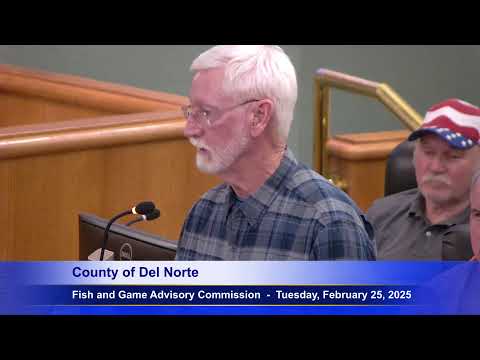
Jeff Reed, representing the Lake Earl Grange Environmental Policy and Procedures Committee, told the commission there has been insufficient local follow‑through on waterfowl and wetland monitoring and that the Lake Earl Wildlife Area management plan has not been updated in decades. “When the department created the Elk Management Plan a few years back, the primary goals were maintaining elk herds, protecting habitat, reducing damage, addressing public health and safety concerns, and providing recreational opportunities,” Reed said. He added that the local Lake Earl plan “expired 22 years ago” and that stakeholders want integrated watershed-scale planning.
Reed and other speakers raised questions about lake-level management, submerged aquatic vegetation loss and salinity. Reed cited historical assessments and said earlier monitoring documented millions of water-bird use days and recommended against projects that would alter lake levels without study. He asked whether more recent studies or waterfowl censuses and fish surveys have been completed; the transcript shows department staff did not present a full recent monitoring summary at the meeting.
Department staff acknowledged past shifts in breaching management and said they are exploring grazing leases, grant-funded restoration and coordinated work with state parks, federal agencies and nonprofits. Jeff Stoddard and other regional staff said the department is considering how to leverage wildfire-resilience and habitat restoration funds to treat public lands, restore grazing where appropriate and create habitat that may draw elk away from private lands.
Stakeholders requested that the department share monitoring datasets, water-level records and past study results, and to involve local stakeholders in development of any revised Lake Earl Wildlife Area management plan. Reed recommended the advisory commission and county provide input during plan development and asked the department to clarify whether monitoring commitments in prior plans have been completed. Staff said they will investigate available monitoring data and possible funding streams and acknowledged that restoring and managing public lands to influence elk distribution is a multi-agency, multi-year effort.
No formal votes or directives were recorded. County commissioners and residents said they want more frequent local stakeholder meetings and clearer channels to ensure field data and local recommendations reach decision makers in Sacramento.