Get Full Government Meeting Transcripts, Videos, & Alerts Forever!
Get email alerts on the Student Behavioral Health topic
No spam. Unsubscribe anytime.
Bill would require district committees to address student safety and behavioral health
Summary
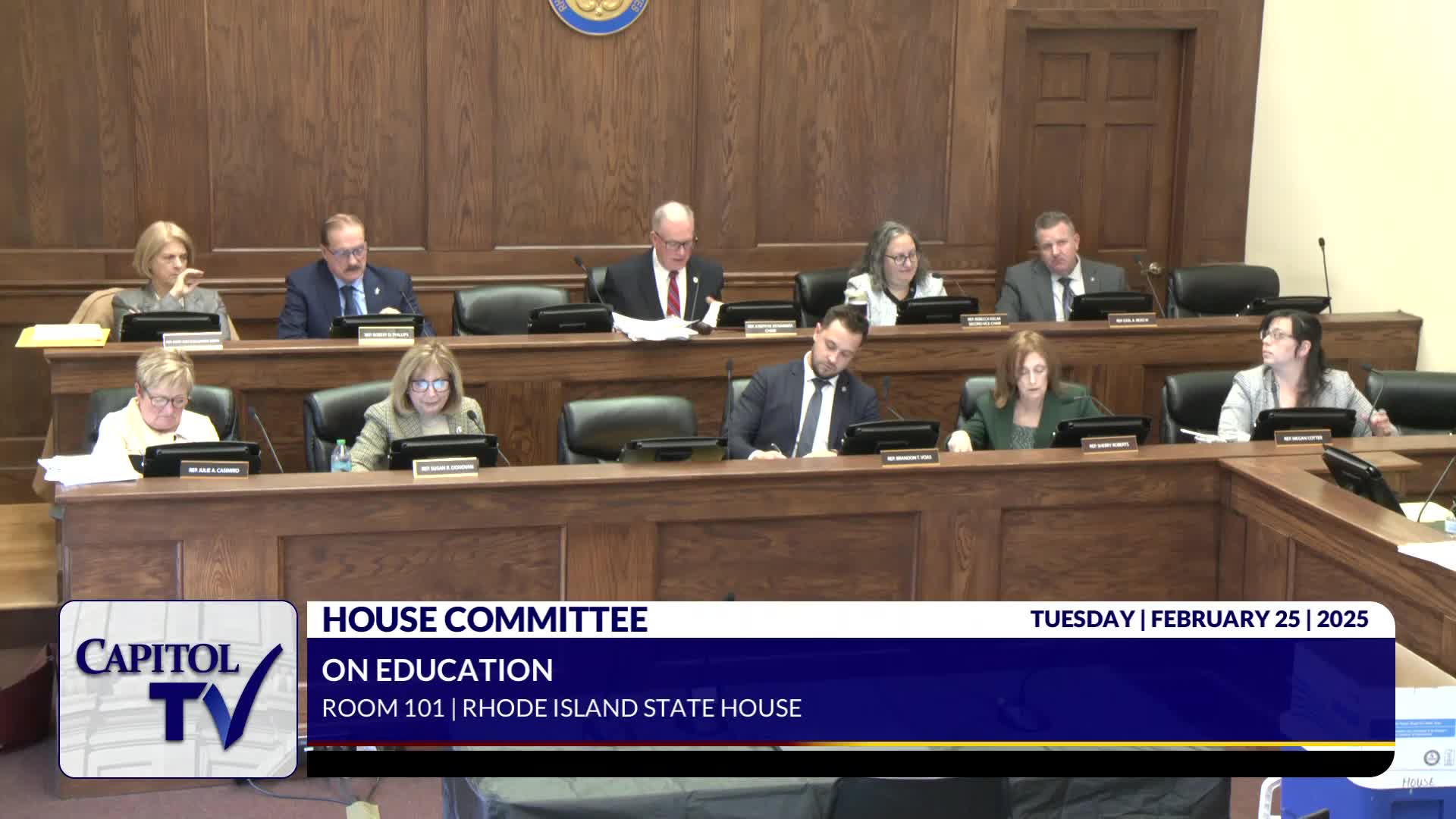
House Bill 5165 would direct each school committee to create a student safety and behavioral health committee to develop consistent district policies addressing student mental health and crisis response; unions and educators strongly supported the measure.
Representative Carter introduced House Bill 5165, which would direct each school committee to create a student safety and behavioral health committee responsible for developing district policies to address student behavioral and mental health needs and crisis response.
Carter said the measure is meant to ensure early intervention and consistent policy across districts; she cited the value of on‑site counselors and the life‑saving role they can play. The bill’s author and witnesses emphasized the intent that the committees operate in a non‑punitive, collaborative fashion and focus on policies rather than individual student records.
Testimony in support came from Mary Barton, executive director of NEA Rhode Island, who said educators report large increases in disruptive behavior, difficulty concentrating, and absenteeism; NEA members reported a median loss of five hours of instruction per month due to disruptive behavior. Marybeth Calabrio, president of the Rhode Island Federation of Teachers and Health Professionals, said data from Rhode Island Kids Count and other sources show growing youth mental health needs and urged passage.
Committee members asked whether the new committees would impose new costs; witnesses and the sponsor said the proposal builds on existing school improvement or wellness teams and would not necessarily require additional paid positions. Representatives of the mental health advocate, ACLU, and Mental Health Association submitted or indicated support for amendments clarifying that the committees operate in a non‑punitive manner and that access to individual student information be limited to those with FERPA authority.
The committee did not take a final vote on the bill during the hearing; the bill was included in the items the committee voted to hold for further study earlier in the meeting.