Get Full Government Meeting Transcripts, Videos, & Alerts Forever!
Get email alerts on the Obituary topic
No spam. Unsubscribe anytime.
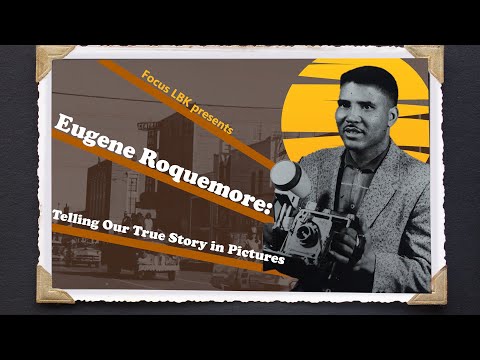
Lubbock photographer Eugene Raquemore remembered for community portraits
Summary
Community members recalled Eugene Raquemore, a Lubbock photographer active from the 1950s through the 1980s, praising his volunteer spirit, service as a decorated World War II veteran, and the archival value of his East Lubbock portraits.
Community members recalled Eugene Raquemore, a Lubbock photographer active from the 1950s through the 1980s, praising his volunteer spirit and the historical value of his portraits of East Lubbock.
Speakers at a recorded tribute said Raquemore combined professional skill with generosity, photographing weddings, proms and community events for people who could not always pay. Their remarks emphasized that his images now serve as both historical record and community memory.
"It was something he would rather do for free than to charge those who couldn't pay. He wasn't worried about money. He knew God would make a way," said Speaker 1, commenter, describing Raquemore's approach to clients who could not afford photography services.
Speaker 2, commenter, said Raquemore frequently accepted delayed or partial payment: "If you, didn't have, the money for the pictures that he took, he'd just say, well, pay me whenever you can. Pay me how much you can. You know, he didn't pressure people for the money because his passion was just to help a person out and capture moments that we've remembered a long time."
Speakers outlined biographical details presented during the tribute: Raquemore was drafted into World War II, served in Germany and France, and was described as having earned four Bronze Stars. After the war he used the GI Bill to study photography at Wiley College, where he studied under Curtis M. Humphreys, and later returned to Lubbock around 1952 to build his practice.
Several speakers noted Raquemore's ties to local businesses and daily life: his family's restaurant at 1703 Avenue A, and later work at Frito-Lay, which he sometimes left early to photograph evening events. "I remember many a days he would come home, done worked all day at Frito Lay, and somebody had called him, mister Rockamo, I got a vent. Can you get up and take can you take these pictures of me?" said Speaker 2, describing how Raquemore answered last-minute calls.
Tribute speakers described a body of work that documents East Lubbock's social life, parades, nightclub nights and formal events, showing pride and growing affluence in the community. "The people in his pictures are having a good time in their own community doing the things that make them happy," Speaker 1 said.
Speakers and the tribute's organizers framed the photographs as both "windows and mirrors" on the city's past: images that record cultural life, veterans' presence and family milestones in East Lubbock. The speakers did not state plans for archival transfer, public exhibition, or estate details during the recorded remarks.
The remarks closed with appreciation for Raquemore's decades of work preserving community moments: "It is a blessing to have these photos, which act as both windows and mirrors to who we were and to whom we can become. And for that, we owe something to mister Eugene Racamor, the tireless photographer who helped us tell our true story in pictures," Speaker 1 said.