Get Full Government Meeting Transcripts, Videos, & Alerts Forever!
Get email alerts on the School Security topic
No spam. Unsubscribe anytime.
Mill Creek board approves five-year camera upgrade after debate over 10‑year licensing cost and vendor risk
Summary
After more than an hour of questions about warranties, proprietary software and upfront licensing costs, the Mill Creek Township School District board voted to approve a district-wide camera replacement and software licensing plan on a five‑year term.
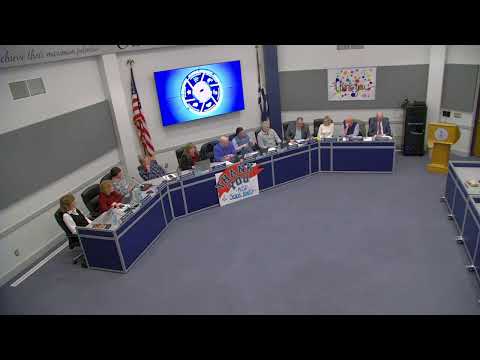
The Mill Creek Township School District Board of Directors on Feb. 24 approved a districtwide camera replacement and software licensing plan, voting to adopt a five‑year licensing term after prolonged discussion about costs, warranty language and vendor risk.
Board members debated whether to buy a 10‑year license for the program — which would have lowered the per‑year cost but required a large upfront payment — or to accept a shorter term that would reduce the district’s long‑term exposure to technology and vendor changes. The board ultimately amended the original proposal and approved a five‑year term for the camera project.
The vote followed a lengthy presentation and question-and-answer session in which district staff outlined the bid process, pricing and technical features and a vendor representative described maintenance, warranty and software‑update practices. Aaron O’Toole, a district staff member who presented the procurement analysis, said the district sought quotes for three different licensing terms (three, five and 10 years) from two direct resellers. He described the proposal as hardware plus a long‑term enterprise license that provides cloud software and feature updates over the license term.
O’Toole told the board the revised quotes provided shortly before the meeting showed the following approximate total licensing costs (hardware + license): about $655,000 for a three‑year term, about $756,000 for a five‑year term and about $988,000 for a 10‑year term for one reseller; a comparable second reseller’s quotes were roughly $672,000 (three years), $764,000 (five years) and $998,000 (10 years).
Garrett, a Rhombus representative who answered board questions at the meeting, described how the vendor’s cloud software works and what the warranty covers. Garrett said the vendor’s system is cloud‑based, “so everything is automatically uploaded,” and that software feature updates are delivered automatically with no additional charge during the license term. He also said, “If a specific model is no longer supported within that 10 year period, Rhombus will replace it with the updated model free of charge.” Garrett recommended the 10‑year option for cost savings but confirmed the company’s standard offers are for 3, 5 or 10 year licenses.
Board members focused their questions on three subjects: (1) whether the vendor’s warranty and software updates are guaranteed if the vendor is bought or goes out of business during a long license term; (2) whether the cameras and software are tied to an architecture that would make switching to another cloud software provider difficult; and (3) the financial prudence of paying large upfront licensing fees versus paying annually.
O’Toole explained the difference between a company warranty and an insured warranty, saying an insured warranty would involve an insurance policy that covers replacement if a vendor goes out of business. Board member Michael Kobilka (identified in the transcript as “Mister Kobilka”) expressed that he would not support a 10‑year, upfront payment because of the financial risk of a large up‑front licensing payment and the rapid pace of change in security software. Several board members said the 10‑year price offered a substantial discount compared with repeating shorter‑term licenses.
Several board members also pressed whether the cameras would be “open” so that the district could change software providers later. Garrett said the cameras can be “unlocked” and used with on‑premise recorders or takeover boxes, but the vendor’s cloud console and feature set are proprietary; switching would require additional equipment or migration steps.
After discussion, a motion to amend the purchase from a 10‑year to a five‑year licensing term carried on a roll‑call amendment vote. The board then voted to finalize the contract on a five‑year term. The roll call on the final motion recorded the following votes: Mister Dean — yes; Miss Philbeck — yes; Mister Kobilka — no; Mister Lindner — yes; Miss Newsome — yes; Miss Pascual — yes; Mister Winchell — yes; Miss Winchell — yes; Mister Brink — yes. The amendment and final approval were announced as passing.
The board also discussed procurement steps: after hardware and licensing approval the district will solicit bids for installation. O’Toole said the district selected direct resellers to limit reseller margin and used cooperative purchasing vehicles to obtain the quotes. The vendor said installation is straightforward and training and ongoing support are included under the license.
The board assigned Mr. Mike Kobilka as liaison for the project. The vendor representative thanked the board and staff and left the meeting.
Votes at a glance: the board approved the camera hardware and licensing contract on a five‑year licensing term; the district will proceed to solicit installation bids and finalize contract documents.
What this means: the district will replace older cameras (some the presenters said are 10–14 years old) and move to a cloud‑based video management platform with ongoing feature updates for the chosen license term. The board chose a five‑year commitment after weighing the lower long‑term cost of a 10‑year term against the financial and vendor‑stability risks of prepaying a large licensing fee.