Get Full Government Meeting Transcripts, Videos, & Alerts Forever!
Get email alerts on the Capital Projects topic
No spam. Unsubscribe anytime.
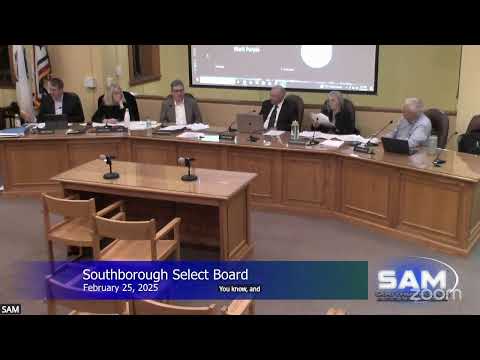
Select Board reviews revised Neary (NHERI) schematic; new fourth‑grade school estimated at about $70 million
Summary
The Select Board reviewed schematic estimates for the Neary (NHERI) project on Feb. 25 and confirmed the building committee’s recommended option: a new four‑grade school (the committee label “C4”).
The Select Board reviewed schematic estimates for the Neary (NHERI) project on Feb. 25 and confirmed the building committee’s recommended option: a new four‑grade school (the committee label “C4”). The project’s revised cost estimate, including furniture, temporary housing for students during construction and site work, is approximately $69–70 million before borrowings and grant reimbursements.
The board’s finance subcommittee and the Neary Building Committee recommended C4 after project re‑pricing and some value engineering. That option would replace the existing Neary school with a new facility designed for four grades and an enrollment projection the committee used for cost modeling.
Nut graf: The revised C4 cost estimate includes an assumed $5 million in federal incentives for a proposed geothermal heating and cooling system (four million dollars from the federal Inflation Reduction Act and $1 million in state support). The board was explicit that federal incentives are treated as provisional: the town cannot rely on those funds as a guaranteed revenue stream until Congress and federal programs commit appropriations and until the system is installed and certified.
Key numbers and process The building committee presented the board with four earlier cost permutations; after additional scrutiny and design adjustments the group focused on C4. The C4 schematic estimate includes: - Project construction, site work, furnishing and temporary housing: about $69–70 million (total project cost estimate subject to change following bids). - Estimated MSBA (Massachusetts School Building Authority) reimbursement: the committee’s current estimate would reduce the town’s share, but state and federal reimbursements are not finalized at this stage. - A separate figure for the warrant: the board was told it will be asked to authorize a higher number (around $108–109 million) in May to satisfy MSBA procedural requirements that ask voters to approve the full project authorization before final grant determinations and bidding.
Board questions and next steps Board members asked for more detail on contingencies and for an explicit fall‑back number if the federal geothermal incentives are not available. Select Board member Al Hamilton said the town must assume the federal rebate may not materialize and asked the building committee to return with an alternative price that excludes the $4 million federal component. Select Board member Sam said he wanted the committee to answer written questions previously submitted in December and to return to the board with clarified assumptions about temporary housing, timelines and the MSBA reimbursement estimate.
The board asked the Neary Building Committee to return before the next town meetings for a detailed review of the estimate and contingency planning. The committee noted bids would not be solicited for about a year and that final, binding costs will be known only after a competitive bid process in 2026.
Why it matters: If the town proceeds with C4 and voters ultimately approve bonding, the project will be the largest capital expenditure in recent Southborough history. The board and building committee emphasized that getting firm rebate and grant commitments, and confirming the accuracy of cost estimates through bidding, will be essential before the town asks voters to appropriate funds.
Provenance: discussion and schematic review occurred during the Neary project agenda item, where the building committee presented re‑priced schematic figures and the board requested further clarification and contingency scenarios for federal/state incentives and temporary housing costs.