Get Full Government Meeting Transcripts, Videos, & Alerts Forever!
Get email alerts on the Budget And Finance topic
No spam. Unsubscribe anytime.
Finance director: district deficit projected to shrink to about $8M this year; next‑year preliminary gap near $10M
Summary
Rob Welch told trustees midyear adjustments — higher ADA, updated homestead-exemption hold harmless amounts and increased weighted revenues — reduce the current-year deficit from earlier estimates; staff projected a preliminary $10M deficit for 2025–26 and convened a stakeholder Fit (FIT) committee to develop options.
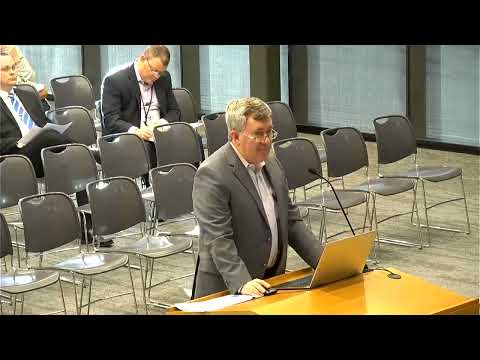
Rob Welch, staff member in district finance, presented a midyear budget update and preliminary projections for next year on Feb. 24, saying updated state and local revenue estimates and enrollment changes reduce this year’s deficit but that significant work remains for the 2025–26 budget.
Welch reviewed the district’s recent budget history: the district started budget development with an initial projected deficit of about $20 million, trimmed that to roughly $12.5 million through a series of reductions and then adopted the 2024–25 budget with an estimated $16 million deficit after adding a 2 percent compensation increase. At midyear, Welch said new information — updated homestead‑exemption ‘‘hold harmless’’ revenues, larger‑than‑expected weighted enrollments, and a higher ADA projection — increased projected revenue by about $9 million and raised expenditures by about $1 million to fund those weighted programs, reducing the budget shortfall to about $8 million for 2024–25.
Welch described early assumptions for 2025–26 that produce a preliminary projected deficit of about $10 million, driven by staffing needs (including an added grade at Eagle Mountain High School), employer medical‑insurance contributions (estimated $1.7M), property/casualty and transportation cost increases, and continued high‑cost special‑program enrollments. Welch said the district had trimmed roughly $14 million from the starting point of the prior two budgets and was pushing those savings forward.
To develop solutions, Welch described a Financial Integrity and Transparency (FIT) committee of staff, teachers, coaches, parents and community members that began meeting and will report ideas ahead of a board budget workshop set for March 11. ‘‘Their current task at this point ... is to engage others and come back with additional ideas and additional input,’’ he said. Board members and staff encouraged stakeholders to contact state legislators as school‑finance bills were moving rapidly in the legislature.
Budget amendment: Later in the meeting the board approved a February 2024–25 budget amendment presented by Mr. Kittenger that reflected the midyear revenue and expenditure adjustments and reduced the year‑end deficit by about $7 million, a vote the board took by 7–0.
Why it matters: The state basic allotment has not been adjusted since February 2019; Welch said that restoring purchasing power would require a much larger per‑student increase than bills proposed at the time of the meeting. The finance presentation included sensitivity to proposed legislative changes and emphasized the board’s upcoming workshop and the FIT committee’s recommendations as the district decides additional actions for next year.