Get Full Government Meeting Transcripts, Videos, & Alerts Forever!
Get email alerts on the Signs And Landscape topic
No spam. Unsubscribe anytime.
Board gives staff direction on county signage updates and Cameron Park standards; asks outreach and follow-up
Summary
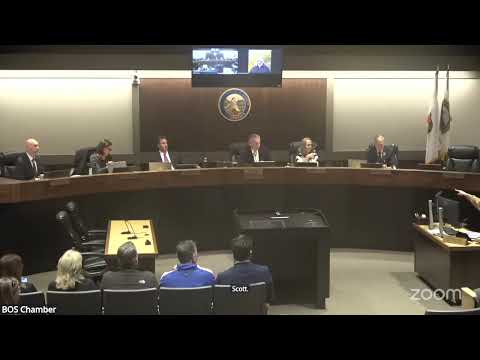
Planning staff presented proposed revisions to the county sign ordinance and a draft set of Cameron Park sign standards on Feb. 25; the Board of Supervisors instructed staff to proceed with edits and outreach but asked that two proposed Cameron Park provisions be removed from the draft.
County planning staff reviewed proposed amendments to the county sign ordinance and a draft set of Cameron Park sign standards at a public workshop on Feb. 25 and asked for the board’s feedback before formal hearings.
Tom Purcell, Long Range Planning, and consultant Dudek walked supervisors through substantive changes: clarified applicability (including the Tahoe Basin), more objective and consistent development standards, clearer permit paths (administrative permits for fully compliant signs, design‑review for Highway 50‑oriented signs or community sign programs, variances for limited deviations), and new or expanded allowances for public and community‑service signs in recreational and specific‑plan zones. Staff said the amendments would make standards more measurable and simplify enforcement and permitting.
The draft Cameron Park sign standards — developed with the Cameron Park Community Services District and the local design review committee — propose local design preferences such as non‑reflective materials, maximum sign sizes tailored to small commercial parcels, and prohibitions on neon/gas‑tube lighting. The Cameron Park draft also included a request from the community design committee to consider a nighttime shutoff for illuminated signs.
Board members exchanged detailed questions with staff about digital and internally illuminated signs, enforcement mechanics for temporary signs (including campaign signage), and possible amortization or relocation approaches for three off‑site billboards that residents raised as longstanding concerns. County counsel advised that campaign signage is a “temporary noncommercial message” category under the ordinance and that content‑based restrictions are legally sensitive; staff and counsel agreed to explore options for better candidate guidance and for enforcement processes without infringing First Amendment protections.
Supervisors directed staff to proceed with the draft ordinance updates and the Cameron Park standards but asked staff to remove the Cameron Park nighttime‑shutoff proposal and the proposed ban on gas‑tube neon lighting from the draft. Staff also was asked to explore options to address legacy billboards (amortization, relocation or negotiation), to review enforcement and potential fiscal impacts of any new enforcement responsibilities, and to coordinate with the county Registrar of Voters on clearer information on campaign signage rules for candidates.
The board recorded a roll‑call motion adopting that direction, and the motion passed 5–0. Staff said it will continue public outreach, accept written comments for two additional weeks and then proceed to Planning Commission review and environmental review on a timeline that could bring Planning Commission hearings in May and a Board adoption hearing in June or July.