Get Full Government Meeting Transcripts, Videos, & Alerts Forever!
Get email alerts on the County Budgeting topic
No spam. Unsubscribe anytime.
County projects $19.3 million general‑fund balance; supervisors told growth is slowing and costs rising
Summary
County staff presented a midyear budget update that projects about $19.3 million in general‑fund fund balance for FY 2024–25, with shrinking departmental savings and slower revenue growth; supervisors pressed staff on inflation, contingency use and the outlook for 2025–26.
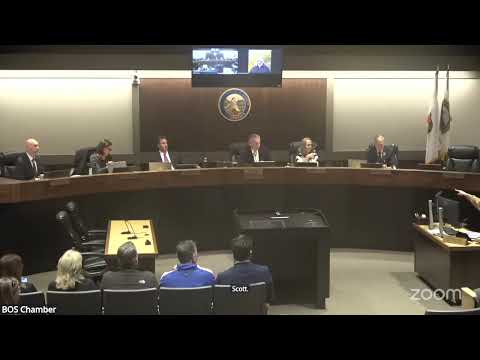
El Dorado County’s chief administrative office told the Board of Supervisors on Feb. 25 that the county is projecting roughly $19.3 million in general‑fund fund balance for fiscal year 2024–25, but staff warned that revenue growth is slowing while costs — particularly on construction materials and public‑safety expenses — continue to rise.
Sue Henneke of the chief administrative office presented the midyear fiscal report and said the projected $19.3 million includes $7.85 million designated as contingency carryover under board policy, about $5.7 million in departmental savings (largely in salaries and benefits), $3.8 million in unfinished projects or equipment pending delivery, and roughly $2 million in higher‑than‑expected revenues such as interest income. Henneke told supervisors that departmental savings now represent about 3.3% of departmental net county cost, down from about 5–6% the prior year.
“Things are getting tighter,” Henneke told the board. She cited slower property‑tax and sales‑tax growth, and said the county is budgeting conservatively for the FY 2025–26 cycle. Henneke attributed part of the revenue pressure to the local real‑estate market and the difficulty many property owners face securing homeowners insurance following recent wildfires.
Supervisors pressed staff on cost inflation and contingency policies. Supervisor Bierkamp (presentation host) noted that rising prices for asphalt and other construction inputs will likely erode the apparent cushion. A supervisor asked how the county uses general‑fund contingency; Henneke explained contingency is a budgeted line item the board can access for unplanned urgent needs, while the general reserve requires a declared emergency and is reserved at a higher threshold.
Supervisor Lane thanked department staff for “tightening the belt,” but said the county should continue to prepare an “ultra‑conservative” 2025–26 budget given statewide and federal uncertainties. The board approved the midyear report and related budget transfers on a recorded vote at the meeting (motion to receive and file the report and authorize transfers; vote recorded as 4–0 with Supervisor Parlin absent).
Henneke and supervisors also discussed the composition of the projected fund balance: contingency carryover, departmental savings, unfinished projects that will need rebudgeting next year, and one‑time revenue items such as higher interest earnings. Henneke cautioned that property‑tax, sales‑tax and transient‑occupancy‑tax receipts are expected to be constrained, and that county budgeting will continue to rely on conservative revenue estimates.
The board did not change the adopted contingency policy at the meeting. Staff will use the midyear figures to help shape the FY 2025–26 budget and to return with any needed follow‑up if departments request transfers from contingency or other actions during the year.