Get Full Government Meeting Transcripts, Videos, & Alerts Forever!
Get email alerts on the Property Tax Homestead Exemption topic
No spam. Unsubscribe anytime.
Augusta commissioners vote to opt out of state floating homestead exemption, direct staff to draft local alternative
Summary
The Augusta City Commission voted 8–2 to opt out of House Bill 581 (the state’s floating homestead exemption) and directed staff to draft a locally controlled homestead exemption modeled on the state bill, with subsequent resolution authorization to be executed by the mayor.
The Augusta City Commission voted 8–2 Tuesday to opt out of House Bill 581, the state law creating a floating homestead exemption, and instructed staff to draft a local alternative for consideration by the General Assembly and voters.
Administrator Mona Allen told the commission the governing body must decide whether to opt in or opt out by March 1 and summarized alternatives developed by Chief Appraiser Scott Rountree and staff. “House Bill 581 would apply to all homestead properties, the amount of exemption floats each year to match the consumer price index,” Allen said, explaining that the exemption limit would match the CPI and that a local floating option sales tax (FLOS) to offset revenue effects would require voter approval.
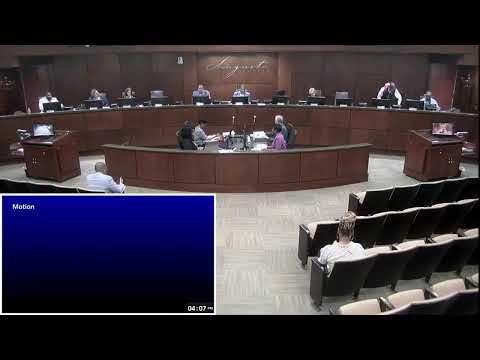
The request to opt out and pursue a locally controlled version was made as a motion by Commissioner Don Clark and seconded by Commissioner Catherine Smith Rice. The motion carried 8–2, with Commissioners Jordan Johnson and Michael Lewis recorded as voting no. The commission subsequently authorized the mayor to execute a resolution to effectuate the opt-out pursuant to OCGA 48-5-44.2; that resolution was approved by the same 8–2 tally.
Why it mattered: Commissioner Clark and others argued local control would let Augusta craft protections tailored to the county’s tax base and priorities. “I just think whatever we do, we have to be in control of our own destiny as opposed to putting it in the hands of someone else in this case being the state,” Clark said.
What staff presented: Allen and Chief Appraiser Scott Rountree offered four alternatives: (1) opt in to HB581 (CPI-based float for all homesteads); (2) adopt a local valuation freeze (freeze homestead valuations at implementation year); (3) adopt a targeted float limited to seniors or low-income homeowners; or (4) adopt a float tied to the Housing Price Index (HPI) instead of CPI. Allen and Rountree showed modeled outcomes using historical data: had HB581 been in effect in 2021, it would have lowered taxes for about 76% of homesteads, required an estimated 0.507 increase to the rollback millage, and shifted roughly 7% of total property tax burden from homesteads to non-homestead properties. Rountree added that a freeze would have benefited the most homeowners but shifted more than 10% of burden to non-homestead properties; a seniors-only float would have benefited about 38% of homesteads; an HPI float would have benefited about half of homesteads but produced smaller per-household savings.
Legal and process notes: Administrator Allen and City Attorney Plunkett told commissioners that even if Augusta opts out locally, any local alternative that differs from HB581 must be introduced to the Georgia General Assembly by the local delegation (staff cited a March 24 deadline for the delegation to receive draft legislation) and would not take effect until 2026 if enacted; voter referendum would be required before a local FLOS could be implemented. Allen also noted House Bill 92, still pending in the state legislature, might change deadlines but was not yet law.
Concerns and dissent: Opponents warned of unintended shifts in tax burden to commercial and non-homestead properties and the risk posed by Augusta’s local millage cap. Mayor Pro Tem Wayne Guilfoyle said the state approach is “a double-edged sword” that helps homestead owners but can increase commercial and rental property taxes and stress the millage cap. Commissioner Brandon Garrett asked staff for further calculations on estimated average individual savings and millage impacts; staff said they would provide more detailed figures.
Next steps: The commission added a resolution to the agenda and authorized the mayor to execute it to effectuate the opt-out. Staff and legal counsel said they would work with the county’s lobbyist and the local legislative delegation to draft a local bill and aim to provide more detailed fiscal calculations for commissioners before finalizing a local proposal. The commission directed staff to return with drafts and more analysis for the commission to consider before submission to the General Assembly and any required referendum.
Ending: Commissioners emphasized the decision reflected differing priorities—broad homeowner relief versus taxpayer equity and local control—and committed to drafting a locally controlled option for further review and public consideration.