Get Full Government Meeting Transcripts, Videos, & Alerts Forever!
Get email alerts on the Land Use Development topic
No spam. Unsubscribe anytime.
Residents urge El Dorado County to deny two proposed substance-use treatment facilities in Rescue/Deer Valley
Summary
Dozens of residents and local groups told the Board of Supervisors the planned Home California / Native Directions facilities would violate county zoning, raise wildfire and public-safety risks, and strain local infrastructure; some speakers urged the board to deny permits and to require full environmental and fire-risk reviews.
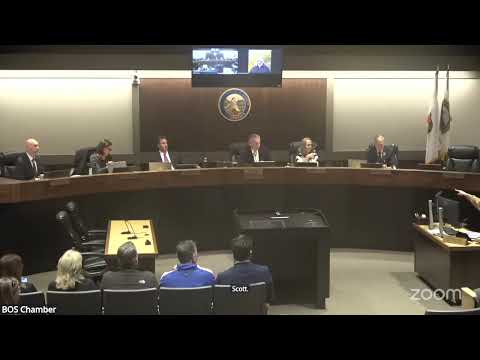
Dozens of residents and community groups told the El Dorado County Board of Supervisors on Feb. 25 that two proposed substance-use disorder treatment facilities — proposed at 2761 Sands Road and 3480 Deer Valley Court in the Rescue/Deer Valley area — are inappropriate for their rural locations and should be denied.
At open forum, speakers representing Rescue Deer Valley and other local groups said the proposals — advanced by an organization identified in public remarks as Home California / Native Directions — conflict with county zoning, pose serious wildfire and evacuation risks, and would strain local roads, water and septic systems. Chris Silva, identified as a spokesperson for Rescue Deer Valley, said the groups asked the county to “deny these commercial building permits” and asserted the projects did not meet local zoning rules.
The concerns coalesced around three issues: zoning and land-use consistency, fire- and medical-emergency response, and infrastructure (roads, water and wastewater). Multiple speakers said the sites are in high-severity fire zones with a single narrow access road that would make evacuations and emergency response difficult. Resident John Figuarito told supervisors that “this project significantly increases fire risk in a CAL FIRE designated high severity fire zone,” and asked for a full fire and emergency risk assessment before any permit is approved.
Speakers also questioned whether the projects complied with county zoning. Chris Silva and others said the sites are designated for single-family rural residential uses, not commercial operations intended to house dozens of people. County Council’s June 7, 2024 written response to Home California — referenced during public comment — was cited by a speaker as affirming the county’s duty to enforce local zoning. Several speakers asked the board to obtain or publish legal opinions confirming whether the projects must comply with local zoning rules and whether state funding alters that requirement.
Residents raised worries about wastewater and groundwater contamination, given the proposed density at 3480 Deer Valley Court and the absence of El Dorado Irrigation District sewer service in the area. David Mead, a nearby resident, said the site’s septic systems would discharge to groundwater that feeds nearby Martell Creek, which drains toward the Pine Hill Ecological Reserve; he urged a full environmental impacts review, including pharmaceutical-contaminant pathways from treatment medications.
A few commenters urged denying the proposals on procedural grounds. Speakers said Home California and associated organizations had mischaracterized their status in public materials (for example, representing themselves as tribal entities when they are not a federally recognized tribe) and in grant applications, and that the county should verify claims and representations in applications and grant materials.
Not all speakers opposed the projects. John Gibson, who described himself as a county business owner with long experience creating treatment programs elsewhere, urged the board to consider the needs of women and children who would be served. He recommended programs be located closer to health care and services and warned against “warehousing” residents far from support systems.
Several speakers asked the board to ensure state funders — including the Department of Health Care Services and the Department of Social Services (both cited in public remarks) — require awardees to obtain and comply with local permits and zoning before grant money is spent. Multiple commenters asked the county to obtain and publish definitive legal guidance about whether state funding or the arm’s‑length status of an applicant can alter the county’s zoning authority.
The board did not take an action on the projects during the meeting. County staff earlier signaled that several related agenda items (including those identified in the meeting as items 41, 403 and 404) were scheduled for closed‑session discussion regarding property negotiation; county council later reported that closed session had concluded with "no action to report." Speakers urged that any negotiations or permit decisions be transparent and that the board prioritize public-safety and zoning compliance.
The public record submitted during the meeting included letters referenced by commenters (including correspondence from a U.S. senator and from the Shingle Springs Band of Miwok Indians) and multiple requests that the planning and legal departments provide written findings on zoning compliance, fire and evacuation risk, wastewater impacts and whether state funding affects local land-use authority.
The board did not set a hearing date for the two projects during the Feb. 25 meeting. Several commenters said they will continue to press the board for additional reviews and for denial of the permits if the projects cannot meet county standards.