Get Full Government Meeting Transcripts, Videos, & Alerts Forever!
Committee hears competing views on residential battery incentive program; utilities and solar industry seek design changes
Summary
House substitute bill 18-71 would create a 10-year residential battery incentive program administered by WSU Extension Energy Program, cap incentives and allow public utility tax credits. Utilities and the solar industry support the concept but raised concerns about prescribed rate language and compensation design.
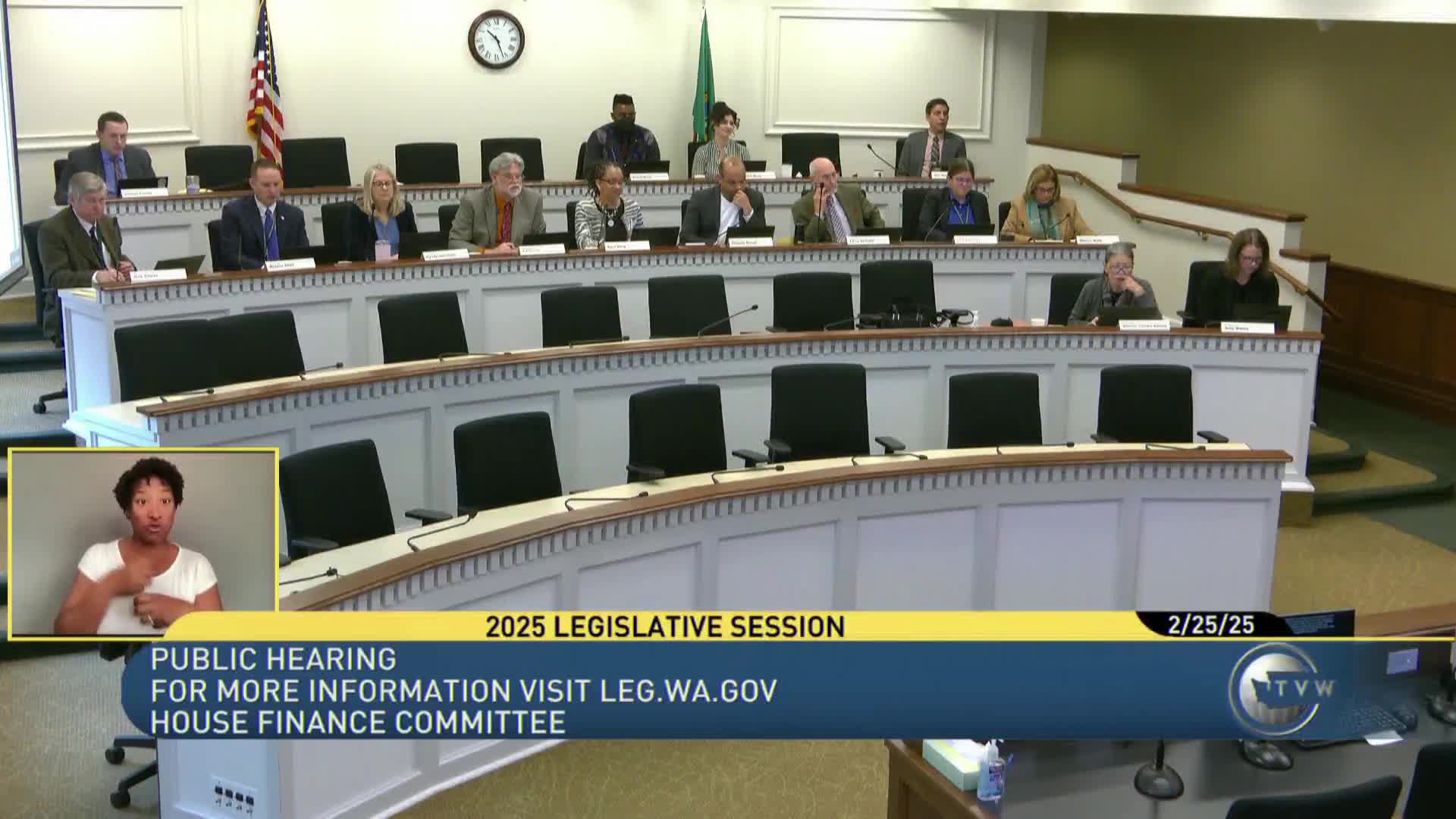
A bill to establish a 10-year residential battery incentive program was the subject of detailed technical and fiscal discussion in the House Finance Committee on Feb. 25.
Substitute House Bill 18-71 would require the Washington State University Extension Energy Program to administer a residential battery incentive program, set per-customer incentive caps (up to 18 kilowatt-hours per installation), and allow electric utilities that participate to claim a public utility tax credit equal to incentive payments and associated costs. The draft caps in the bill set maximum incentives at $765 per kilowatt-hour for low- and moderate-income customers and $450 per kilowatt-hour for other customers; utilities with more than 100,000…
Already have an account? Log in
Subscribe to keep reading
Unlock the rest of this article — and every article on Citizen Portal.
- Unlimited articles
- AI-powered breakdowns of topics, speakers, decisions, and budgets
- Instant alerts when your location has a new meeting
- Follow topics and more locations
- 1,000 AI Insights / month, plus AI Chat