Get Full Government Meeting Transcripts, Videos, & Alerts Forever!
Get email alerts on the Committee Votes topic
No spam. Unsubscribe anytime.
House Finance reports a slate of bills out of committee; key votes recorded
Summary
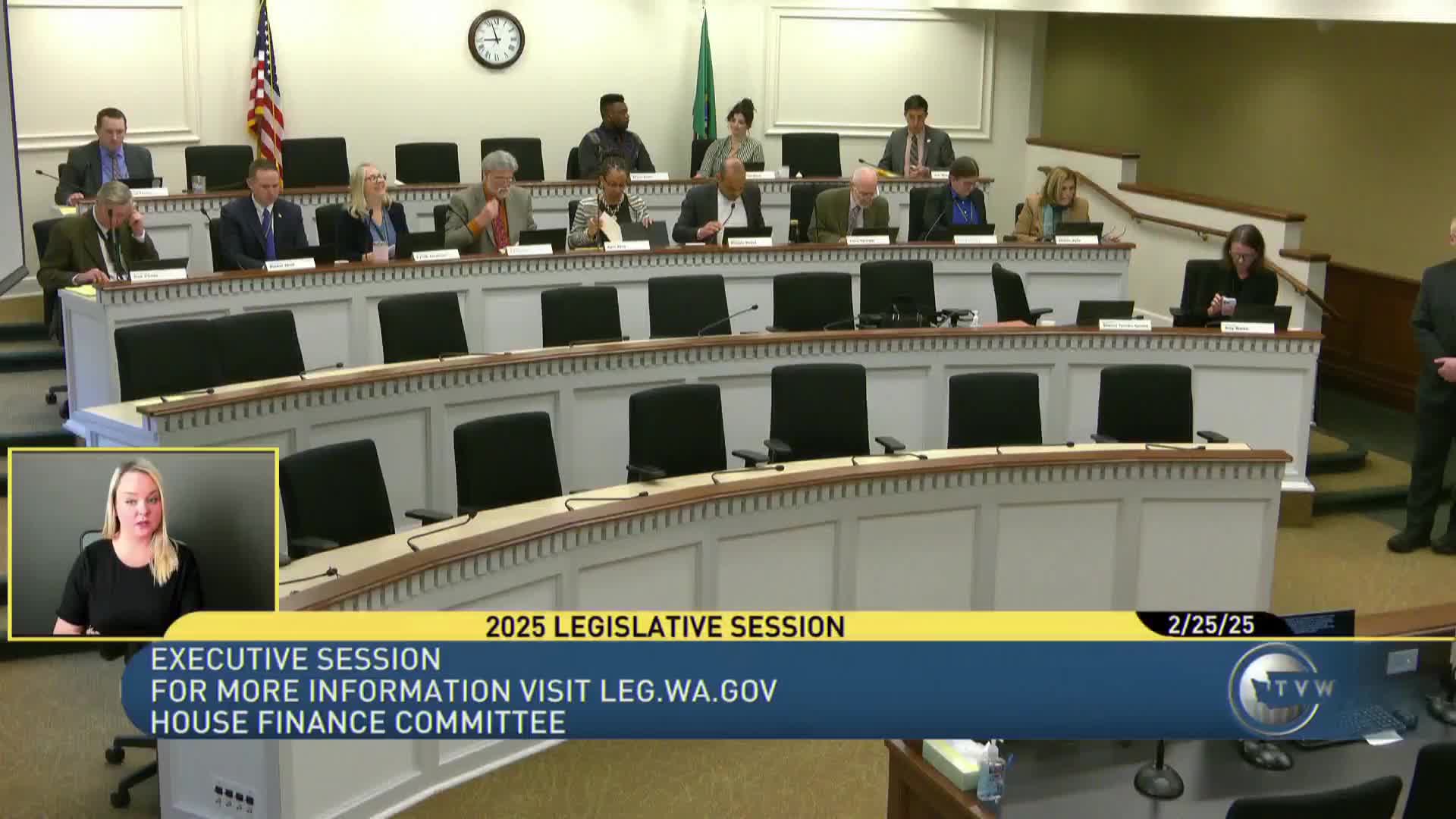
The House Finance Committee voted to report a group of bills with due pass recommendations on Feb. 25, 2025. Ten bills were moved out of committee by voice or roll call; vote tallies and amendments are included for items that were decided during executive session.
The House Finance Committee on Feb. 25 moved a package of bills out of committee with due pass recommendations after executive session and discussion, recording roll-call votes on several items.
The committee adopted a substitute for House Bill 15-32 (local option sales and use tax for cities, targeted to mitigate impacts in the Kent area) after debate and votes on three amendments; the final substitute was reported out with a 10–5 roll-call vote. The committee also reported proposed substitute House Bill 12-58 (sharing 9-1-1 excise tax revenues when counties transfer calls to municipal dispatch) out of committee with a 10–5 vote. Substitute House Bill 19-60 (renewable energy personal property exemption and excise tax plus new local grant programs) was reported out 12–3. House Bill 20-15 (local option sales and use tax for public safety funding) was reported out 11–4. Proposed substitute House Bill 13-56 (property tax limit and school funding adjustments) was reported out 10–5. Other bills reported out by voice or unanimous roll call included House Bill 17-17 (sales remittance program for affordable housing), substitute House Bill 17-03 (equine industry and horse racing commission changes), substitute House Bill 18-06 (enhanced fish tax revenue distribution), House Bill 13-84 (winery/cider tax rate adjustment), and House Bill 17-69 (tax treatment of abandoned-vehicle sales).
Why it matters: reporting bills out of committee is an important procedural step that allows proposals to move to the next stage in the legislature. Several of the measures reported out would change how local governments raise revenue or how particular industries are taxed and would create new state-local grant programs if enacted.
Votes at a glance
- Substitute House Bill 15-32 — reported out with due pass (roll-call: 10 ayes, 5 nays). Several amendments were considered; H-1640.1 (voter approval requirement) failed, H-1511.2 (attestation requirement) was adopted, H-1639.1 (credit against state sales tax) failed; amendments were then incorporated into the substitute before the final report.
- Proposed substitute House Bill 12-58 — reported out with due pass (roll-call: 10 ayes, 5 nays).
- Substitute House Bill 19-60 — reported out with due pass (roll-call: 12 ayes, 3 nays).
- House Bill 20-15 — reported out with due pass (roll-call: 11 ayes, 4 nays).
- Proposed substitute House Bill 13-56 — reported out with due pass (roll-call: 10 ayes, 5 nays).
- House Bill 17-17, proposed substitute House Bill 17-03, substitute House Bill 18-06, House Bill 13-84 and House Bill 17-69 — each reported out by voice vote/unanimous recorded roll (15–0 where recorded).
What’s next: Bills reported with a “due pass” recommendation leave House Finance and proceed toward floor consideration and further action in the legislative process. Any amendments adopted in committee are now part of the committee’s recommended text.
(Full roll-call tallies and amendment outcomes are recorded in the committee record.)