Get Full Government Meeting Transcripts, Videos, & Alerts Forever!
Get email alerts on the Governance Self Evaluation topic
No spam. Unsubscribe anytime.
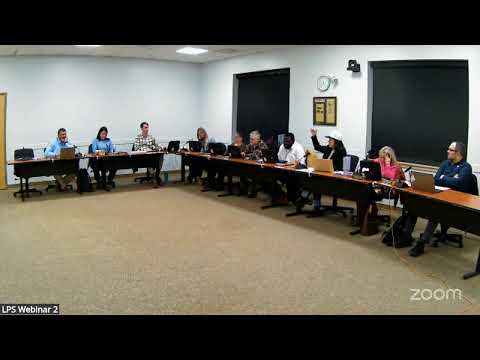
School committee reviews self-evaluation and mission; debates measurable goals and subcommittee structure
Summary
The Lewiston School Committee reviewed its recent self-evaluation survey and the district’s mission, vision and strategic priorities, debated adding measurable goals, and reorganized or proposed several subcommittees including a rapid-start safety committee and a multicultural/cultural competency group.
The Lewiston School Committee reviewed the results of a recent self-evaluation survey, discussed the district’s mission, vision and strategic priorities, and debated creating measurable, time-bound goals to guide future work.
A presenter identified as Jake introduced a slide-based process for reviewing anonymous survey data and asked committee members to identify facts in the data, “not necessarily making any conclusions,” before discussing areas for improvement. Members flagged planning and ongoing development, board member development, and engagement with parents and the broader community as areas with room to improve.
Member McLaughlin proposed attaching a small set of measurable, time-bound goals and milestones (for example, targeted academic or post-graduation outcomes) to the strategic priorities so the committee could evaluate progress; other members agreed this could help tie the self-evaluation to district targets.
The committee also discussed retreat/workshop planning as a venue to refine goals. Members debated consolidating subcommittees to reduce meeting load and overlap. The meeting record shows movement to create an ad hoc school behavior and safety committee that members said should start quickly because of public interest; a multicultural (cultural competency) committee was also proposed. Members discussed combining curriculum and pathways committees and keeping finance, facilities and negotiations aligned as required or standing committees. State law requiring a dropout-prevention committee was raised and scheduled for formalization.
Committee members assigned initial chairs and membership for several committees and agreed to circulate written charges for subcommittees so volunteers and the public know each group’s responsibilities. They also discussed scheduling constraints for committees that require district staff participation during daytime hours.